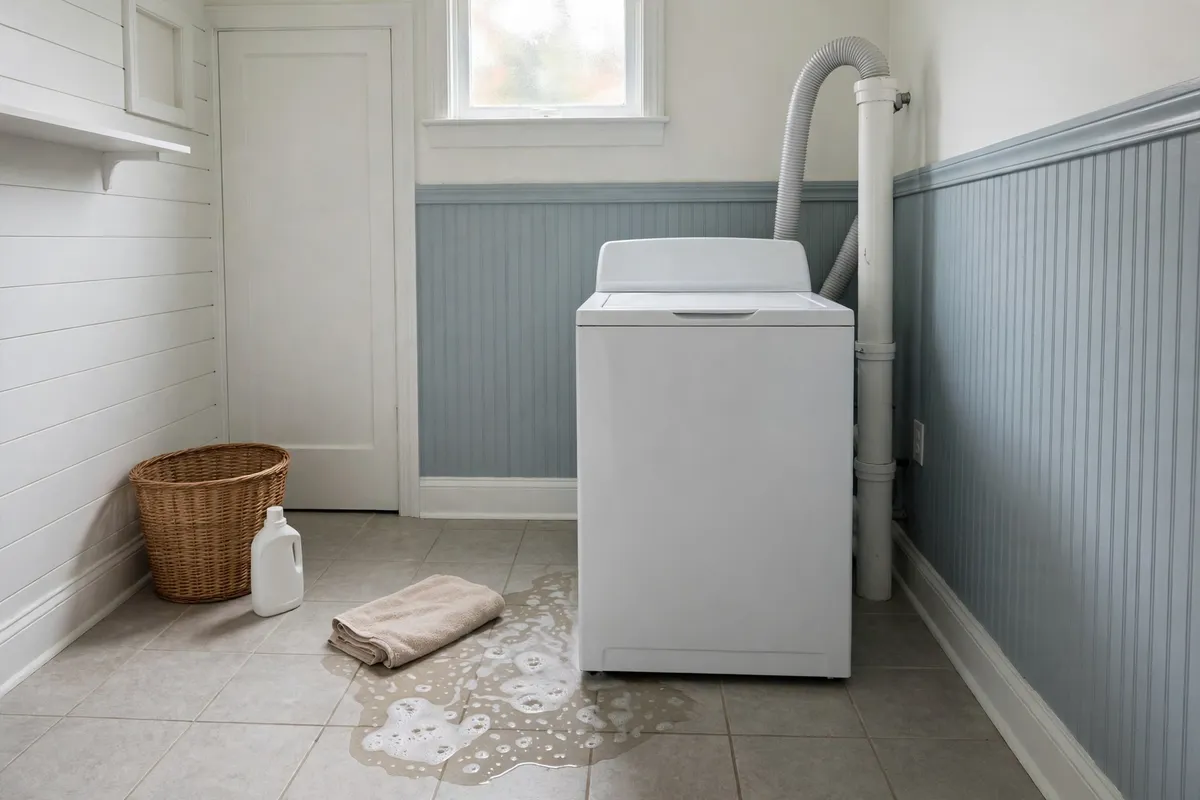
The washer finishes the wash cycle, the pump kicks in, and water comes up out of the standpipe instead of going down it. You mop it up, run a smaller load, and it behaves, until a full load of towels overflows again. That on-again, off-again pattern is the signature of a laundry drain problem: the drain works until the flow rate crosses what the narrowed pipe can carry.
Washing machines are the hardest-working fixture on a drain line: a large volume, fast, full of lint and soap, through a pipe that may have been sized for a much smaller machine decades ago. This blog covers why laundry drains overflow, the lint and standpipe causes behind most of them, and what snaking or a drain fix can do when the simple checks do not hold.
Why a Washing Machine Overwhelms a Drain
A washing machine does not trickle water away like a sink. The pump pushes out gallons in a short burst, and the drain has to accept that burst at full speed. A clear two inch line handles it. A line narrowed by lint and soap, or a standpipe sized for an older machine, cannot. Water rises in the standpipe, spills over the top, and runs across the floor.
Suds make it worse. Too much detergent, or the wrong kind for a high efficiency machine, creates foam that fills the standpipe and pushes water up with it. It happens on loads with extra detergent and clears up when you cut the dose. If the overflow follows the detergent rather than the load size, that is the first thing to change. If it follows every large load no matter the detergent, the pipe itself is the problem: why drains run slow covers the indoor side.
Lint: The Slow Buildup Nobody Sees
Lint is the quiet cause. Every load sheds fibers, and the washer sends them all down the drain. Most pass through, but some catch on rough spots, joints, and hose ridges. Soap residue glues them in place. Over months the layer thickens and the opening narrows, until the drain that handled full loads last year overflows on a medium load.
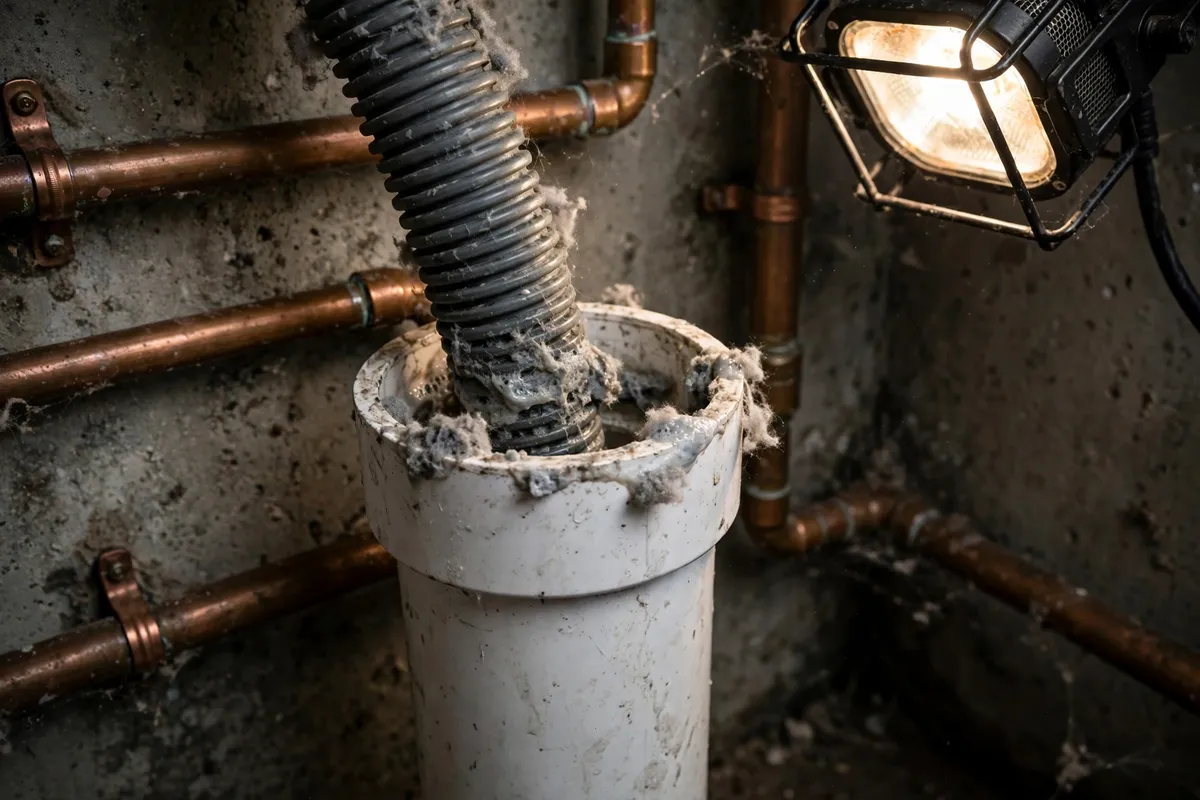
A lint trap on the end of the drain hose catches much of it before it reaches the pipe. Mesh bags sold for this job work, as does a section of old pantyhose tied over the hose end, replaced often. Check the washer filter too, usually behind a small panel at the front of the machine, and clean it on the schedule in the manual. A full filter sends more lint downstream. Pull the hose out now and then and look inside the pipe opening: what you see there previews the pipe further down.
The Standpipe Problem in Older Newark Homes
Many Newark homes were built when washers pumped less water, slower. The standpipe in a 1960s or 1970s laundry room is often a narrower pipe than a modern machine wants, and the opening may sit lower than the washer manufacturer recommends. A typical standpipe is 18 to 30 inches above the trap; one that is too short lets the pump push water straight out. A pipe that is too narrow cannot accept the burst at all. Both look exactly like a clog, and neither is fixed by snaking alone.
The hose position matters just as much. The drain hose should drop into the standpipe far enough to stay put, but not so far that it seals the opening or reaches down into standing water. A hose shoved to the bottom can siphon water back, and a hose taped airtight removes the air gap the drain needs. Leave the top of the standpipe open around the hose, keep the hose end above the trap water level, and make sure the hose is not kinked behind the machine. Homes around Brookside and Pike Creek, where laundry rooms were added to basements and garages long after the house was built, see this pattern often: the standpipe was sized for the machine of the day.
When the Problem Is Deeper Than the Laundry Room
An overflow that survives the lint check and the hose check points deeper. The laundry branch line may be partly blocked by years of lint and soap, or the main line may be restricted by roots, scale, or a sagging section. The tell is what else happens: if the kitchen sink gurgles when the washer drains, if the basement floor drain bubbles during the drain cycle, or if several fixtures slow down at once, the restriction is not in the laundry room. It is downstream, and the washer exposes it first because it discharges the most water fastest.
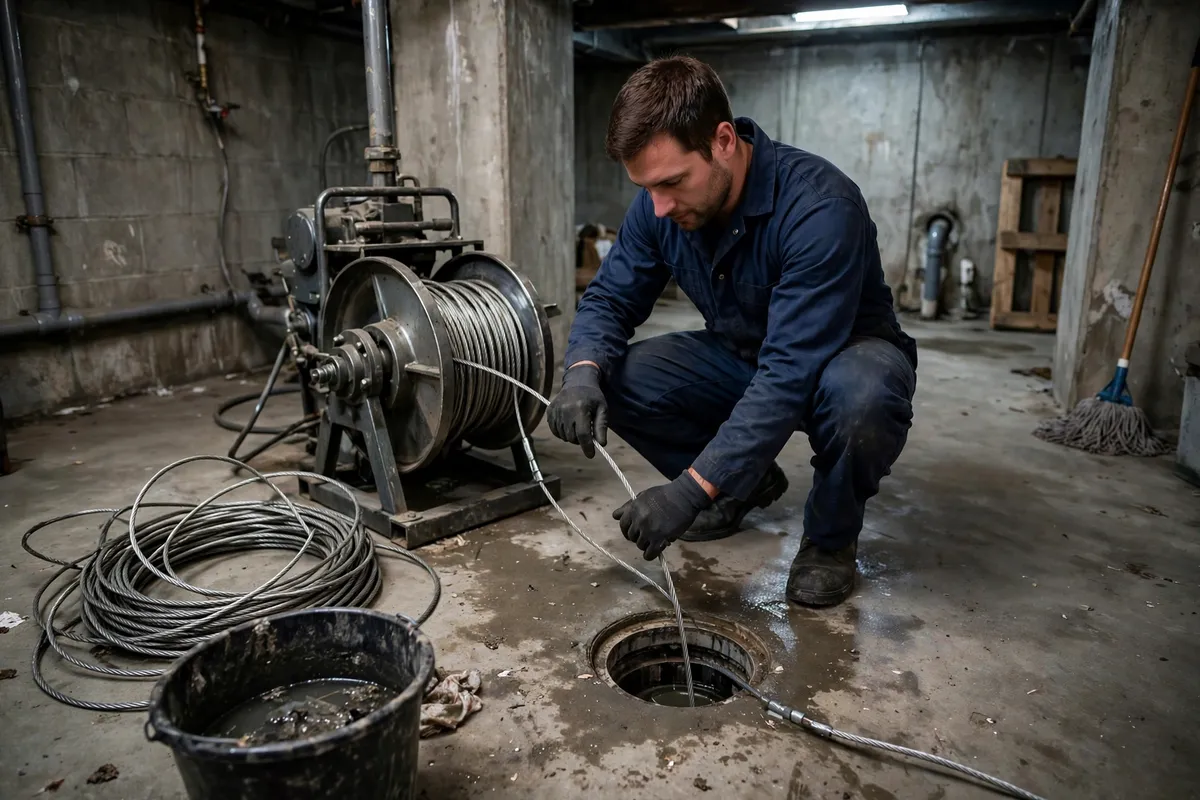
In older cast iron lines, the pipe interior roughens with age, and lint and soap catch on it until the opening is a fraction of what it was. Cast iron pipe descaling restores the opening without replacing the line. Roots do the same from outside, entering cracked joints and packing the line with fine roots that catch what the washer sends down. A sewer camera inspection shows which one it is; main line vs branch line clogs explains how to read the signs first. If several fixtures back up together, read multiple clogged drains before assuming the washer is at fault.
What Snaking and Jetting Can Actually Fix
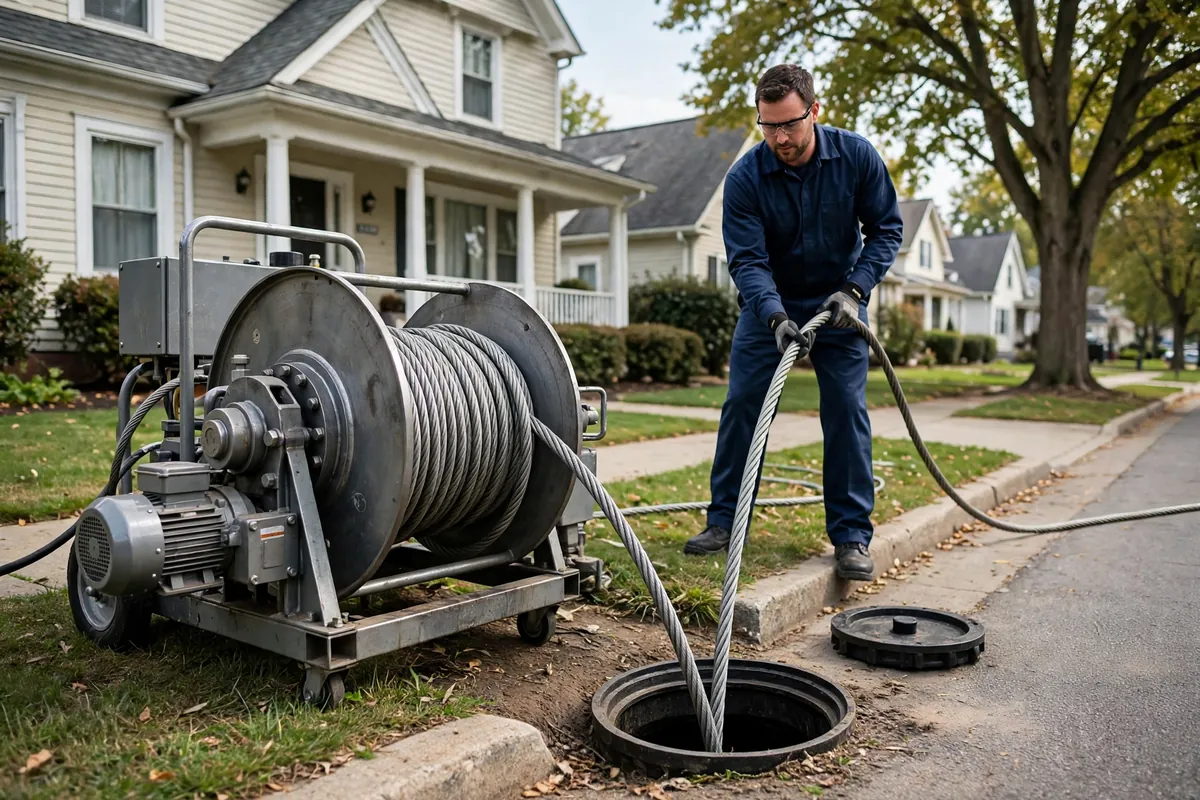
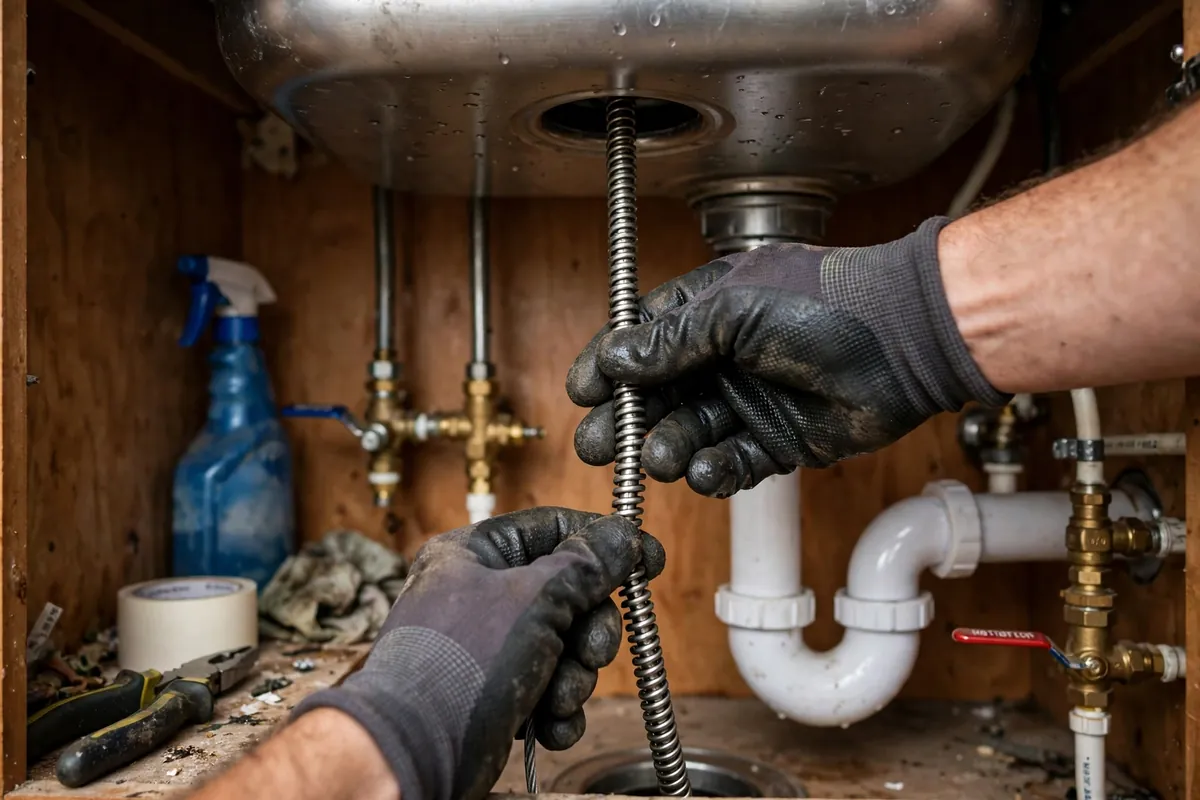
A drain cable clears a lint and soap plug in the branch line. The cable breaks up the packed material and pulls it back, restoring the opening so the next load drains at full speed. It suits a plug in one spot in an otherwise sound pipe, not a pipe narrowed along its length by scale, or a standpipe that is simply too small. Snaking a too-small standpipe clears nothing, because the restriction is the pipe itself.
Hydro jetting scours the full pipe wall, which matters when soap and lint coat the whole line rather than plugging one spot. The jetter strips buildup back to the pipe surface, and a camera pass afterward confirms the line is clear. See hydro jetting vs drain snaking for which one fits a laundry line versus a main line. Neither tool replaces a standpipe fix: if the pipe is undersized or too short, the lasting repair is a new standpipe sized for the machine. Do not pour chemical drain cleaner into a laundry drain: it rarely clears lint, it can damage pump seals if it backs up, and it makes the next visit harder. Read how chemical drain cleaners damage pipes before reaching for a bottle.
The Laundry Overflow Checklist
Run through this list before you call. The answers tell a pro where to start.
- Detergent dose checked. Use the amount the manual recommends, and high efficiency detergent in a high efficiency machine.
- Lint trap fitted. A mesh trap on the hose end, emptied after every few loads.
- Hose position checked. Hose drops into the standpipe without sealing it, not kinked, not pushed to the bottom.
- Standpipe inspected. Look inside for lint and soap buildup, and check the height against the manual.
- Other fixtures watched. Note whether sinks gurgle, toilets bubble, or floor drains rise when the washer pumps out.
- Pattern noted. Large loads only, hot washes only, or every load? The pattern points to the cause.
Homes near Glasgow and Bear, where long branch lines run to a laundry room far from the main, need the other-fixtures check most: a long branch gives lint more pipe to coat. Older homes near the University of Delaware campus face short runs into aging cast iron mains. Either way, the checklist holds, and the overflow that follows a heavy rain with a rising floor drain is a different problem: why a basement floor drain backs up during heavy rain.
When a Laundry Overflow Needs a Pro
Most laundry overflows are homeowner checks plus one professional visit. Call a pro when the overflow keeps coming back after the lint, hose, and detergent checks, when other fixtures slow down or gurgle during the drain cycle, when sewage odor comes from any drain, or when water appears in the basement during laundry. Each one points past the laundry room, and each load makes the buildup worse.
If sewage is involved, stop using water in the house and read what to do first for a sewage backup before anything else. Express Drain Rescue clears laundry drains, branch lines, and main lines across Newark, with camera inspection to find the restriction before any digging starts. When you call, say which loads overflow, what the hose and standpipe look like, and whether other fixtures are affected. The same lesson applies to a shower drain that keeps clogging after snaking: why a shower drain keeps clogging even after snaking.
A washer that overflows is telling you the drain cannot keep up. Listen the first time, and the fix is usually a lint trap, a hose adjustment, or one cable run.