You run the washing machine, and the toilet in the hall bathroom starts gurgling. Or you flush upstairs, and the shower downstairs fills with gray water. Or maybe it is simpler: the kitchen sink drains slow, everything else works fine, and you are wondering whether the whole house is about to back up. The answer is in the pattern. Which fixtures are misbehaving tells you where the clog is sitting, and it decides what fixes it.
Every drain in your house is either a branch or part of the main. A branch line serves one fixture, or one small group close together, like a bathroom sink and its shower. The main line is the big shared pipe every branch feeds into, carrying everything out to the city sewer under the street. A clog in a branch affects only what drains into it. A clog in the main affects everything upstream of it, which is usually everything.
How Your Newark Home's Drains Are Plumbed
Most Newark homes, especially the capes, ranches, and split-levels built from the 1950s through the 1970s in Brookside, Fairfield, Nottingham Green, and Oaklands, were plumbed the same way. Each bathroom and the kitchen has its own branch lines, usually two-inch pipe, that join the main stack and sewer lateral running under the front yard to the street. Older homes often still have cast-iron branches and a clay or cast-iron lateral, and both age the same way: the inside narrows with scale and corrosion, and the joints give tree roots a way in. Newer homes in Pike Creek and Todd Estates mostly run PVC, which stays smoother longer, but the layout is the same.
The lowest fixture matters most, because it is the first place a main line backup shows itself: usually a basement floor drain, a laundry tub, or a first-floor shower. When the main is blocked, wastewater comes back up through the lowest opening it can find, which is why a main line problem so often announces itself in the basement, even when the clog sits forty feet away under the front lawn.
The Branch Line Test: One Fixture, One Problem
A branch line clog is a local problem. The kitchen sink drains slow but the bathroom sink is fine. The upstairs shower pools around your feet, but the toilet next to it flushes normally. That is one branch, one clog, and the fix usually stays at that fixture.
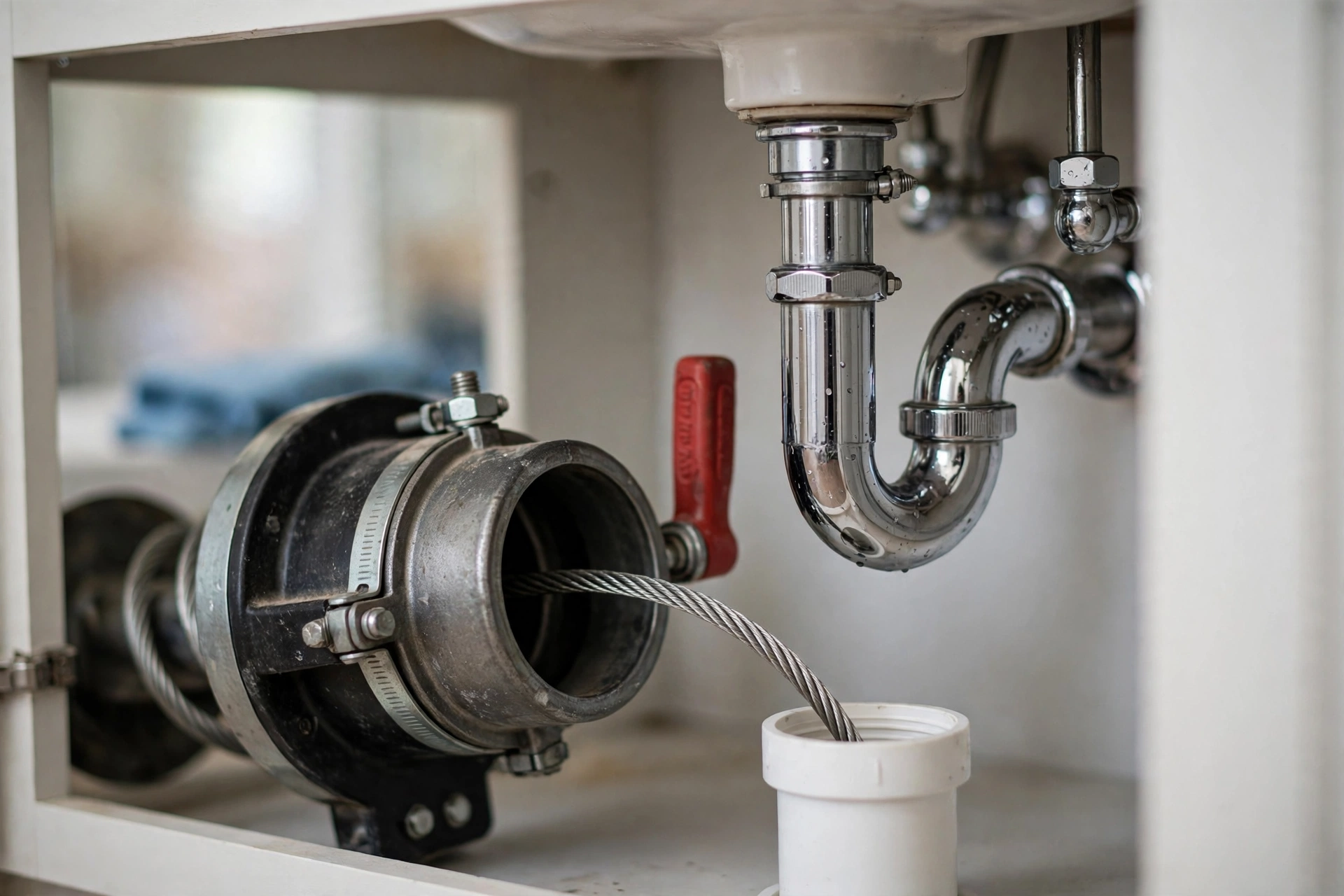
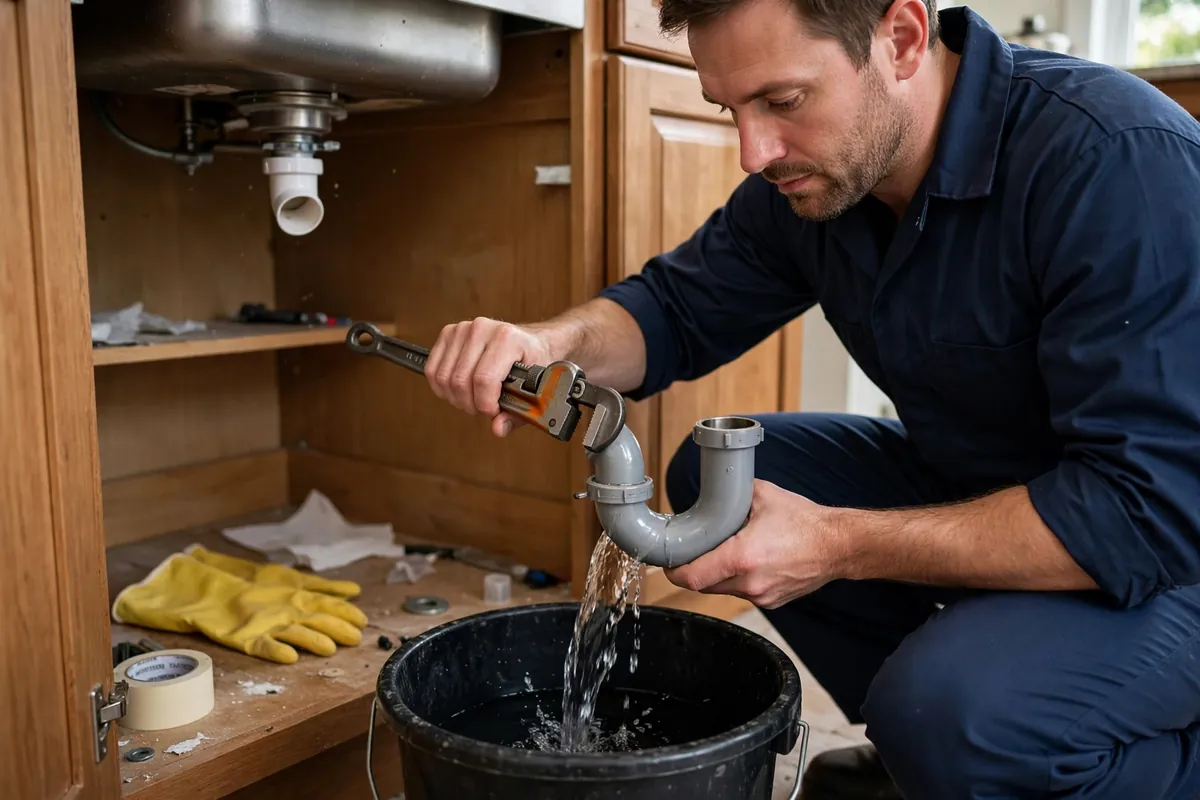
Branch clogs have local causes, too. Kitchen branches collect grease and food scraps. Bathroom branches collect hair and soap scum. A laundry branch collects lint and detergent residue. The clog sits close to the fixture, often in the trap or the first few feet of pipe, and a hand snake or a small machine cable fed through that drain can usually reach it. Our guide to why drains go slow runs through the usual suspects, and the post on why a shower drain keeps clogging after snaking shows what happens when buildup coats the pipe walls instead of sitting in one spot.
The Main Line Test: Several Fixtures, One Shared Cause
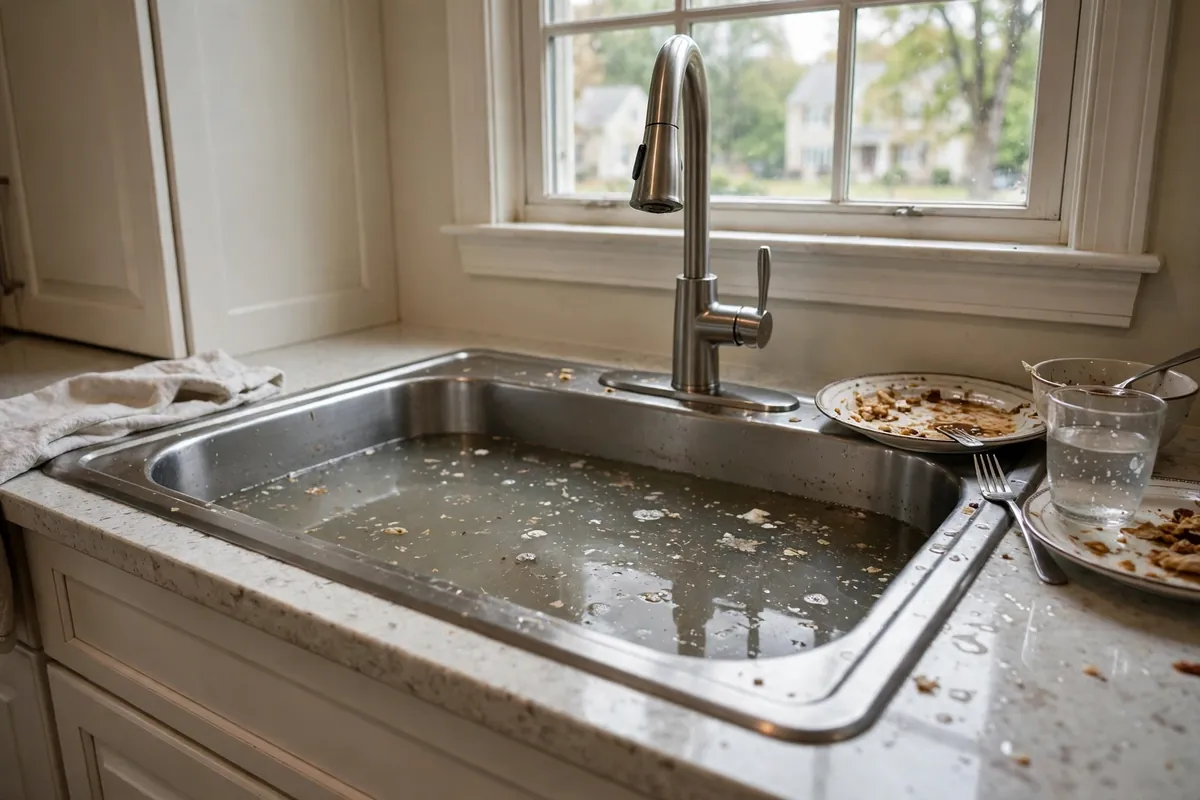
A main line clog is a house-wide problem, and it shows up as a pattern across fixtures that have nothing to do with each other. The kitchen sink and the upstairs toilet go slow on the same day. The shower backs up when the washing machine drains. Water appears in the basement floor drain after a shower upstairs. Different rooms, different fixtures, same bad day. That is the main line talking.
The rule of thumb is simple: two or more fixtures on different branches, acting up at the same time, means the clog is downstream of where their branches join. Since every branch eventually joins the main, that usually means the main. If only the upstairs fixtures are slow, the clog may be in the main stack inside the house. If everything including the basement is affected, the clog is usually in the lateral outside, between the house and the street.
Gurgling gives it away. When a main line is partly blocked, air trapped ahead of the water pushes back up through the nearest trap, so a toilet bubbles when the washer drains, or a sink gurgles when a toilet flushes two rooms away. The fixtures are not broken. They are venting air that cannot get past the clog. Our post on why a sink gurgles when the toilet flushes explains the air side of it, and the multiple clogged drains page covers what to do when several drains fail together.
The Flush Test You Can Run in Five Minutes
You do not need tools to narrow this down. Run the test in this order, and watch the lowest fixture in the house, usually the basement floor drain or the first-floor tub.
- Flush the toilet nearest the street side of the house, then watch the lowest drain. If water rises or bubbles there, the main is restricted.
- Run the washing machine through a drain cycle. A washer dumps a lot of water fast, and it will find a main line restriction before a sink ever does.
- Fill the kitchen sink and the bathroom sink, then pull both plugs at once. If one backs up into the other, or the tub gurgles, the shared line is the problem.
What Usually Clogs Each One in Newark
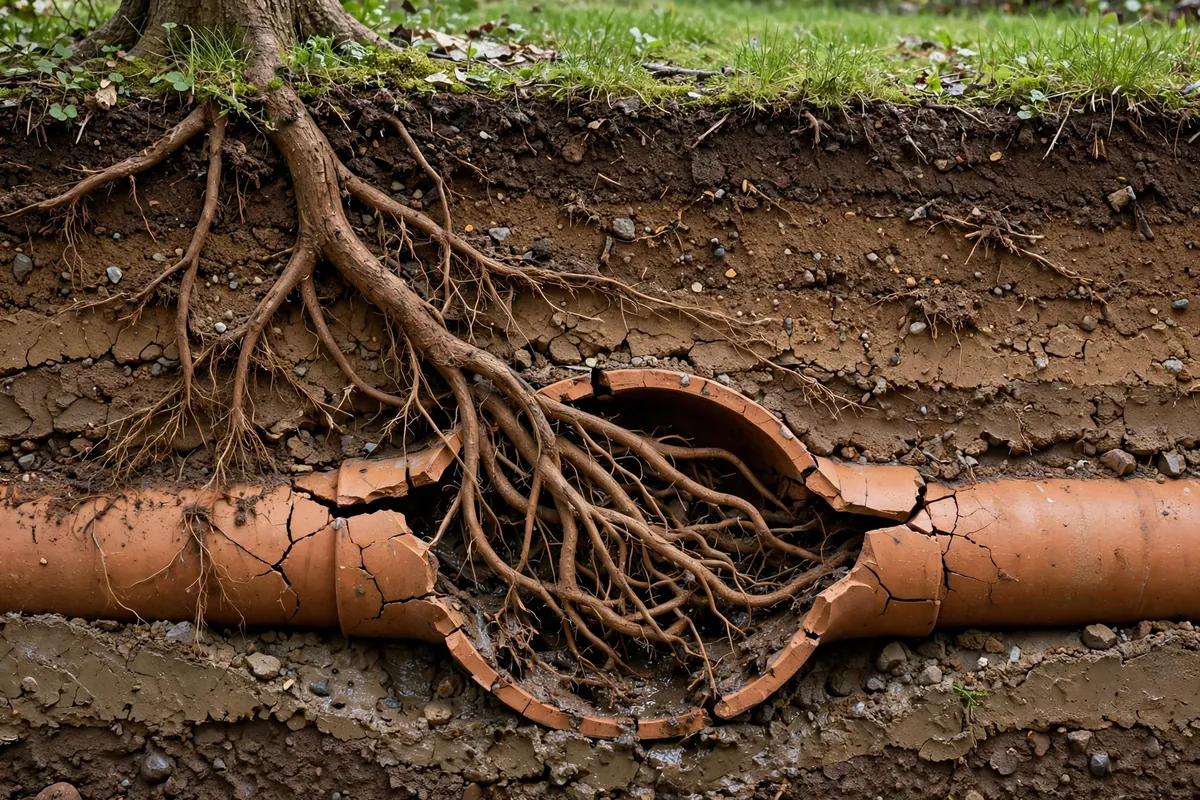
Branch lines clog on what goes down that one drain: grease in the kitchen, hair in the shower, wipes and too much paper in a toilet branch. Main lines clog on what the whole house sends down together, plus what gets in from outside. In Newark that usually means tree roots. The city has plenty of mature maples and oaks whose roots hunt for the moisture in a sewer lateral. Clay pipe joints, common in pre-1970s laterals, let fine roots in, and the roots grow into a mat that catches everything else. Cast-iron laterals scale and narrow, and a sagging section, called a belly, lets waste settle and build up at the same spot every time.
Heavy rain makes main line trouble worse: groundwater seeps into cracked laterals and adds volume the line cannot carry, so a partial clog becomes a backup. Our post on why a basement floor drain backs up in heavy rain covers the rain side in detail.
When Snaking the Main Is the Call
Snaking the main is the call when more than one fixture is affected, when the flush test pushes water up through the lowest drain, or when a branch snake clears one drain and another one slows down the same day. That last one is the classic trap: you clear the kitchen branch, and the real blockage downstream shows itself somewhere else. Snaking branches one at a time while the main is blocked feels like progress, and nothing changes.
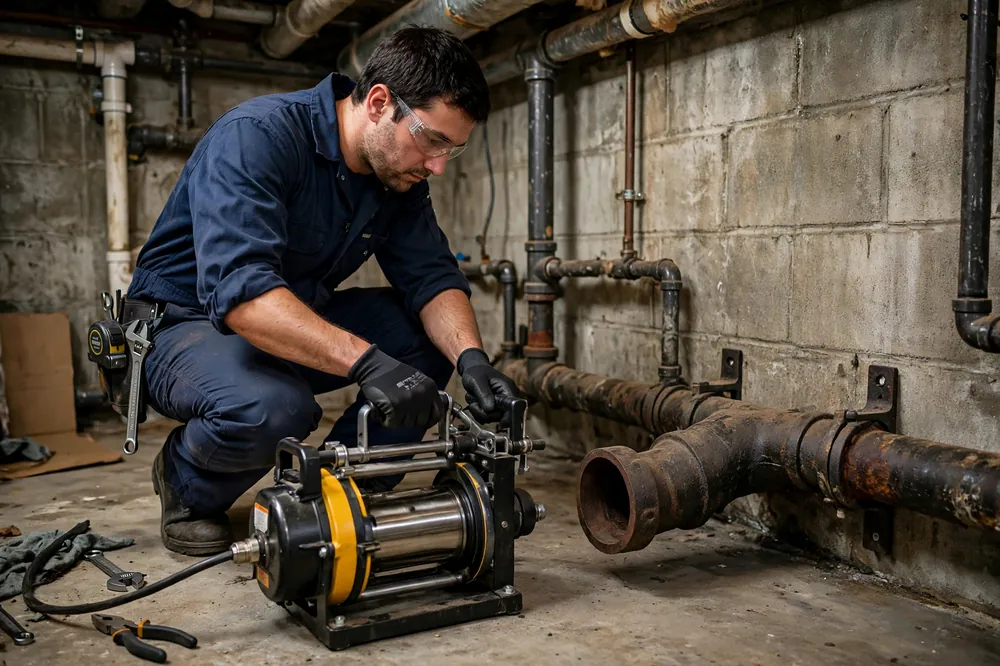
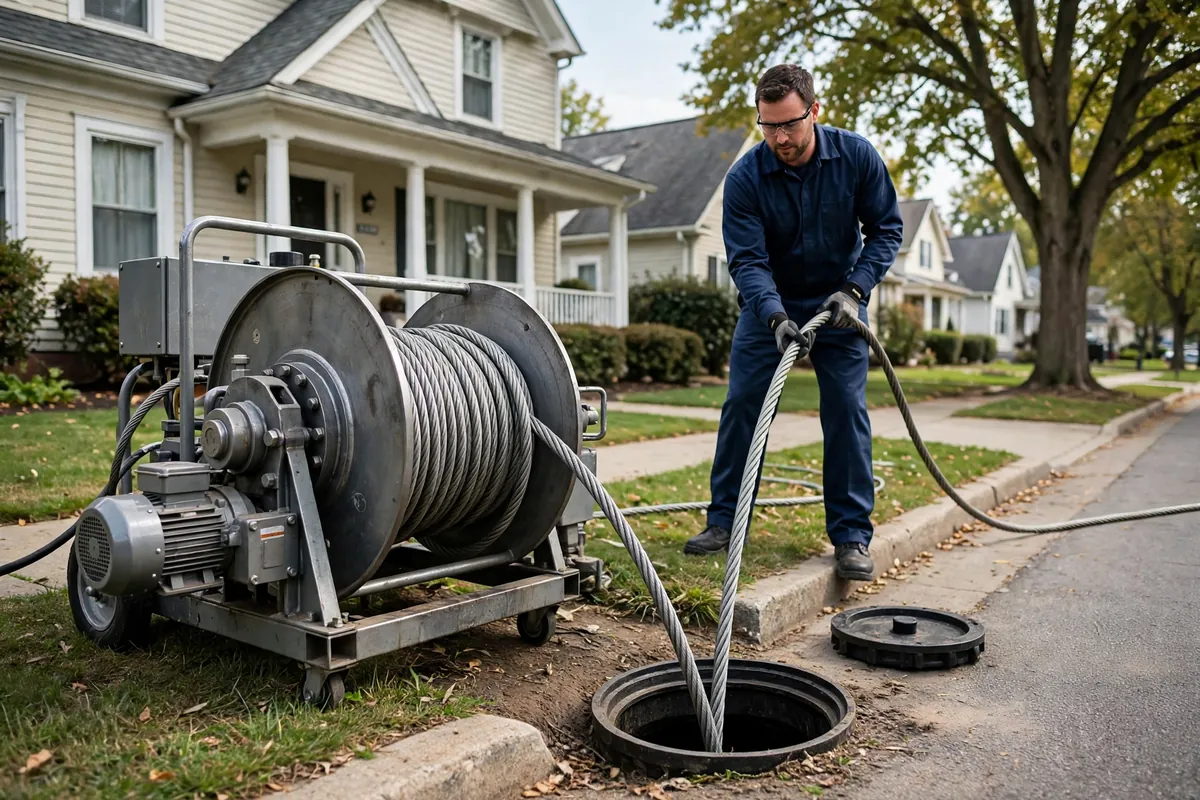
A main line snaking runs a longer, heavier cable through the main cleanout, all the way to the street if needed, and it clears the full line rather than one branch. For root mats and heavy scale, that is often followed by hydro jetting, which scours the pipe walls clean instead of just punching a hole through the clog. Our comparison of hydro jetting vs drain snaking lays out which one fits which clog, and the main sewer line clog removal page covers how the main line job itself works. If the cable keeps hitting the same spot, or the clog comes back within weeks, a sewer camera inspection shows exactly what is in the pipe, so the fix matches the cause.
What Not to Do While You Figure It Out
Do not keep running water to test a suspected main line clog: every gallon has to go somewhere, and with the main blocked, somewhere is the lowest drain in the house. Hold off on laundry and long showers until you know. Do not pour chemical cleaner down a main line, either. It can damage the pipe without ever reaching the blockage. And do not snake the main yourself with a rental machine unless you have done it before: a stuck cable is a bigger job than the clog was.
If sewage is coming up through any drain, stop using water, keep clear of the backup, and call. Our guide on what to do first during a sewage backup walks through the first hour step by step.
Most clogs turn out to be branch line trouble, and that is good news: one fixture, one fix, done. But when the pattern points to the main, say so early. Tell the plumber which fixtures are affected, what the flush test showed, and which drain sits lowest in the house. That is the whole diagnosis in three sentences. That pattern holds from Brookside to Pike Creek: the fixtures have been telling the story all along.