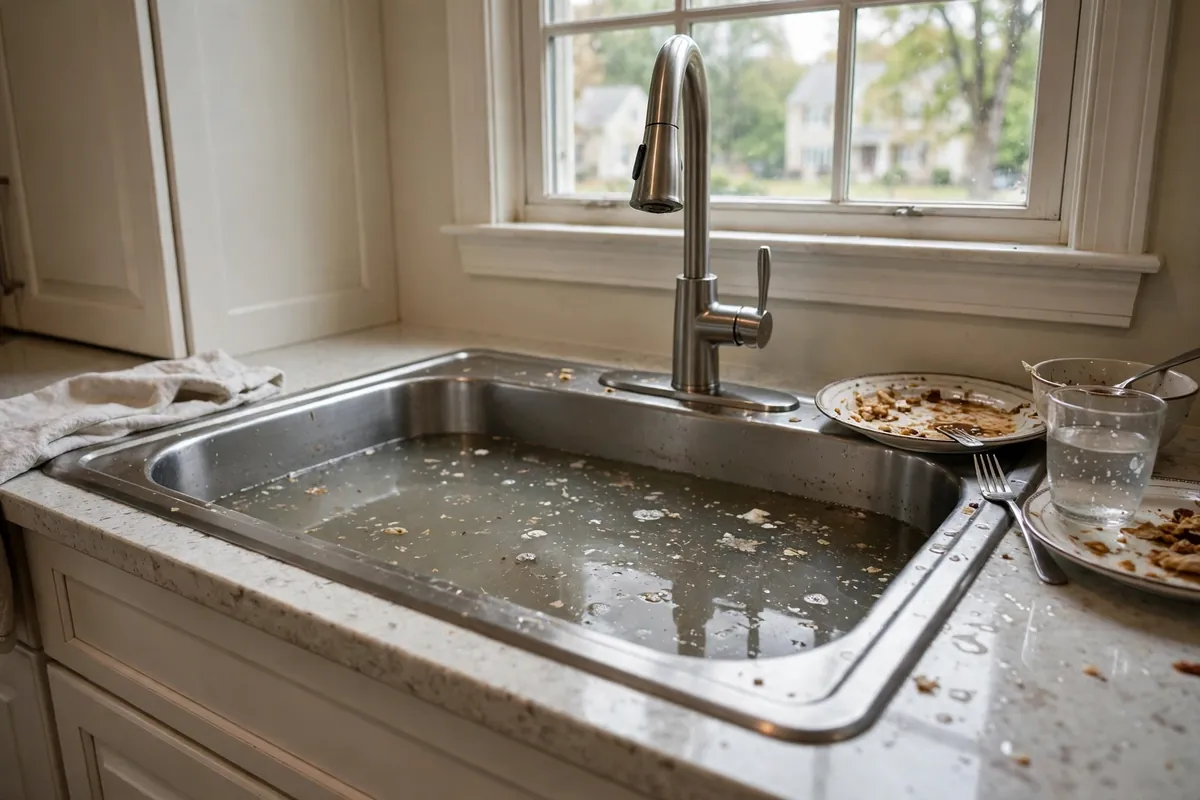
You step into the shower, turn on the water, and within a minute you are standing in a puddle that reaches your ankles. You had this drain snaked a month ago. Maybe two weeks ago. The plumber, or you, ran the cable, the water drained, and everyone declared victory. Then the puddle came back, right on schedule.
A shower drain that keeps clogging after snaking is not bad luck, and it is not a mystery. Snaking is a good tool used on the wrong problem. It clears a path through a clog. It does not clean the pipe. And in a shower drain, the pipe itself is the problem: hair and soap scum coat the walls, and every snaking leaves that coating exactly where it was. Here is what is really going on, and what fixes it for good.
What Snaking Actually Clears (and What It Leaves Behind)
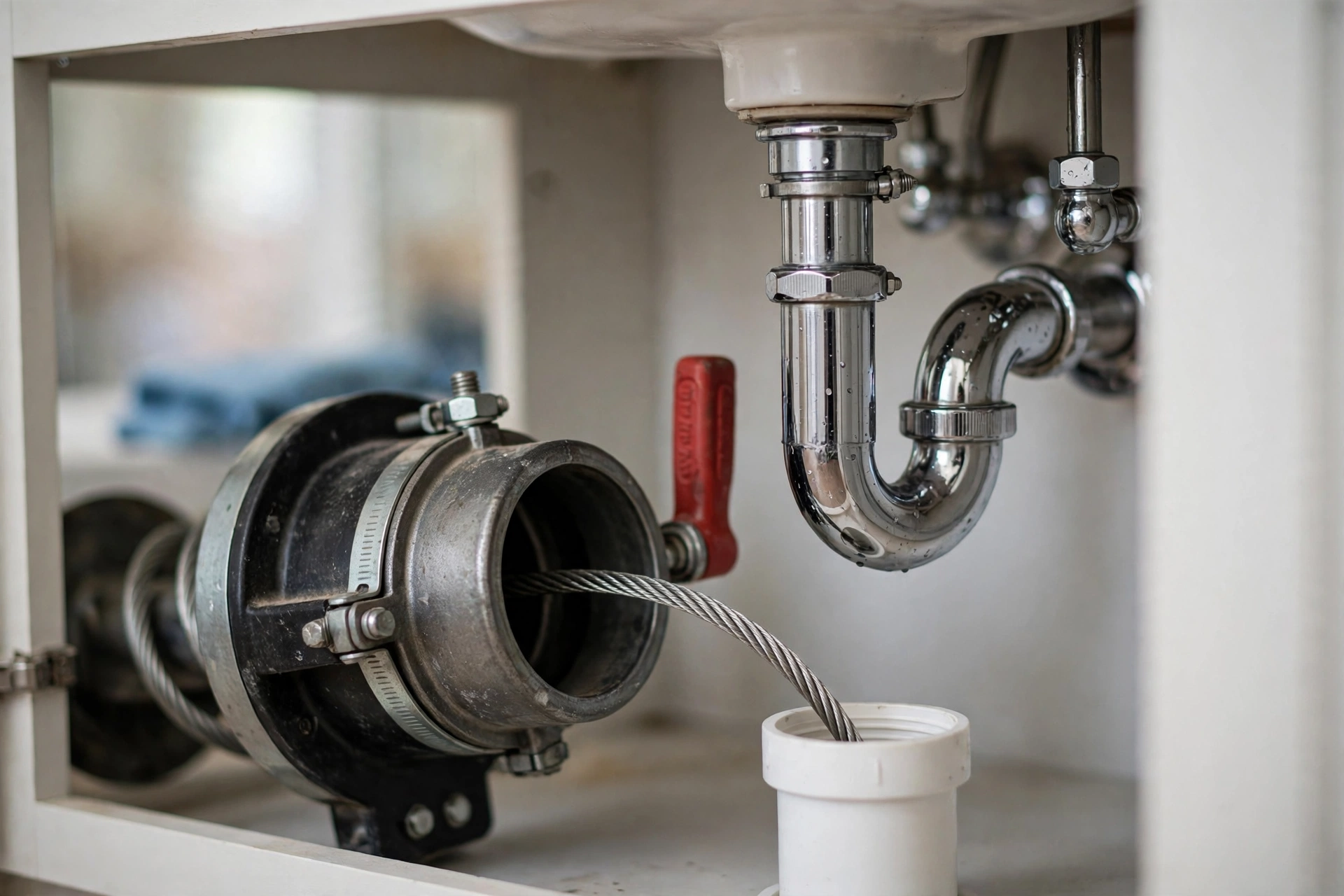
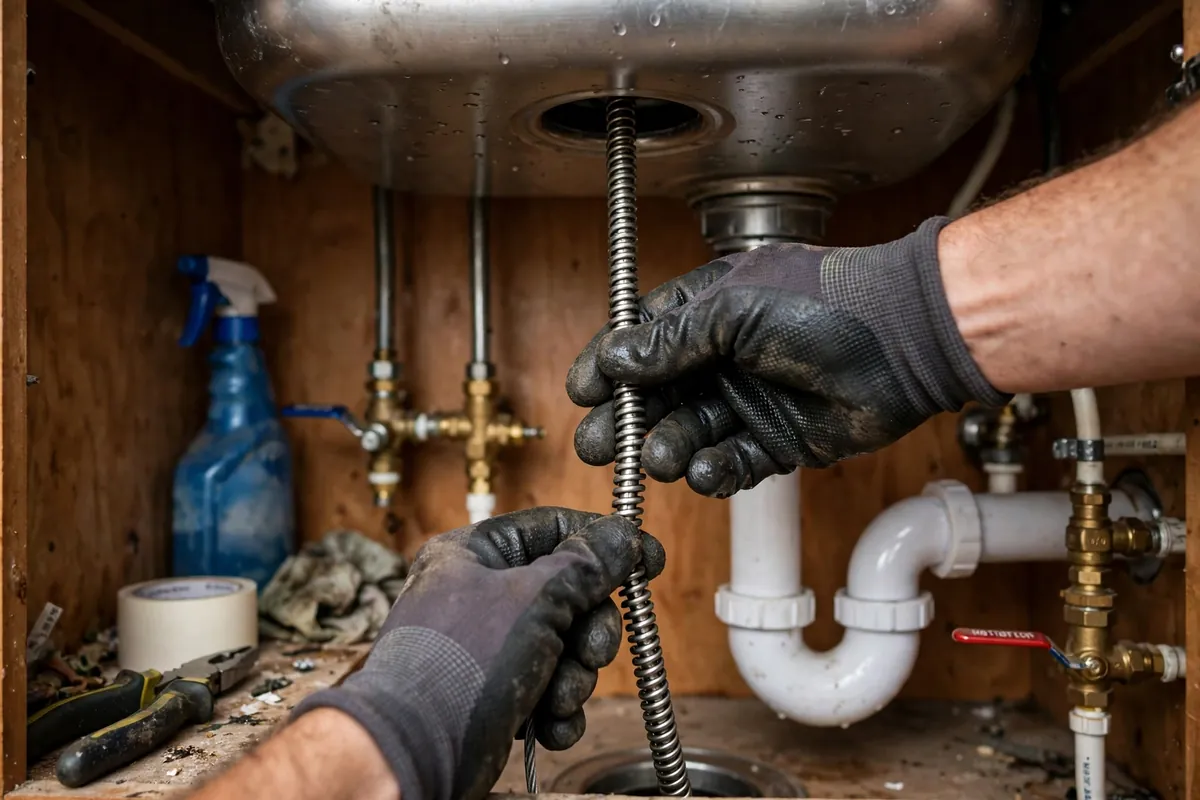
A drain snake is a flexible steel cable with a cutting head that spins as it feeds through the pipe. As it turns, the head bores a hole through the blockage and lets water flow again. That hole is the whole victory, and it is a small one. The cable is thinner than the pipe, so it clears a channel down the middle while the walls stay coated.
Think of it like drilling a hole through a donut. Water flows through the hole, so the drain works. But the donut is still there, lining the walls, and the next thing that comes down the drain sticks to it. In a kitchen line, that leftover coating is grease and biofilm. In a shower line, it is hair and soap scum, and it rebuilds faster than grease does, because every single shower adds to it.
This is why the clog always comes back on a schedule. The first snaking buys you a few weeks. The second buys you less, because the coating is thicker now. By the third visit, the drain is clogging every couple of weeks, and the snake is just mowing the same lawn. If that sounds familiar, the snake is not failing. It is doing exactly what a snake does, and what your drain needs is a different tool. Our comparison of hydro jetting vs drain snaking breaks down when each one makes sense.
Hair and Soap Scum: The Mat That Grows Back
Every shower sends hair down the drain. Long hair, short hair, pet hair from a dog wash, all of it. The first strands catch on the drain crossbars or the trap, and they stay there. Soap scum, the sticky film left when soap meets hard water, coats those strands like glue. The next shower's hair sticks to the scum, the scum sticks to the hair, and a mat forms that grows a little with every use.
That mat is the real clog, and it lives close to the surface, in the trap and the first few feet of pipe. A snake can punch through it, but the mat is fibrous and springy, so it closes back around the hole once the cable is pulled out. This is also why chemical cleaners do not help here. They dissolve a narrow channel through the middle, same as the snake, and they leave the mat intact. Worse, they can damage the pipes themselves, as our guide on why chemical drain cleaners damage pipes explains.
The fix at this level is unglamorous: a drain cover that catches hair before it goes down, and cleaning that cover every week. A simple drain strainer prevents most shower clogs outright. But if the mat has already formed past the trap, a strainer will not remove it. That takes a cleaning that reaches the walls.
The Real Culprits Further Down the Line
Sometimes the problem is not in the trap at all. If your shower was snaked properly and still clogs, the restriction may sit further down, where a hand snake never reaches. Soap scum and hair can coat ten or fifteen feet of pipe, narrowing it gradually until even a normal shower overwhelms it. Mineral scale does the same thing in older lines, roughening the pipe interior so debris catches instead of sliding through.
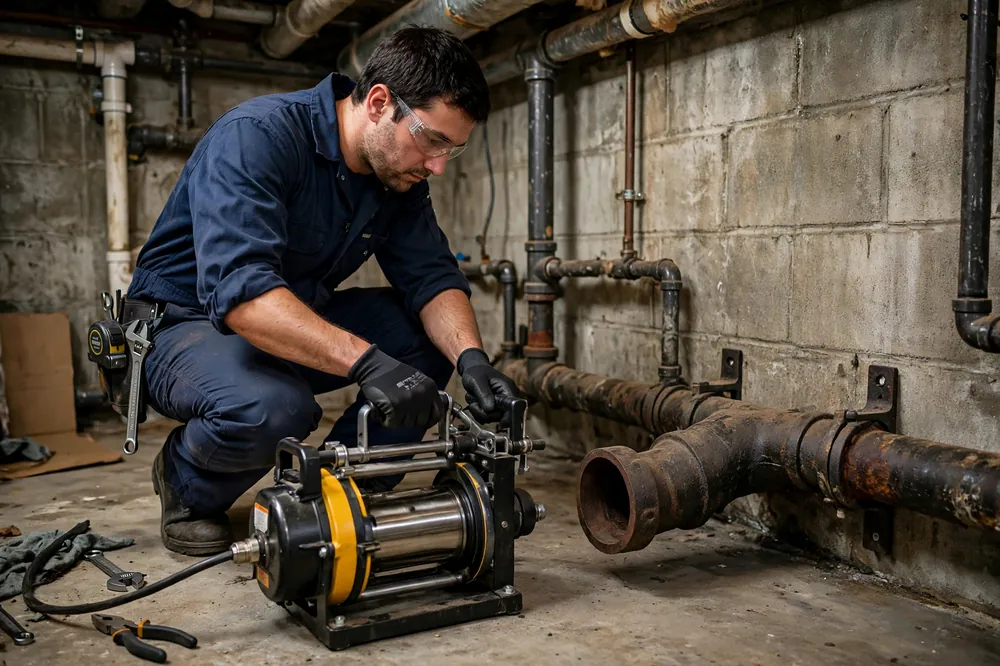
Newark's older homes add their own wrinkle. Many houses in the city still run original cast-iron drain lines, and the rough, corroded interior of aging cast iron grabs hair and scum far more aggressively than smooth PVC. A cast-iron shower line can carry twice the buildup of a plastic one the same age, which is why the clog returns faster in pre-1970s houses. Our guide to cast iron pipe problems in older homes covers what to watch for.
Then there are the structural causes. A belly, a low spot where the pipe sags, lets water pool and debris settle, so the line clogs at the same place every time. A venting problem can slow the drain enough that hair settles instead of flushing through. And if several fixtures are slow at once, the problem is not your shower at all: it is the main line, and snaking one branch will never fix it. Why your drains are slow walks through the seven most common causes, and a sewer camera inspection settles the question in minutes by showing the inside of the pipe on video.
Why Newark's Older Homes Clog Faster
Newark has a lot of housing stock from the 1950s through the 1970s, and those homes share a plumbing profile: cast-iron stacks, galvanized branch lines, and shower drains that have seen fifty years of hair and soap. The pipes were fine when they were new. Decades of scale and corrosion have narrowed them, and the rough interior gives every strand of hair something to grip.
Household habits pile on. More people per bathroom means more showers per day, which means more hair and more soap scum in the same few feet of pipe. Long hair, thick hair, and frequent hair washing all speed up the mat. So does hard water, which leaves more soap scum behind with every shower. None of this is anyone's fault. It is just what happens when an older pipe meets a busy modern bathroom, and it is why the same drain can clog three times in a year while the newer bathroom down the hall never does.
The pattern is the tell. One clog is a fluke. Two clogs in a year is a warning. Three is a diagnosis: the pipe walls are coated, and the snake is only buying time. At that point, the honest move is to stop re-snaking and get the line properly cleaned and inspected.
What Fixes a Shower Drain for Good
The lasting fix has two parts: clean the walls, then keep them clean. Cleaning the walls means hydro jetting, which blasts the full circumference of the pipe with high-pressure water and strips the hair, scum, and scale off in one pass. Where snaking drills a hole, jetting pressure-washes the pipe back to its original diameter. For a shower line that has been snaked three times, jetting is usually the first thing that actually changes the outcome.
After the cleaning, a camera inspection confirms the result and checks for the structural causes: a belly, a cracked section, or a vent problem that jetting alone cannot solve. If the camera finds a belly or a break, that is a repair conversation, not a cleaning one, and it is better to have it with video in hand than to keep repeating snakings that cannot work.
Then comes the easy part. Fit a hair strainer over the shower drain and clean it weekly. Rinse the drain with hot water after long showers. And if the drain starts slowing again, do not wait for the puddle: a slow drain is the early warning, and catching it early is the difference between a quick cleaning and another round of ankle-deep showers. The snake had its chance. Give the pipe a real cleaning, and the puddle stops coming back.