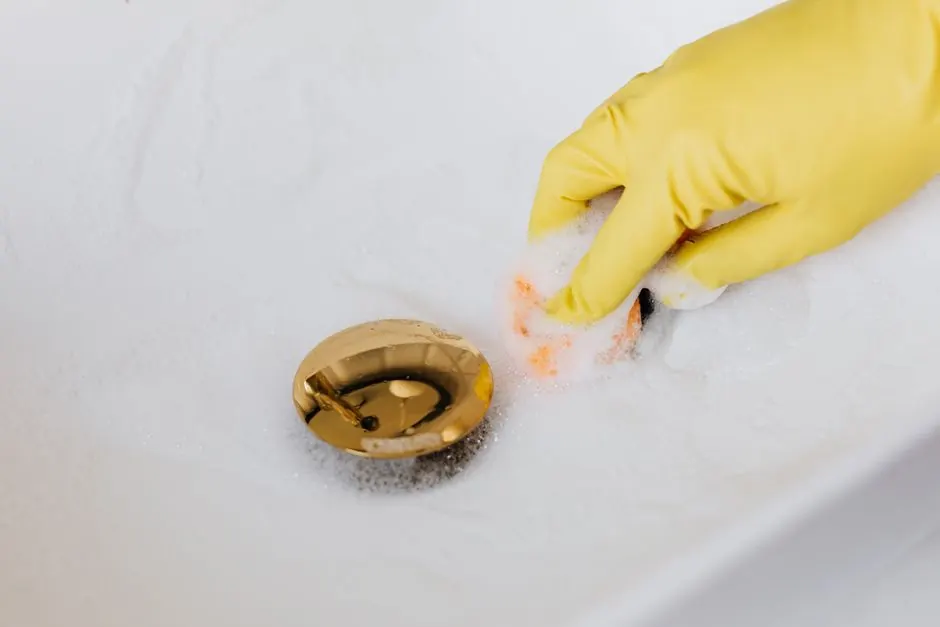
In the drain aisle at any store, every bottle promises the same thing. Pour, wait, rinse, done. No tools, no plumber, no mess.
We have pulled apart enough pipes across Newark to know the rest of the story. The label never mentions what that chemistry does to PVC, cast iron, and the joints holding your drain system together. Sometimes it works. Often the bottle leaves the clog mostly intact while quietly shortening the life of your pipes. Here is what happens inside the pipe, and what we would rather see you do instead.
How Chemical Drain Cleaners Actually Work
Most drain cleaners fall into two camps. Caustic cleaners, the thick gels built on sodium hydroxide or potassium hydroxide, attack grease and soap by generating heat. Commercial kitchens deal with grease at a different scale, using a grease trap that needs regular cleaning. Acid cleaners, usually built on sulfuric acid, dissolve organic matter and mineral scale by brute chemical force.
Both rely on the same idea: sit on the clog long enough and the chemistry eats through it. The trouble is the chemistry does not stop at the clog. It works on everything it touches on the way down: pipe walls, joints, and any metal fittings in the run.
Why Caustic Cleaners Threaten PVC Pipes
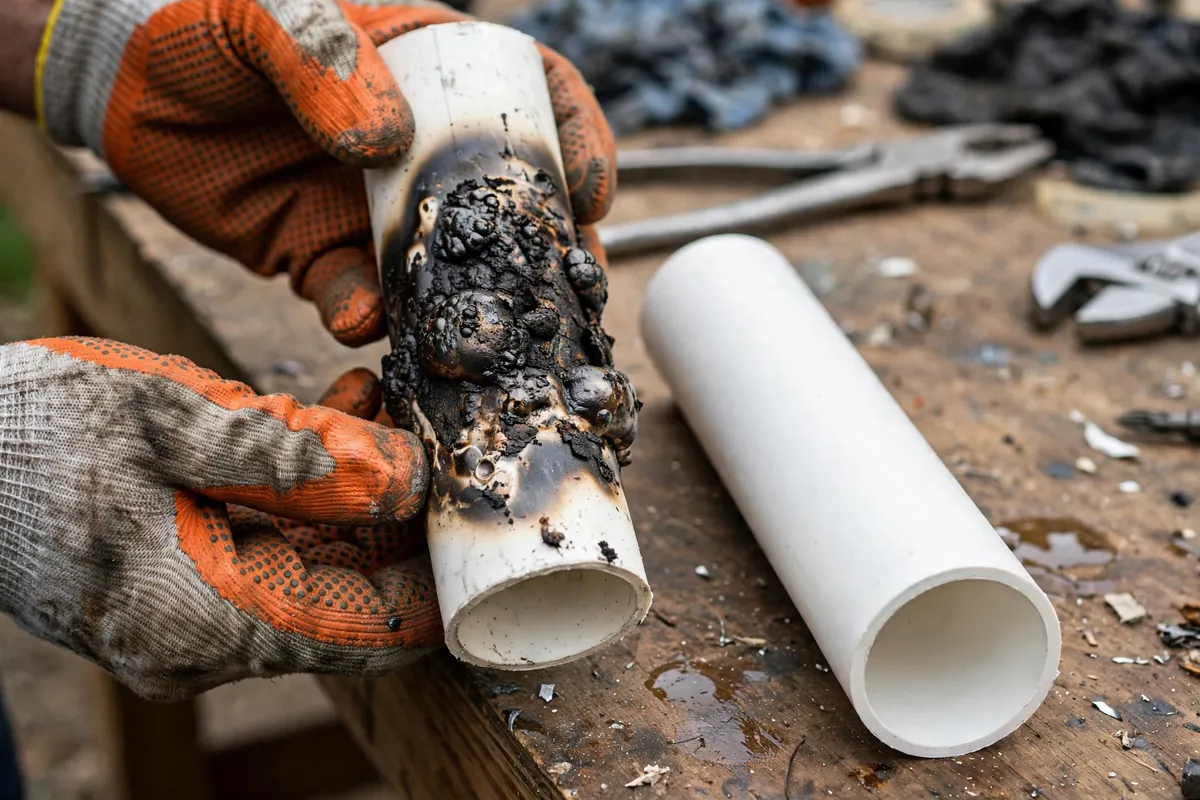
PVC handles normal hot water without complaint, but not the reaction heat of a caustic drain cleaner. When that gel reaches a clog and starts working, temperatures can climb far above what PVC is rated for. The pipe softens, and the glued joints soften first because the solvent weld is the weak point.
We have cut out PVC in Brookside and Christiana homes where the pipe had slumped, or a joint had shifted just enough to weep. That is no longer a clog. That is a pipe repair.
One use probably will not do this. Repeated use is where the damage piles up, especially in a slow-draining line that holds the chemical against the pipe wall for hours.
Why Acid Cleaners Attack Cast Iron and Metal Pipes
Many older Newark homes, around the university and through the older blocks of Bear and Pike Creek, still run on cast iron or galvanized steel. Acid cleaners treat those pipes like an extension of the clog. Sulfuric acid does not distinguish between the scale it was sold to dissolve and the metal of the pipe itself.
The result is accelerated corrosion. The inside of the pipe gets rougher, and rough pipe catches debris faster, which means more clogs and more bottles of cleaner. We have seen cast iron lines thinned to a crust at the bottom, exactly the kind of cast iron pipe problem older homes run into again and again.
Do These Cleaners Weaken Pipe Joints and Seals?
Yes, and joints usually fail before the pipe wall does. PVC systems are glued, and heat plus chemical exposure softens the solvent welds. Metal systems use rubber gaskets and couplings that caustic chemicals break down over time. Chrome trap assemblies under sinks pit and corrode when acid sits in them.
A failing joint does not always announce itself. Sometimes it is just a slow, damp stain inside a cabinet or a musty smell you cannot quite place. By the time the leak shows on the ceiling below, the damage is weeks or months old.
Why Your Clog Comes Back After Chemicals
This is the part the label skips. A chemical cleaner does not need to dissolve the whole clog, just burn a narrow channel through the middle. Water starts moving, you think the problem is solved, and the leftover ring of grease or soap scum stays glued to the pipe walls. Fresh debris catches on it immediately.
Give it a few weeks and the drain slows again. People tell us they pour cleaner in every month or two, each round doing a little more damage while leaving the underlying buildup in place. If your drains keep slowing, read up on why drains slow down and what actually clears them. A snake or a jetter physically removes the material instead of negotiating with it, so there is nothing for the next batch of grease to grab onto.
Chemical Cleaners and the Safety Risks You Don't See
Beyond the pipes, the contents of that bottle are rough on people. Splashes burn skin, and fumes irritate lungs, especially in a small bathroom with the door shut. Pouring one type of cleaner and then trying a different brand later can cause dangerous reactions if the products mix.
There is a risk for the plumber too, and it matters to you. When a drain full of chemical cleaner still will not clear, our tech works around caustic liquid sitting in the trap and the line. Always tell your plumber if you have used a chemical cleaner. It changes how we open the drain, and it keeps everyone safe.
What to Do Instead When a Drain Slows Down
Start simple. A cup plunger with the overflow sealed handles many shallow sink and tub clogs. Pull the pop-up stopper in a bathroom sink and clean the hair off it, that alone fixes a surprising number of slow drains. A kettle of water can loosen light kitchen grease, but keep boiling water away from PVC, since extreme heat softens joints too.
Skip the second bottle if the first one did not work. A drain that shrugs off chemical cleaner usually has a real blockage: a dense grease mass, a wad of hair and soap, roots, or scale. More chemistry only risks the pipe. That is the point where a call protects the pipe.
Why Professional Snaking Clears What Chemicals Can't
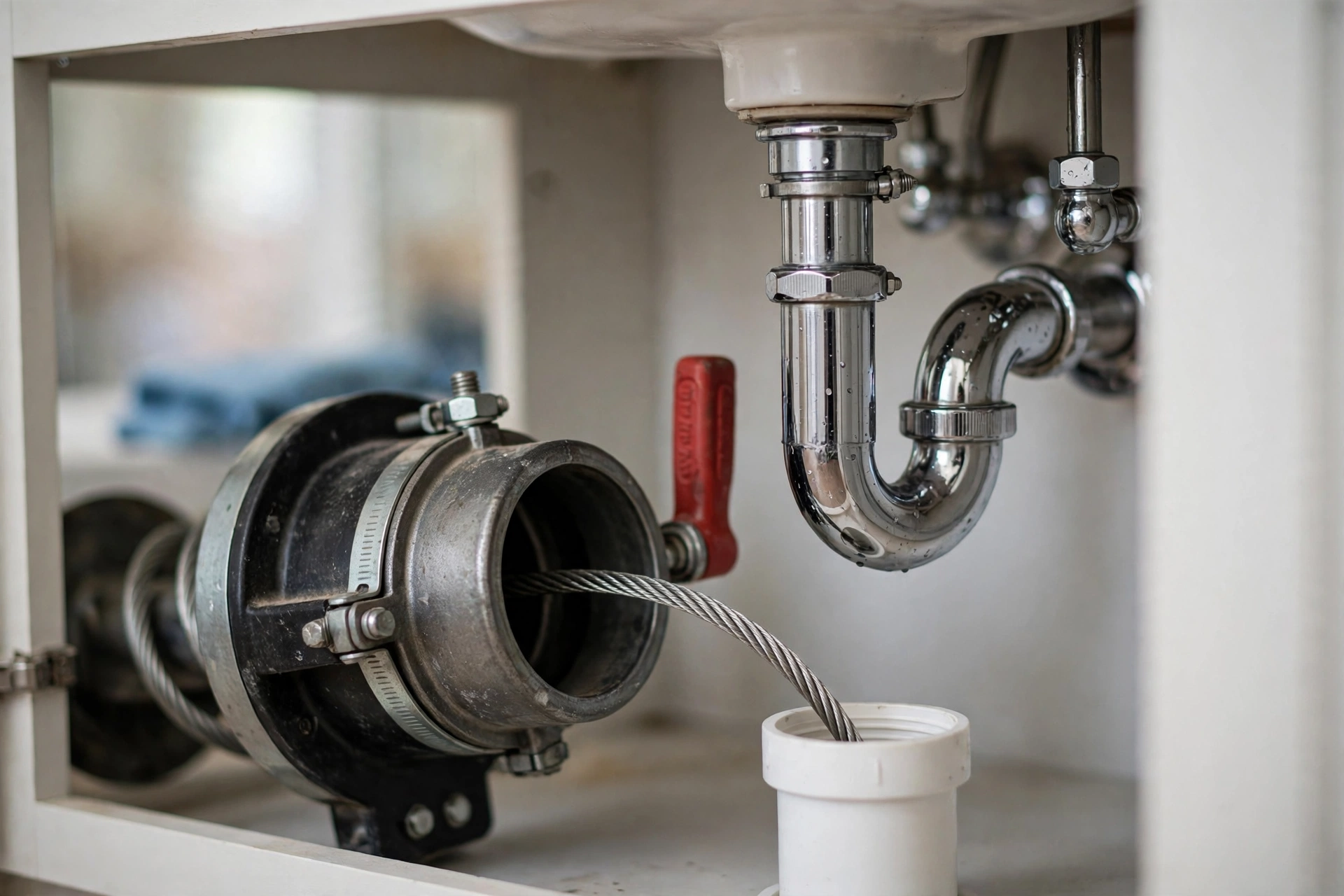
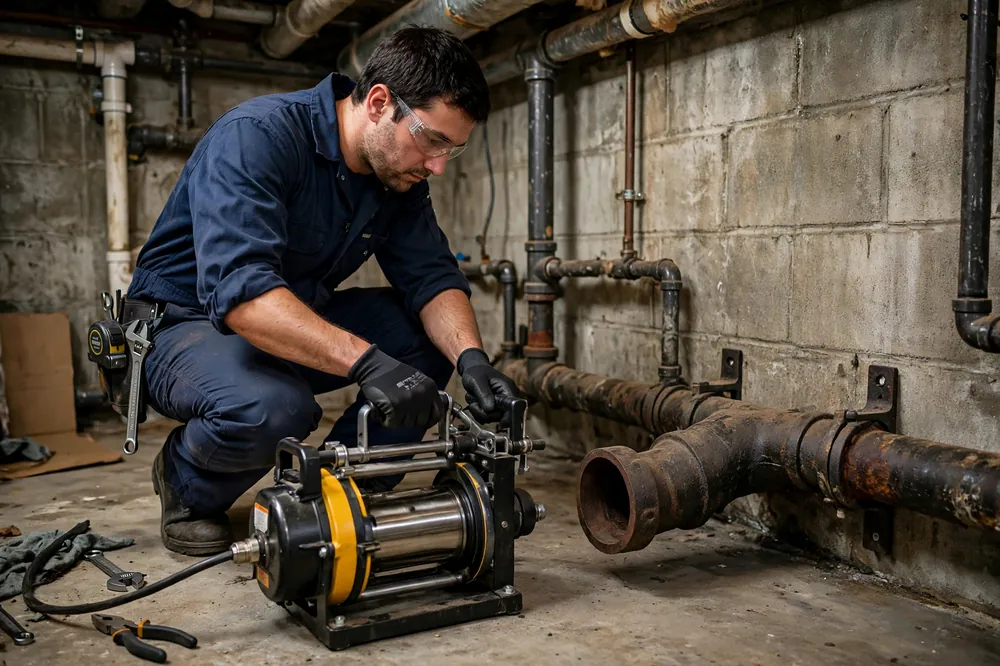
A drain snake does not dissolve anything. It reaches the clog, breaks it apart, and pulls it out. The clog leaves the pipe entirely instead of just getting a hole burned through its middle. For grease-heavy lines, hydro-jetting scours the pipe walls back to their full diameter with high-pressure water: no heat, no corrosion, nothing for the pipe to react to. If you are weighing the two methods, our comparison of hydro jetting vs drain snaking explains which clog calls for which.
People rarely expect the other benefit. A sewer camera inspection during or after the clearing shows the actual condition of your line. If the pipe is sound, you get peace of mind. If it is scaling, cracked, or bellied, you learn that before it becomes an emergency. No bottle gives you that.
The Bottom Line for Newark Homeowners
A bottle of drain cleaner is easy to buy and easy to pour. But we have replaced enough damaged pipe to say it plainly: the chemistry that clears a clog also attacks the pipe it sits in. PVC softens, joints weaken, cast iron corrodes, and the clog usually comes back.
If your drain is slowing down, call Express Drain Rescue at (302) 412-8659. We will find the real blockage, clear it out completely, and leave your pipes in better shape than we found them. That is the fix that actually lasts.