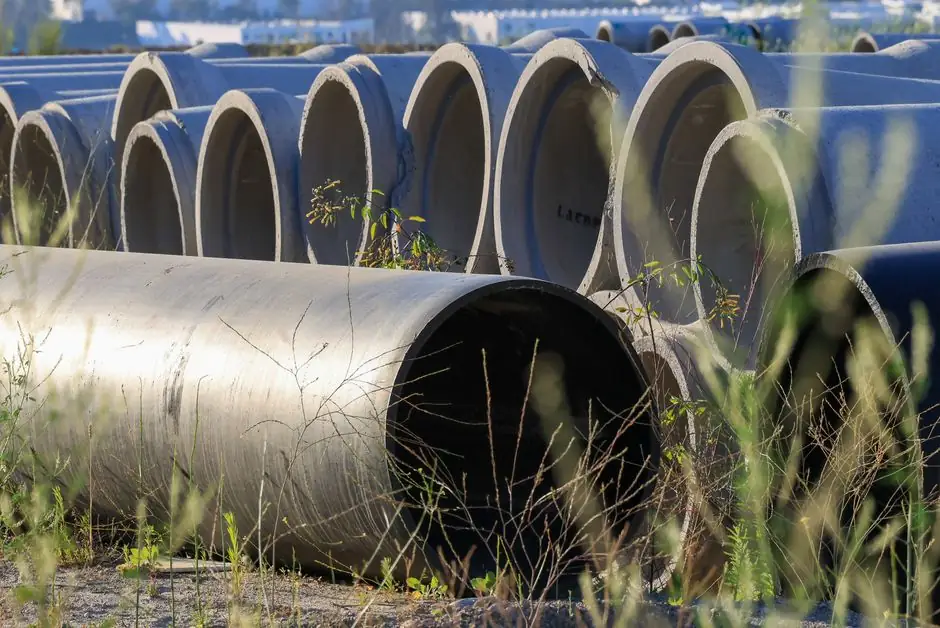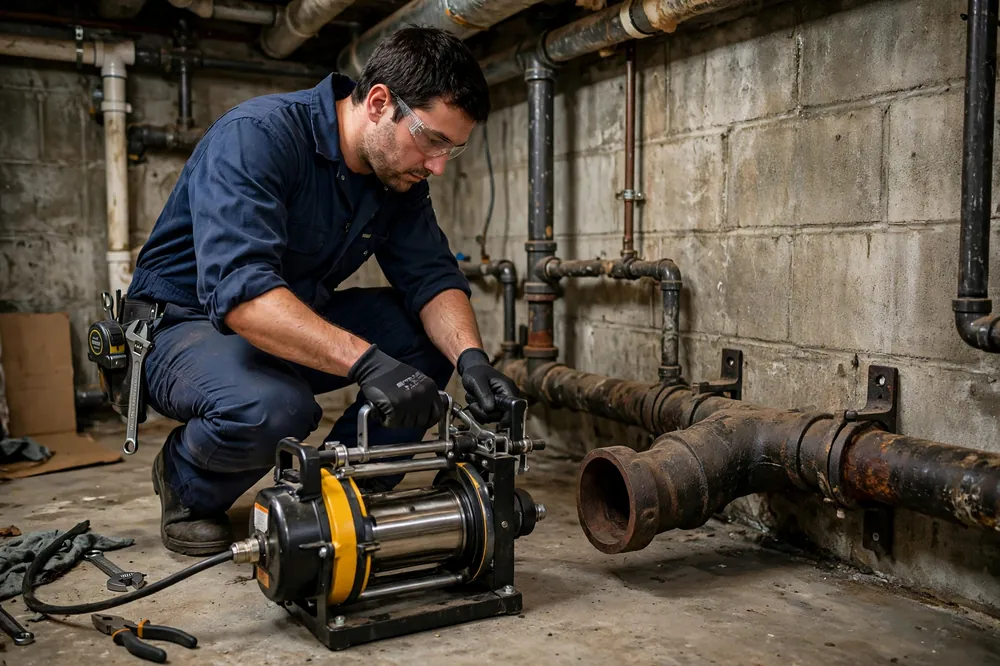
Walk into the basement of a Newark or New Castle home built in the 1950s or 60s and look up: chances are good you will see dark, heavy drain pipes with bell-shaped hub fittings. That is cast iron — the workhorse material of mid-century plumbing. It was chosen because it is strong, quiet, and built to last for generations.
The catch is that generations have now passed. Cast iron corrodes from the inside out, and after 50-plus years of service, the pipe that once had a smooth two-inch opening may now be lined with a thick crust of rust and mineral scale. Homeowners usually notice the effects — slow drains, recurring clogs, odd smells — long before they realize the pipe itself is the problem. This post explains what is happening inside your cast iron, how to recognize the signs, and what your options are.
How cast iron pipe fails over time
Cast iron does not fail all at once. It deteriorates gradually through a process that is mostly invisible until the symptoms show up. Understanding the stages helps you recognize where your own pipes might be.
Interior corrosion and scale (tuberculation)
The inside of a cast iron drain pipe is constantly wet, and water plus oxygen plus iron equals rust. Over the decades, rust forms in raised nodules — plumbers call this tuberculation — that gradually build into a thick, rough crust. Mineral deposits from the water itself add to the layer. The result is a pipe that looks the same from the outside but has a much smaller, much rougher interior opening.
This matters because drainage depends on a smooth, full-diameter pipe. A rough interior snags hair, grease, and solids that would have sailed through a new pipe. Flow slows, debris accumulates on the scale, and clogs form in the same spots over and over. A two-inch branch line can effectively become a one-inch line — and it will clog like one.
Cracks, pinholes, and bellies
Corrosion does not stop at the interior surface. As rust eats deeper into the pipe wall, the metal thins. Eventually you get pinhole leaks — small, weeping drips that stain ceilings or leave damp spots in crawlspaces. Cast iron is also brittle compared to modern plastic, so ground movement, tree root pressure, or decades of vibration can crack it. Underground sections can develop sags (bellies) where waste collects, or collapse outright once the wall is thin enough.
Joint failure
Older cast iron is joined with bell-and-spigot hubs sealed with oakum (a hemp packing) and poured lead, or with no-hub clamps and rubber gaskets. Those seals dry out, shrink, and loosen over the decades. Failed joints leak at the connections and — just as importantly — give tree roots an entry point into the line. A joint that weeps into the surrounding soil is also a joint inviting roots in.
6 warning signs your cast iron pipes are failing
If your home has original cast iron, watch for these symptoms. One or two may just mean a routine clog; several together point to pipe condition.
1. The same drain keeps clogging
A clog that returns to the same fixture weeks or months after being cleared is the classic signature of scaled pipe. The snake punches through the blockage, but the rough scale that caught the debris in the first place is still there — so the debris starts accumulating again immediately.
2. Multiple fixtures drain slowly
When sinks, tubs, and showers across the house all drain sluggishly, the problem is usually in the shared drain lines rather than any single fixture — and in an older home, those shared lines are very often corroded cast iron. A sewer camera inspection can confirm whether scale buildup is the culprit.
3. Rust-colored water from drains
Discolored water backing up into a tub or sink — or rust flakes appearing in drain water — is a direct sign that cast iron is actively corroding. Some discoloration can come from the water supply itself, but rust in drain water points to the drain pipe.
4. Sewer odors that won't go away
A persistent sewage smell, especially in the basement or around floor drains, can mean cracked or leaking cast iron is letting sewer gas escape. Failed joints are a common source. Unlike a dry trap (which a little water fixes), odor from damaged pipe does not resolve on its own.
5. Visible leaks, stains, or damp spots
Pinhole leaks in cast iron often announce themselves as brown stains on basement ceilings, damp patches on foundation walls, or a musty smell in a crawlspace. Because the leaks start small, they can go unnoticed for months while water quietly damages the surrounding structure.
6. Gurgling and bubbling drains
Gurgling usually means air is trapped in the line — often because scale buildup or a partial collapse is restricting flow and creating pressure fluctuations. If your drains gurgle regularly and the house has cast iron, the pipe interior deserves a look.
Descaling vs. replacement: how to choose
Once you know the pipe is deteriorating, the question becomes what to do about it. There are two main paths, and the right one depends on the pipe's actual condition — which is why a camera inspection comes first.
Cast iron pipe descaling
Cast iron pipe descaling restores the pipe's interior without removing it. A technician feeds specialized chain-flail tools through the line; the spinning chains scrape corrosion and scale off the pipe walls while a vacuum or water flush carries the debris out. Before-and-after camera footage shows the difference — a rough, narrowed pipe becomes a smooth, full-diameter one again.
Descaling makes sense when the pipe walls are still structurally sound — scaled and rough, but not perforated, cracked, or collapsed. It is far less disruptive than replacement: no walls opened, no floors torn up, no days of construction. It is the right call for pipe that is choked with scale but still has integrity.
Repair or replacement
Some pipe is past saving. If the camera shows holes, cracks, collapsed sections, or walls corroded paper-thin, descaling will not help — and could even open up a weak spot. In that case the damaged section needs to be repaired or replaced. For underground sewer lines, trenchless pipe lining can create a new pipe inside the old one without digging up the yard. For interior runs, replacement means opening walls or ceilings — disruptive, but sometimes unavoidable.
The honest answer is that many older homes need a combination: descale the runs that are still sound, and replace the sections that are not. A good plumber will show you the camera footage and explain which sections fall into which category, rather than pushing one solution for everything.
Do not let anyone sell you descaling — or replacement — without a camera inspection first. The camera is what separates a real diagnosis from a guess, and it protects you from paying for work your pipes did not need.
What a descaling service actually involves
Homeowners are often surprised at how straightforward the process is:
- Camera inspection: The technician runs a camera through the line to map the scale, measure the pipe's condition, and confirm it is a descaling candidate.
- Access: The tools enter through existing cleanouts or fixtures — usually no demolition required.
- Descaling: Chain-flail heads sized to the pipe spin through the line, scraping scale off the walls. The work progresses section by section.
- Flush and verify: Debris is flushed out and a second camera pass confirms the pipe is clean and intact.
Most residential descaling is completed in a day. Afterward, drains flow the way they did decades ago — and because the interior is smooth again, debris passes through instead of snagging, which means fewer clogs going forward.
Getting ahead of cast iron problems
If your home still has original cast iron, you do not have to wait for a crisis. A few proactive steps go a long way:
- Get a baseline camera inspection. Knowing your pipe's current condition lets you plan — descaling now is cheaper than emergency replacement later.
- Be gentle with old pipes. Skip chemical drain cleaners entirely; the heat and caustic action accelerate corrosion in already-thin cast iron.
- Keep grease out of kitchen drains. Grease bonds to rough scale especially well, so older pipes clog faster from the same cooking habits.
- Fix small leaks promptly. A weeping joint today is a failed joint tomorrow — and every leak is an invitation to roots and soil erosion around the pipe.
When to call Express Drain Rescue
Call us at (302) 412-8659 if:
- The same drains keep clogging after being cleared
- Your home has original cast iron and has never been camera-inspected
- You see rust-colored water, stains, or damp spots near drain lines
- There is a persistent sewer odor you cannot explain
- You want to know whether descaling or replacement is right for your pipes
We serve Newark, New Castle, Middletown, and communities across New Castle County — with camera inspections that show you exactly what is inside your pipes, and honest recommendations about whether descaling can save them.