Your sewer line is the one part of your plumbing you never see — until it fails. It carries every drop of wastewater from your Newark, DE home out to the municipal sewer, buried several feet underground. Out of sight means out of mind, right up until the day sewage backs up into the basement or the yard turns into a swamp.
The good news: sewer lines almost never fail without warning. They send signals for months — sometimes years — before a catastrophic backup. Homeowners who recognize those signals get a camera inspection, a targeted repair, and a manageable bill. Homeowners who miss them get an emergency. Here are the seven warning signs to watch for.
1. Multiple drains slowing down at once
A single slow sink is a branch-line problem — hair, grease, a local clog. But when the kitchen sink, the tub, and the toilets all start draining slowly around the same time, the trouble is downstream of all of them: in the main sewer line that every fixture shares.
This pattern is the single most reliable early indicator of main-line trouble. The line may be partially blocked by roots or grease, or a section may have sagged (a "belly") so waste collects instead of flowing. Either way, the whole system is telling you the same thing. A sewer camera inspection will show exactly what is happening down there — no guessing required.
2. Gurgling sounds from toilets and drains
Hear a toilet gurgle when the washing machine drains? Or a shower drain that burps air when you flush? That gurgling is trapped air being forced through water — and it means the sewer line is not venting and draining the way it should.
Partial blockages, root masses, and bellied sections all disrupt the smooth flow of water and air through the line, and gurgling is the audible symptom. It is easy to dismiss as a quirk, especially when everything still technically drains. Do not dismiss it — gurgling that persists for weeks is one of the earliest warnings that the line is deteriorating, and it is far cheaper to investigate now than after a backup.
3. Sewage odors inside or outside the home
A healthy sewer line is sealed — you should never smell it. If you catch whiffs of sewage from a basement floor drain, from the yard, or near the foundation, something has broken that seal. Common causes include a cracked pipe venting gas into the soil, a dried-out trap (less serious), or a break in the line itself.
Pay attention to where the smell is strongest. Odors concentrated around one area of the yard often sit directly above the damaged section of pipe — useful information for the plumber. Persistent sewage smell is never normal and always deserves a professional look.
4. Soggy spots or unusually lush grass in the yard
A sewer line runs from your house to the street, and when it cracks or separates at a joint, wastewater leaks into the surrounding soil. That leak often surfaces as a persistently soggy patch of lawn — even in dry weather — or as a strip of grass that is noticeably greener and faster-growing than the rest of the yard. (Wastewater is, unfortunately, an effective fertilizer.)
If you know roughly where your sewer lateral runs, walk that path after a few dry days. A wet or sunken area along the line's route is a strong indicator of a leak. Sinkholes or depressions forming over the line are a more advanced version of the same problem — soil washing away into a broken pipe — and should be addressed promptly.
5. Backups that keep coming back
A clog that returns weeks or months after being cleared is telling you the clearing only treated the symptom. Snaking punches a hole through a blockage; if the underlying problem is a cracked pipe, an offset joint, a belly, or a root mass, the hole closes back up and the backup returns on schedule.
We see this pattern constantly: a homeowner has the line snaked twice, maybe three times, before someone suggests a camera. Each snaking buys a little less time than the last. If your backups are recurring, stop clearing and start diagnosing — a camera inspection costs less than another round of temporary relief, and it reveals whether the line needs trenchless lining, spot repair, or replacement.
6. Foundation cracks, settlement, or pest activity
A leaking sewer line does more than make the lawn soggy. Water escaping from the pipe saturates the soil around and under the foundation, and saturated soil shifts. Over time that can contribute to foundation settlement, new cracks in basement walls, or a slab that feels uneven.
Leaking lines also attract pests. Rats and insects can enter through broken sewer pipe — a break in the line is effectively an open door from the municipal sewer to your soil. If you are dealing with unexplained pest activity near the foundation alongside any of the other signs on this list, have the line inspected.
7. An older home with original clay or cast-iron pipe
Many Newark-area homes were built with clay tile or cast-iron sewer lines. Both materials served well for decades, but both have known vulnerabilities: clay joints shift and invite root intrusion; cast iron corrodes from the inside out, developing scale and eventually thin spots and holes.
If your home is 40 or more years old and the sewer line has never been inspected, you are operating on unknown information about the most expensive pipe in your plumbing system. A camera inspection of an older line is preventive maintenance in the truest sense — it finds cracks, root entry points, and corrosion before they become emergencies, and it gives you a baseline for future comparison.
What a Sewer Camera Inspection Actually Shows
If any of these signs sound familiar, the next step is a sewer camera inspection. A waterproof camera on a flexible cable is fed through a cleanout into the line, transmitting live video to a monitor above ground. The plumber can see — and show you — exactly what is going on: root masses, cracks, offsets, bellies, scale buildup, and collapsed sections, along with their precise locations measured in feet from the access point.
That footage turns a vague worry into a specific diagnosis with specific options. A single cracked joint might mean a spot repair. Roots through several joints might mean lining the whole run. A collapsed section means excavation. Without the camera, every one of those problems looks identical from above ground: slow drains and bad smells.
Repair Options, From Least to Most Invasive
Not every sewer line problem means digging up the yard. Modern repair methods cover a spectrum:
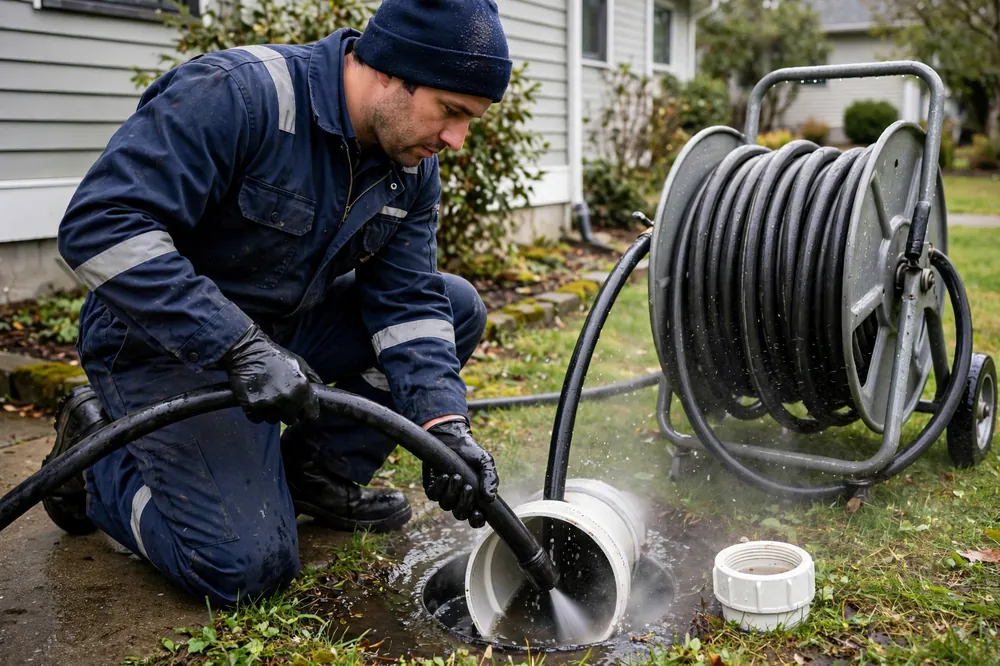
- Clearing and maintenance: for lines that are structurally sound but blocked by roots or buildup — snaking or hydro jetting restores flow.
- Trenchless pipe lining (CIPP): a resin-saturated liner is installed inside the old pipe and cured in place, creating a smooth, seamless new pipe within the old one. No joints for roots to enter, minimal digging.
- Pipe bursting: a new pipe is pulled through the old one, fracturing the old pipe outward. Used when the old pipe is too damaged for lining but the route is worth preserving.
- Spot repair or full excavation: for collapsed sections, severe misalignment, or lines that cannot be lined. This is the most disruptive option — and the one early detection helps you avoid.
The right method depends entirely on what the camera finds, which is why inspection always comes before recommendation.
The cheapest sewer repair is the one you do early. A camera inspection today can mean a lining job instead of an excavation next year — same pipe, very different project.
What To Do If You Spot a Warning Sign
- Do not ignore it. Sewer line problems do not stabilize — they progress. Every one of these signs gets worse with time, not better.
- Note the details. Which fixtures are affected? When did it start? Is it getting worse? This history helps the plumber diagnose faster.
- Schedule a camera inspection. It is the only way to see the actual condition of the line, and it informs every decision after.
- Get upfront options. A reputable plumber explains what the camera found, lays out repair choices, and prices them before work begins.
We serve Newark, Bear, New Castle, Middletown, and communities across New Castle County. If any of these seven signs sound familiar, call (302) 412-8659 — a camera inspection takes the guesswork out, and we will give you straight options with upfront pricing.