You know the pattern by now. A summer thunderstorm rolls over Newark, the rain comes down hard for an hour, and your basement floor drain starts gurgling. Then the water comes up, gray and smelly, spreading across the concrete floor. It never happens on a dry Tuesday. It only happens when it rains, and that timing is the clue that matters.
A basement floor drain that backs up in heavy rain is not a clogged drain. It is a system problem, and the system is bigger than your house. Rain overloads the municipal sewer, pressure reverses in the line that connects your home to the street, and the lowest opening in your house becomes the escape valve. Here is what is really going on, and what fixes it for good.
Your Floor Drain Is the Lowest Point in the System
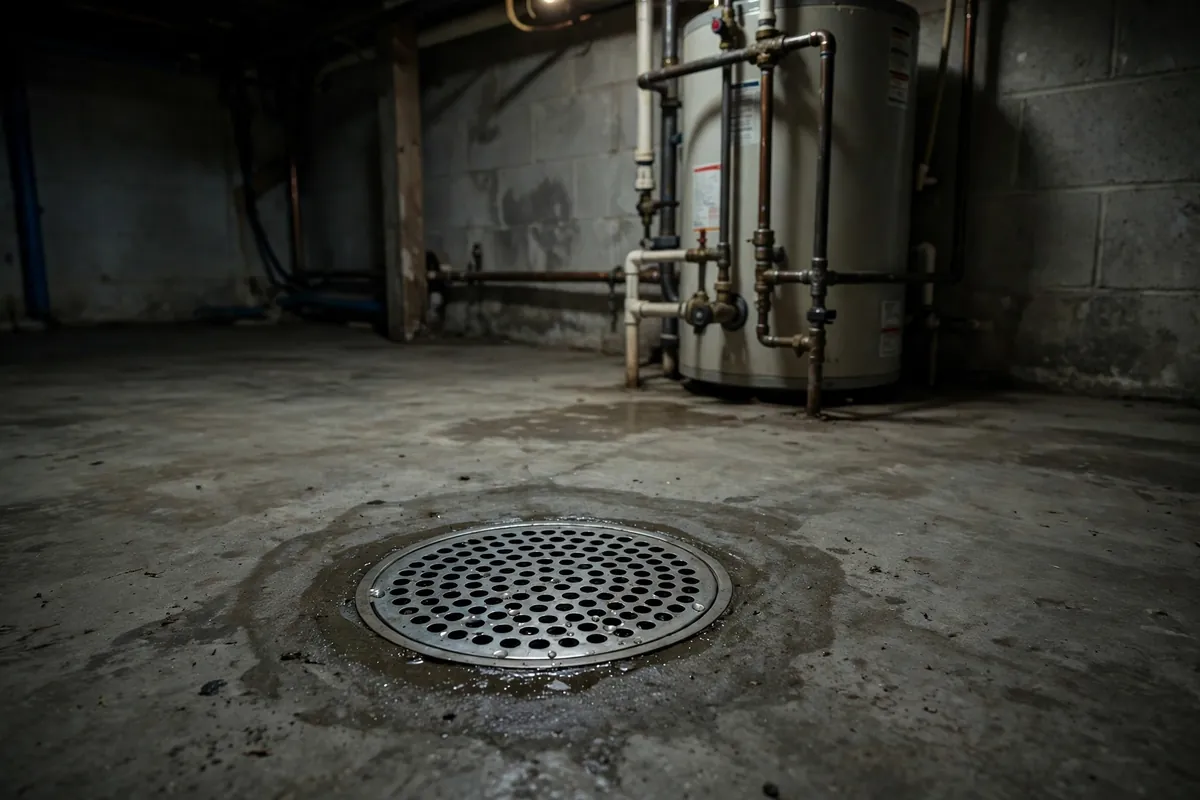
Your basement floor drain sits at the bottom of your plumbing, and water always finds the lowest point. When everything flows the way it should, that is fine: the drain carries wash water and the odd spill out to the sewer. But when flow reverses, that same low position turns against you. The water has to go somewhere, and your floor drain is the easiest way out.
That is why the backup shows up in the basement and not in the kitchen sink. The sink is three feet higher, and the toilet is higher still. The floor drain is the path of least resistance, so it takes the hit first. If you see water coming up through the floor drain while the upstairs fixtures still work, the problem is almost certainly downstream of your house, not in a single fixture. Our guide to sewage backup cleanup covers what to do first when it happens.
When Heavy Rain Overloads the Municipal Sewer
Newark's sewer system was built for a different era, and heavy rain is its weak spot. In a hard storm, rainwater gets into the sewer through old joints, cracked laterals, manholes, and foundation drains tied into the system. The main fills up faster than it can carry water away, and pressure builds in the line. When the main is full, water looks for the nearest exit, and that exit is often a basement floor drain on a low street.
Summer thunderstorms are the worst offenders. A storm that drops an inch of rain in an hour can overwhelm a main that handles a steady drizzle without complaint. That is why the backup feels random: it is not the total rainfall that matters, it is how fast it falls. A slow all-day rain rarely causes trouble. A violent hour-long downpour does. If your street ponds during storms, or your neighbors have the same problem on the same nights, the main is telling you it is at its limit.
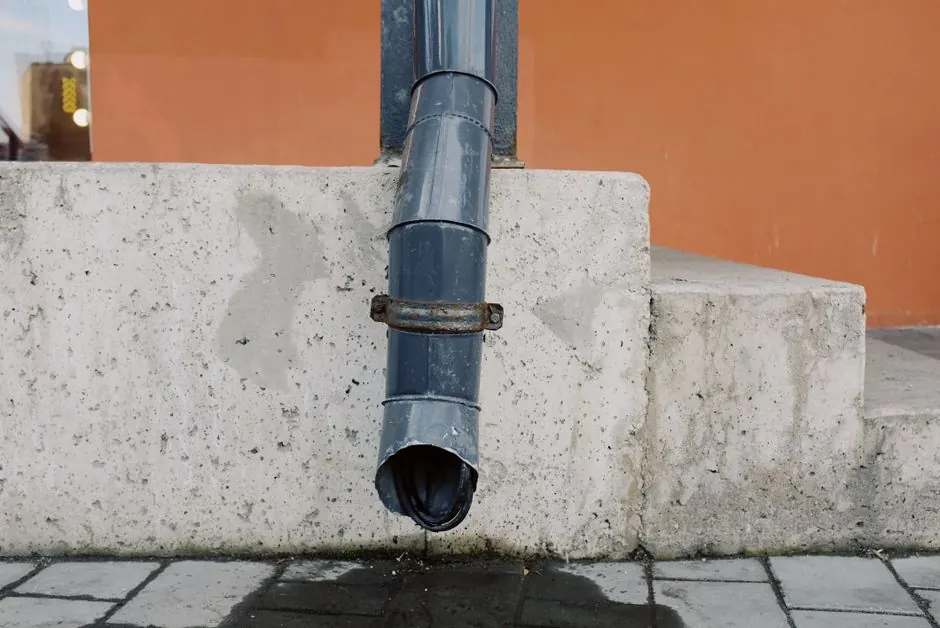
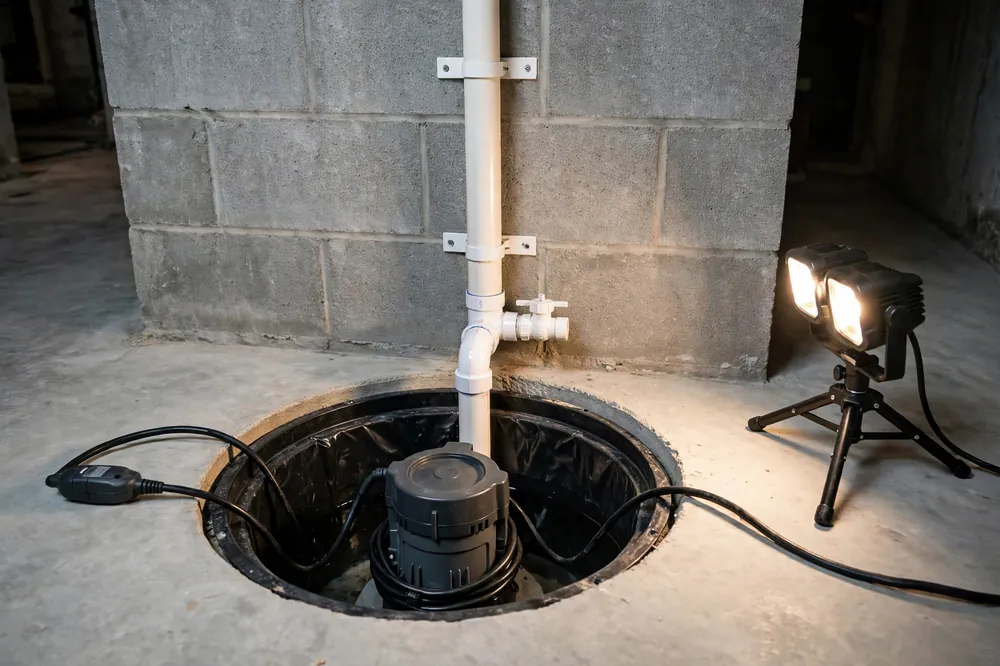
Your own home can add to the load. Downspouts tied into the sewer, a sump pump discharging into the lateral, and a cracked lateral that lets groundwater in all push extra water toward the main at the worst possible moment. A sewer camera inspection shows exactly where the extra water is getting in, and which of those connections are yours to fix.
The Backwater Valve: Your One-Way Gate, and When It Fails
A backwater valve is a one-way gate on your sewer lateral. Water flows out of your house, the gate swings open. Water tries to flow back in, the gate slams shut. It is a simple device, and when it works, it is the single best defense against a rain-driven backup. When it fails, or when a house never had one, there is nothing between your basement and the overloaded main.
Many older Newark homes were built before backwater valves were standard, and many that have one have never had it inspected. Valves fail in quiet ways: the flap gets stuck open with debris, the seal cracks, the cover seizes shut so nobody can clean it. A valve that has not been opened in years is a valve you cannot trust. Our backwater valve installation page explains how the valve works and where it sits on your line.
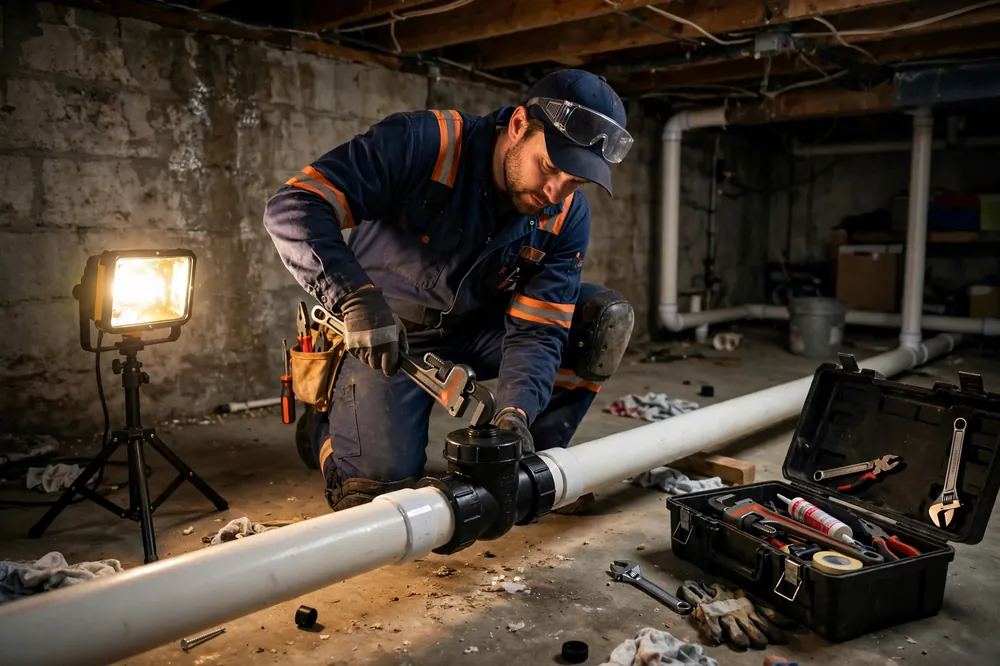
The fix is straightforward: have the valve located, opened, cleaned, and tested. If there is no valve, one can be installed on the lateral, usually with an access point so it can be serviced. It is not a glamorous job, but it is the job that keeps the next storm outside where it belongs.
Why Newark Basements See It More Often
Newark's older neighborhoods carry the most risk. Homes in Brookside, Nottingham Green, Fairfield, and the older streets near Main Street often have cast iron or clay laterals that are decades old, with joints that let groundwater in and roots that narrow the pipe. A narrowed lateral backs up faster, because there is less room for a surge to pass through.
Low ground makes it worse. Basements near the White Clay Creek and the Christina River sit close to the water table, and after a big storm the ground itself is saturated. Foundation drains work overtime, sump pumps run constantly, and any water that finds the sewer instead of the yard adds to the overload. If your sump pump runs for hours after every storm, your basement is already fighting the water table, and the sewer is fighting it too.
None of this means your house is doomed. It means the usual fixes, snaking the drain, pouring in a cleaner, hoping the next storm is gentler, will not work, because none of them touch the real cause. The cause is outside your walls, and the defense has to be built at the boundary between your home and the street.
What to Do Right Now When It Backs Up
First, keep people and pets out of the water. Water coming back through a floor drain can carry sewage, and it should be treated as contaminated. Move valuables off the floor, and do not run laundry, dishwashers, or showers while the drain is backing up, because that adds water to an overloaded line. Do not try to open the sewer cleanout yourself during a storm.
Once the rain eases, the water usually recedes on its own as the main drains. Then the cleanup starts: remove wet items, dry the floor, and disinfect. Damp basements grow mold fast, so do not leave wet carpet, cardboard, or boxes sitting for days. If the water reached finished walls or stored belongings, get help sooner rather than later. A camera inspection after the storm shows whether the backup left debris in your lateral that will cause the next one.
Fixes That Actually Stop the Next Backup
Start with the backwater valve: install one if you do not have it, or service the one you have. Then clear the lateral, because a partially blocked line backs up faster than a clean one, and a camera inspection tells you whether roots, scale, or a belly in the pipe are narrowing it. Hydro jetting scours the full pipe wall clean, which is the right call when the same line keeps causing trouble.
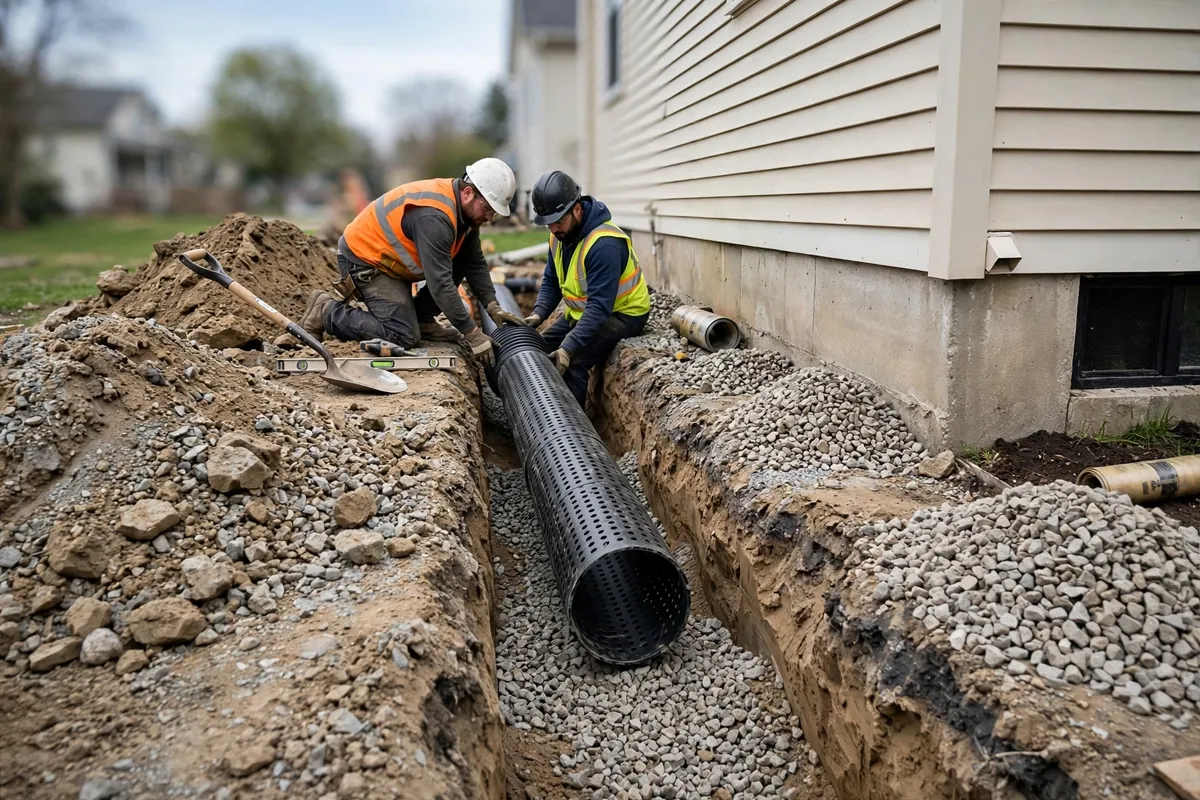
Outside the house, keep rainwater out of the sewer. Disconnect downspouts that tie into the lateral, make sure your sump pump discharges to the yard and not into the sewer line, and consider a French drain to carry groundwater away from the foundation before it finds a crack. Each of these takes pressure off the main at the moment it matters most.
The pattern is worth remembering: if it only happens when it rains hard, the problem is the system, not your drain. A working backwater valve, a clear lateral, and rainwater kept out of the sewer are the three fixes that hold. Get them done before the next storm, and the next storm stays outside.