You flush the toilet and dirty water rises in the tub. The basement floor drain starts bubbling up dark, foul-smelling water. However it shows up, a sewage backup is one of the worst plumbing emergencies a homeowner can face — and how you handle the first hour makes a real difference in how much damage you end up with.
This guide walks you through exactly what to do, step by step. The short version: stop using water, stay away from the sewage, call a professional, document the damage, and get the underlying cause diagnosed. Here is the full version, with the details that matter.
Step 1: Stop using water immediately
The single most important thing you can do is stop adding water to the system. If your main sewer line is blocked, every gallon you send down a drain has nowhere to go — it comes back up through the lowest fixture in the house, usually a basement floor drain, a first-floor tub, or a shower stall.
That means: no flushing toilets, no running faucets, no showers, no dishwasher, and no laundry. Tell everyone in the house. If someone runs a load of laundry during an active backup, a washing machine can pump dozens of gallons of water straight into an already overflowing line — turning a contained mess into a flooded basement.
If you can do it safely, locate your home's main water shutoff valve and turn it off. This is usually in the basement or crawlspace near where the water line enters the house, or outside in a meter pit. Shutting it off does not stop sewage already in the line, but it prevents any automatic water use (like an ice maker or a running toilet) from making things worse.
Step 2: Keep people and pets away from the sewage
Raw sewage is not just unpleasant — it is a genuine health hazard. It can carry bacteria, viruses, and parasites that cause illness through skin contact, and contaminated water can seep into cuts or be accidentally ingested. Keep children and pets completely out of the affected area, and avoid wading through the water yourself.
If you must enter the area — to reach the shutoff valve or grab something important — wear waterproof boots and gloves, wash thoroughly afterward, and avoid tracking contaminated water through the rest of the house.
One more precaution: if sewage has reached electrical outlets, appliances, or your breaker panel, do not enter the water. Call your electric utility or an electrician before anyone steps in. Water and electricity are a dangerous combination, and a flooded basement is no place to find out the hard way.
Step 3: Call a professional — this is not a DIY job
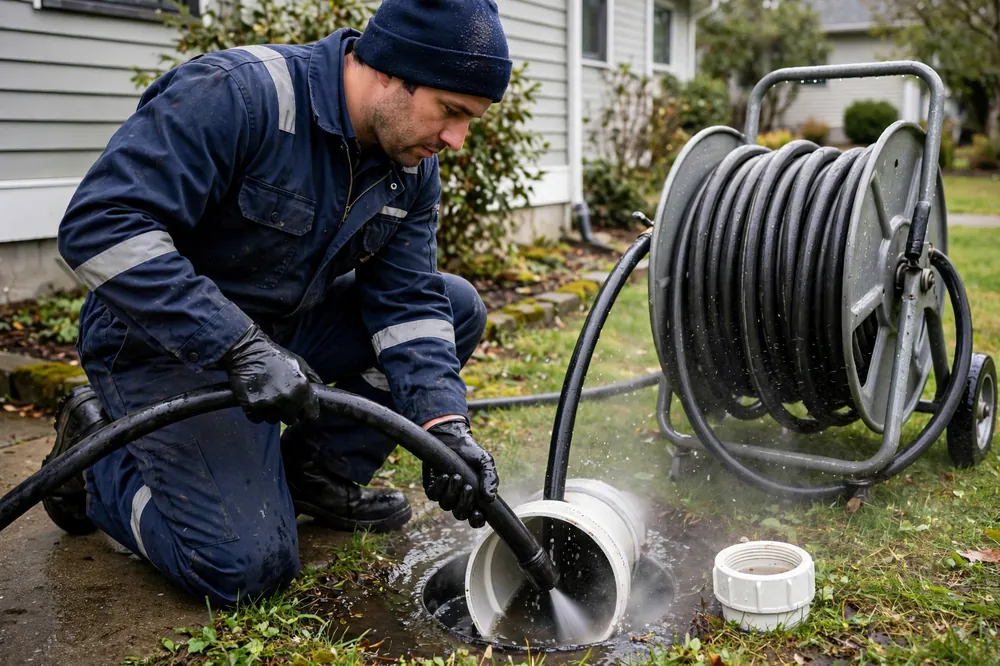
A sewage backup is not a clogged sink. It means something is wrong in your main sewer line, and clearing it requires professional equipment — a heavy-duty drain auger or hydro-jetting machine — plus the experience to diagnose what caused it. Renting a small snake from the hardware store will not clear a main line blockage, and it puts you in close contact with sewage for no benefit.
Call Express Drain Rescue at (302) 412-8659. Our sewage backup cleanup service handles both sides of the emergency: clearing the blockage and properly sanitizing the affected area — because contamination spreads well beyond what you can see.
The sooner you call, the better. A backup that is addressed within hours is far easier to clean up than one that sits overnight, soaking into flooring, drywall, and belongings. Water wicks upward into drywall and baseboards quickly, and the longer contaminated water stands, the more material has to be removed and replaced rather than cleaned.
Step 4: Document the damage before cleanup
Before anything gets cleaned up or thrown away, take photos and video of everything: the water level marks on walls, the affected rooms, damaged flooring, furniture, and belongings. Get wide shots showing the full extent and close-ups of the worst damage. These records matter for insurance claims and for any dispute about what was affected.
Write down what happened and when — the time you noticed the backup, which fixtures were involved, and anything unusual you observed (heavy rain that day, recent gurgling drains, a toilet that had been slow). This timeline helps your plumber diagnose the cause faster and helps your insurance adjuster understand the event.
Keep a list of everything damaged or thrown away, with approximate values. Save receipts for emergency expenses — hotel stays, professional cleaning, supplies. Thorough documentation only helps your case.
Step 5: Get the underlying cause diagnosed
Clearing the blockage stops the immediate emergency, but a backup that is not investigated will almost certainly happen again. Once the line is flowing, the cause needs to be found. A sewer camera inspection sends a camera through the line to show exactly what is going on underground — no guesswork, no unnecessary digging.
Here are the causes we find most often in Newark-area homes:
Main sewer line clog
The most common cause. Grease poured down kitchen drains hardens in the line, so-called "flushable" wipes snag on rough spots and accumulate into a dense mass, and foreign objects can lodge in the line and catch everything flowing past. A main sewer line clog removal clears the blockage, and the camera shows whether the pipe itself is in good shape.
Tree root intrusion
Tree roots seek out the moisture inside sewer lines and enter through tiny cracks or loose joints. Once inside, they grow into a dense mat that catches waste and eventually blocks the line completely. This is common in older Newark neighborhoods with mature trees and clay or cast-iron lines. Roots can be cut out, but they grow back — the lasting fix is repairing or lining the damaged section of pipe.
Heavy rain overwhelming the line
During intense storms, municipal sewer systems can surcharge — fill beyond capacity — and push wastewater back up through home drain lines. If your backups always happen during or right after heavy rain, this is a strong suspect. A backwater valve is designed for exactly this situation: it lets sewage flow out of your home but automatically closes to block reverse flow back in.
A failed or missing backwater valve
Some homes already have a backwater valve, but like any mechanical device, it can fail — flappers get stuck open with debris, seals wear out, or the valve was installed improperly. If you have one and still got a backup, it needs to be inspected. If you do not have one and your home is prone to backups, installing one is the single most effective prevention measure available.
What NOT to do during a sewage backup
In a stressful moment it is easy to make the problem worse. Avoid these common mistakes:
- Don't keep flushing to "push it through." With a blocked main line, every flush adds more water to the backup. Nothing you flush will push through a real blockage.
- Don't pour chemical drain cleaner down the line. Caustic chemicals will not clear a main line blockage, and they create a hazardous chemical soup mixed with the sewage that endangers anyone who later works on the line.
- Don't run the garbage disposal. It just adds ground-up food to the backed-up water.
- Don't try to pump sewage with a shop vacuum. Standard shop vacs are not designed for sewage, and the process aerosolizes contaminants into the air you are breathing.
- Don't ignore a "small" backup. A little water around one floor drain today is often the warning sign of a full backup tomorrow. Any sewage where it should not be deserves a professional look.
If sewage is actively rising and you cannot reach a plumber immediately, stop all water use and, if it is safe to do so, turn off the main water valve. Containment buys time — every gallon you keep out of the line is a gallon that does not end up on your floor.
Protecting your home from the next backup
Once the emergency is handled, take steps so it does not happen again:
- Install a backwater valve if your home is prone to backups or sits in a low spot. It is the most reliable defense against municipal surcharge pushing sewage into your home.
- Never flush wipes — even ones labeled flushable — plus paper towels, feminine hygiene products, or cotton balls. Only toilet paper and human waste belong in a toilet.
- Keep grease out of drains. Wipe cooking pans with a paper towel before washing, and collect used cooking oil in a container for the trash.
- Schedule a camera inspection if your home has older lines or a history of slow drains. Finding roots or a developing clog early is far cheaper than another backup.
- Know your cleanout location. The sewer cleanout — usually a capped pipe near the foundation — gives a plumber fast access to your line. Keep it accessible, not buried under landscaping.
When to call Express Drain Rescue
Call us at (302) 412-8659 right away if:
- Sewage is backing up through any drain, toilet, or tub
- Multiple fixtures are gurgling or draining slowly at once
- You smell sewage inside the house or from drains
- Water is pooling around a basement floor drain
- A previous backup was never properly diagnosed
We serve Newark, Bear, Wilmington, and communities across New Castle County — with same-day appointments, upfront options before any work begins, and the equipment to clear the blockage, sanitize the damage, and find the cause so it does not happen again.