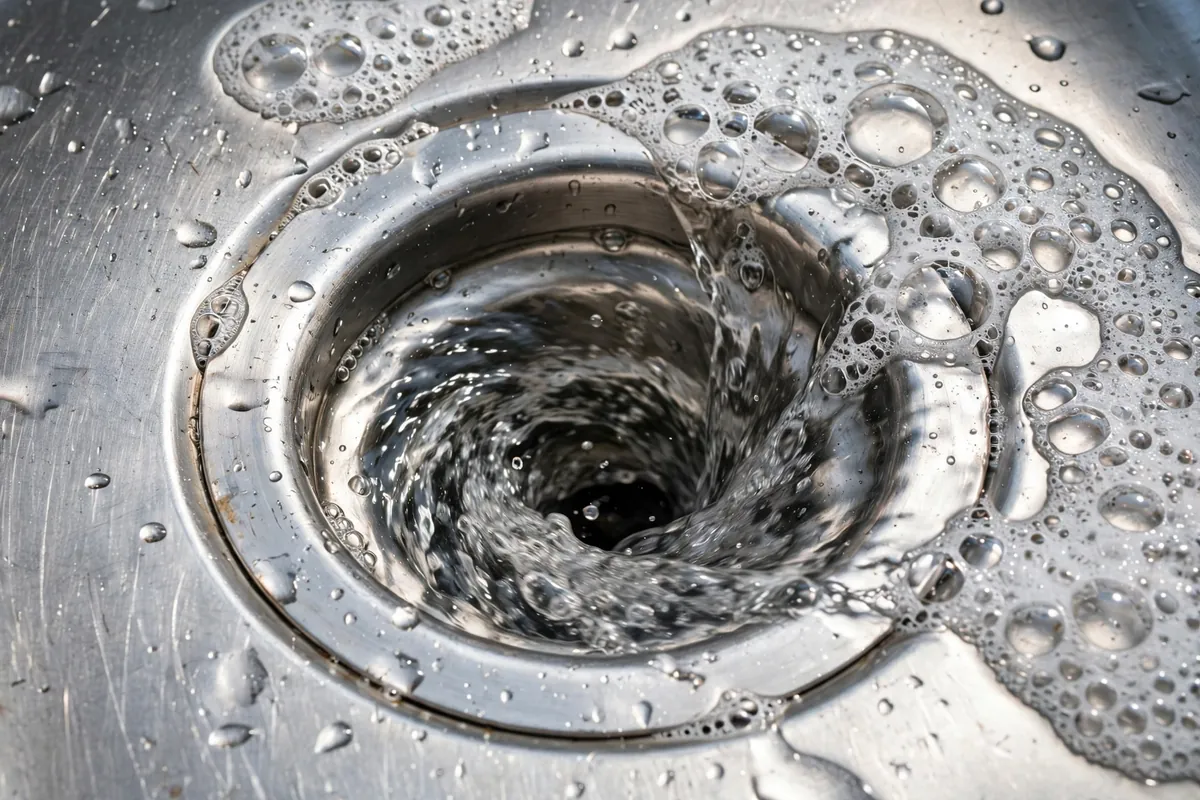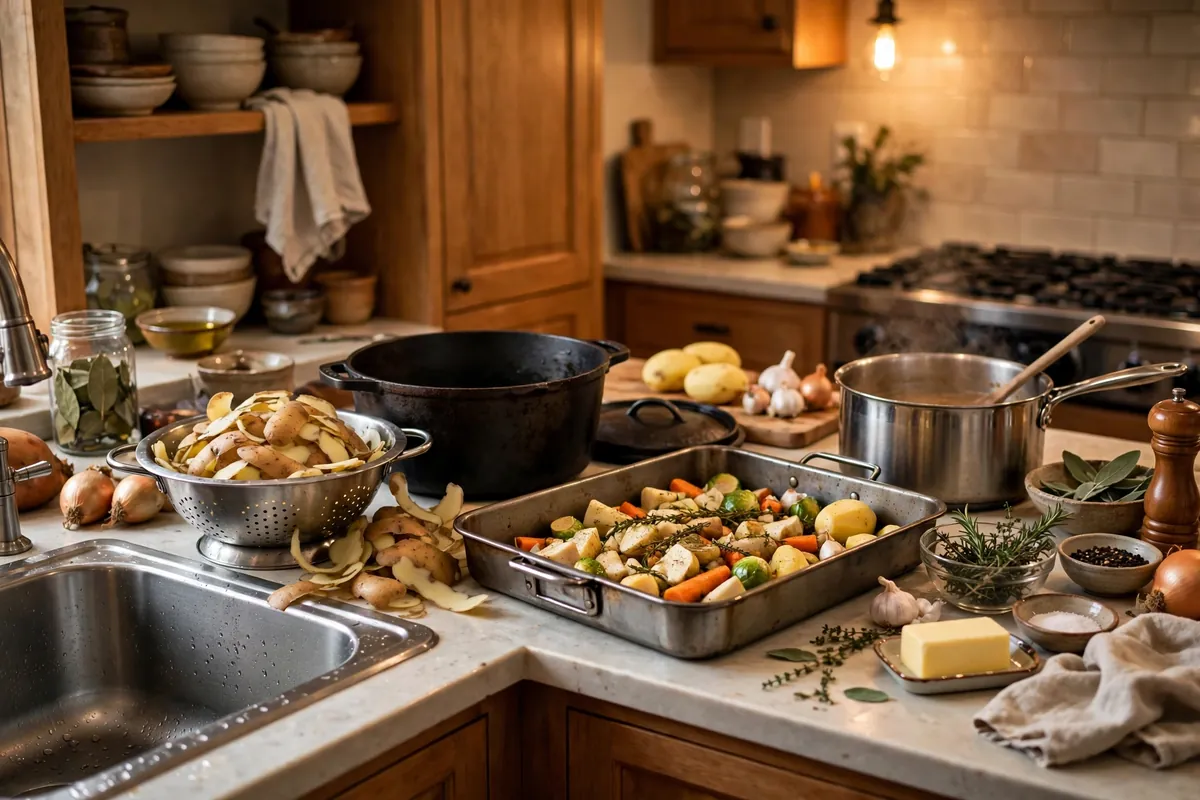
The turkey is resting, the potatoes are peeled, and the sink is full of standing water. Nobody planned this part of Thanksgiving. But the kitchen drain just handled more grease, more starch, and more volume in four hours than it usually sees in a week, and it is telling you so in the only way it can.
Thanksgiving is the busiest day of the year for kitchen drains, and Newark is no exception. The pattern repeats in the same houses every year: a slow sink on Wednesday, a full backup on Thursday, and a call on Friday morning. Most of it is preventable, and the rest is manageable if you know what to do mid-cook. Here is how Newark kitchens get through it.
Why Thanksgiving Is the Hardest Day of the Year for a Kitchen Drain
It is the combination that does it. A normal week spreads cooking across seven days, with time for the drain to clear between meals. Thanksgiving compresses a week's worth of cooking into one afternoon: turkey drippings, butter, cream, potato peels, onion skins, celery ends, and a sink full of pots. Add guests, and the dishwasher, washer, and showers all run while you cook. The drain never gets a quiet hour.
Older Newark kitchens feel it first. The capes, ranches, and split-levels in Brookside, Oaklands, and Fairfield often still run cast iron branches narrowed by age, and old grease inside the pipe leaves less room than the pipe's size suggests. Newer PVC lines in Pike Creek and Todd Estates stay smoother, but even a clean line can choke on a sudden load of starch and fat. A sink that drains a little slower each year is a sink heading for a holiday backup, as our guide to why drains run slow explains.
Grease Is the Main Culprit, and Hot Water Does Not Save It
Turkey grease looks harmless going down. It is liquid, it is hot, and the drain takes it without complaint. The trouble starts a few feet down the line, where the pipe is cooler. Grease cools, thickens, and sticks to the pipe walls. The next load sticks to the first. By the end of the day, the opening is narrower and everything drains slower. Hot water from the tap does not fix this. It pushes the grease a little further down before it cools and sticks again, sometimes past the point a homeowner can reach.
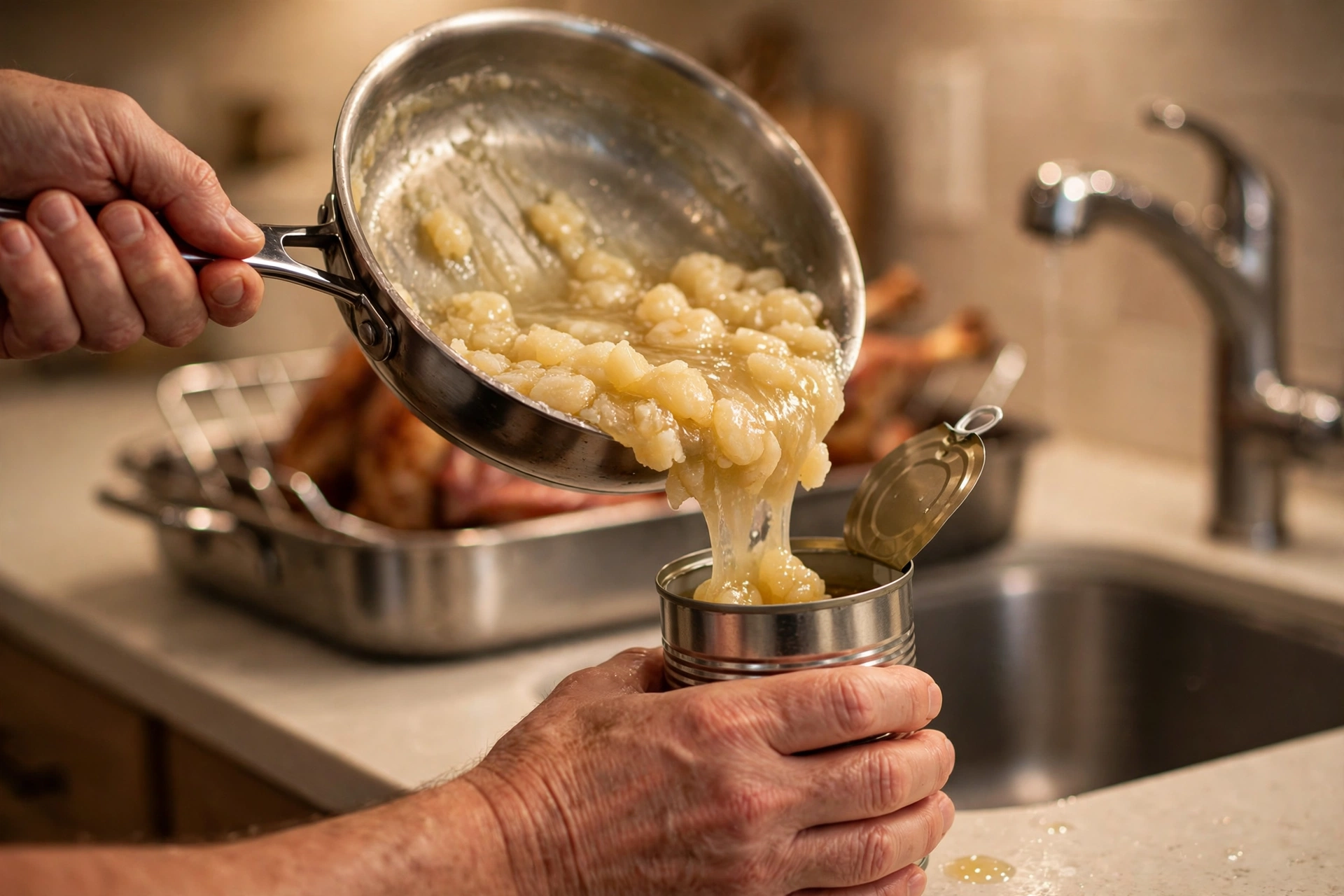
The fix is a can, not the drain. Pour cooled drippings and pan grease into a sealed can or jar, let it solidify, and put it in the trash. Wipe roasting pans and skillets with a paper towel before they go in the sink, and scrape plates into the trash, not the disposal. It feels slower. It beats a backed-up sink with a turkey to carve. Our post on why a kitchen sink smells explains what that grease layer becomes when it sits: a coating of food and biofilm that no surface cleaner reaches.
Potato Peels, Rice, and the Disposal Myth
The garbage disposal is not a trash can, and Thanksgiving is when that lesson lands hardest. Potato peels are the worst offender. They slip past the strainer, and the disposal grinds them into a starchy paste that sets like glue in the trap. Rice, pasta, and stuffing do the same thing on a smaller scale: they swell with water and pack together downstream. Celery strings and onion skins wrap around the disposal parts and slow it down.
Peel over the trash, not the sink. Keep a strainer in the drain, and run the disposal with cold water, not hot, for a full half minute after the grinding stops. Cold water keeps grease solid so the disposal can chop it and move it along. Hot water melts it into the coating described above. The full list of what stays out is in our guide to what never to put down a garbage disposal, and it is worth a read before the peeling starts.
Turkey Prep Overloads More Than the Sink
The kitchen sink is the loudest complainer, but it is rarely the only drain under strain. Brining the turkey, boiling potatoes, and washing a mountain of dishes all send water down the same branch. Meanwhile the dishwasher runs twice, the washing machine runs a load of guest towels, and two showers run back to back. All of it feeds the main line, and if the main line is already narrowed by roots or scale, the kitchen is where the backup shows first, because it is the fixture in heaviest use.
Watch the rest of the house while you cook. If the bathroom sink gurgles when the dishwasher drains, or the basement floor drain shows water after a big kitchen session, the problem is shared, not local. Our guide to main line vs branch line clogs explains how to read that pattern. A kitchen-only problem and a main line problem get fixed differently, and guessing wrong wastes the afternoon.
The Week Before Thanksgiving: A Drain Prep Checklist
A little prep the week before beats a rescue on the day. Run through this list before the groceries arrive.
- Run every faucet and watch the drain speed. A sink that was slow in October will be slower on Thanksgiving.
- Clean the strainers and the disposal splash guard. Old buildup there is the seed of a holiday clog.
- Put a grease can beside the stove now, so nobody has to think about it mid-cook.
- Find the main cleanout, usually a capped pipe near the house or in the basement, and make sure it is reachable, not buried behind storage.
- Skip the chemical drain cleaner. It rarely clears a grease clog and can damage pipes, leaving caustic water standing in the sink. See our warning on chemical drain cleaners.
- If the kitchen drain has been slow all fall, get it cleared before the holiday, not during it. Our comparison of hydro jetting vs drain snaking lays out which method fits a grease-coated line.
That last point matters most. A line that drains slowly now is a line with no margin left, and Thanksgiving will spend that margin by noon. Clearing it the week before is a routine visit. Clearing it on Thanksgiving is an emergency.
Mid-Cook Backup: What to Do When the Sink Stops Draining
Stop adding water first. Turn off the faucet, stop the disposal, and hold the dishwasher. Every gallon you add goes on top of water that cannot drain, and the sink will only get fuller. Bail the standing water into a bucket with a cup, so you can see what you are dealing with and keep cooking with the other basin, if you have one. Keep the turkey and the sides moving: the drain can wait, dinner cannot.
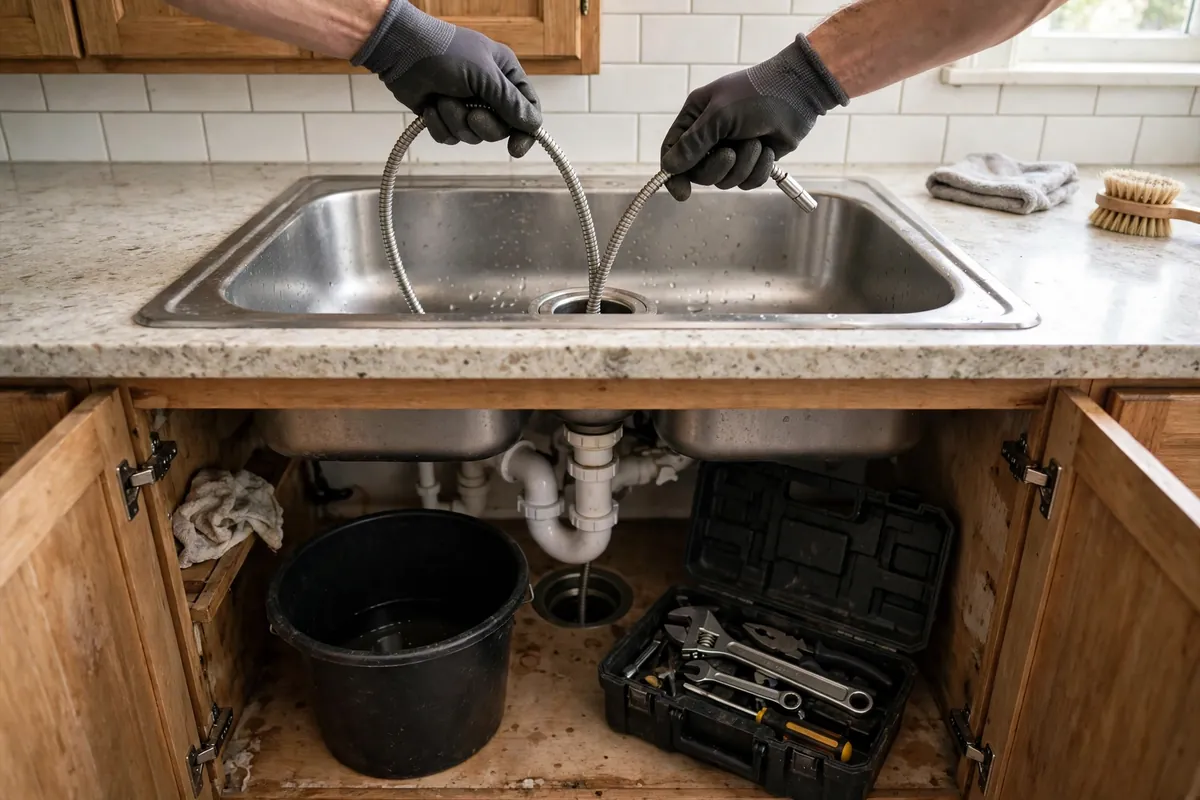
Try a sink plunger, the flat-bottomed kind, not a toilet plunger. Fill the basin with a few inches of water, seal the plunger over the drain, and push firmly a dozen times. With a double basin, seal the other drain with a wet cloth so the pressure goes down the pipe. If the water drops and stays down, run cold water for a minute and watch it. If it rises again, stop.
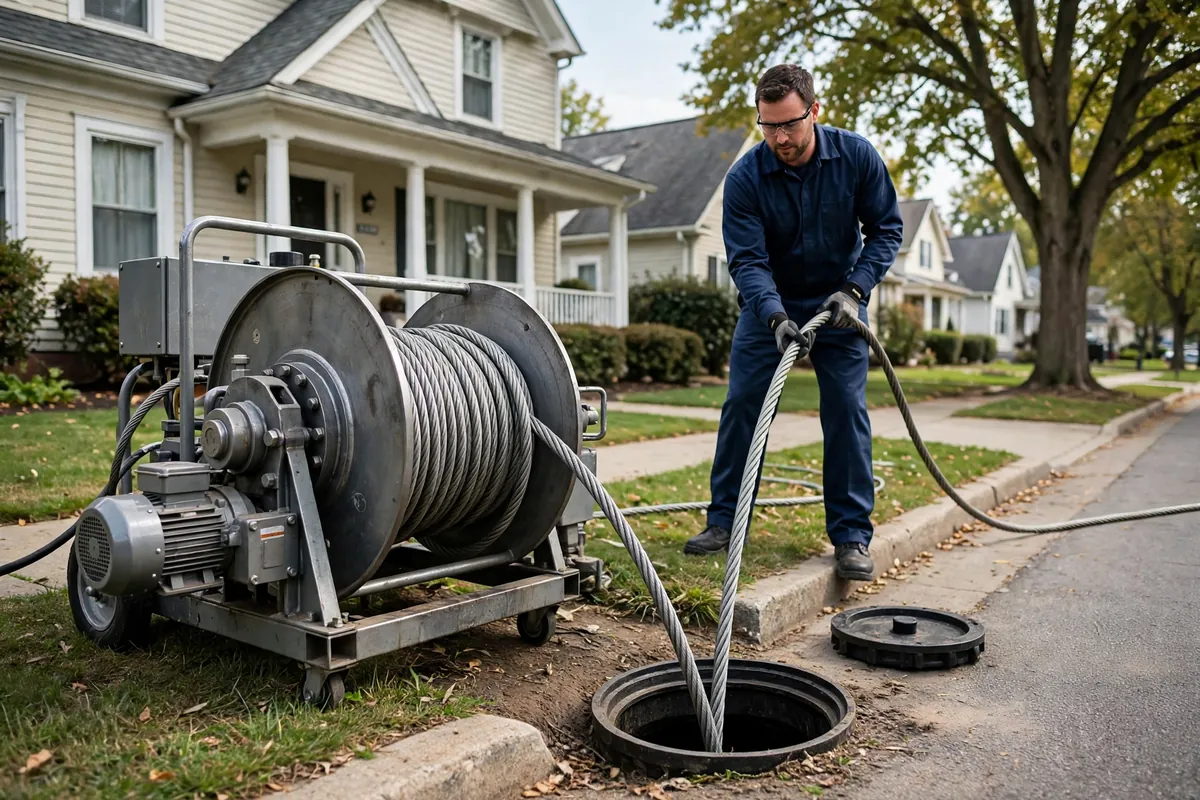
Do not reach for a rented cable machine as a first try, and do not pour anything caustic into a sink full of standing water. A cable can scratch fixtures and get stuck, and a stuck cable turns a clog into a bigger job. If more than one fixture is backing up, or water appears in the basement, the clog is past the kitchen, and a sewer camera inspection will show whether roots, a belly, or a grease dam is behind it.
What Not to Do With a Clogged Holiday Drain
Do not keep running the disposal to clear standing water. A disposal full of water and food waste will jam, overheat, or push waste further down a blocked line. Do not keep flushing to test the main: each flush adds water a restricted system cannot take. Do not ignore gurgling in the bathroom while the kitchen backs up. That sound is air moving through traps because the main cannot breathe, as our post on why a sink gurgles when the toilet flushes explains.
A Thanksgiving backup feels like a disaster. It is really a message: the drain spent a year narrowing, and one big meal finished the job. Scrape the plates, can the grease, peel over the trash, and give the drain a quiet hour between the big jobs. That routine holds from Brookside to Pike Creek, and it is the difference between a holiday spent cooking and a holiday spent bailing.