The garbage disposal is one of the most misunderstood appliances in the kitchen. It is not a trash can, not a blender, and not a wood chipper. It is a relatively small device with one job: grind soft food scraps into particles tiny enough to wash down the drain. Push it past that job description, and you get a jammed disposal, a clogged kitchen drain, or both.
We clear kitchen drain clogs across Newark, Bear, and New Castle County every week, and the same culprits show up again and again. Here are the nine things you should never put down a garbage disposal, why each one causes trouble, and what to do with it instead.
How a Garbage Disposal Actually Works
First, a quick reality check on what is under your sink. A disposal does not have blades. It has a spinning plate with small impellers that fling food against a stationary grind ring, shredding scraps into a slurry that water carries away. There is no chopping and no chewing, just grinding and flushing. Anything too hard, too fibrous, or too sticky for that process either jams the plate or survives the grind and clogs the pipe beyond.
That pipe beyond matters more than people think. The disposal discharges into the same trap and branch line as the rest of your kitchen plumbing. Even if the disposal handles something, the drain line still has to carry it.
1. Fats, Oils, and Grease
The number one enemy, by a wide margin. Cooking grease is liquid going in and solid soon after. It coats the inside of the disposal, the trap, and the branch line, then hardens into a waxy layer. Every later scrap that passes sticks to it. Over time the buildup narrows the pipe until the kitchen sink drains at a trickle or backs up entirely.
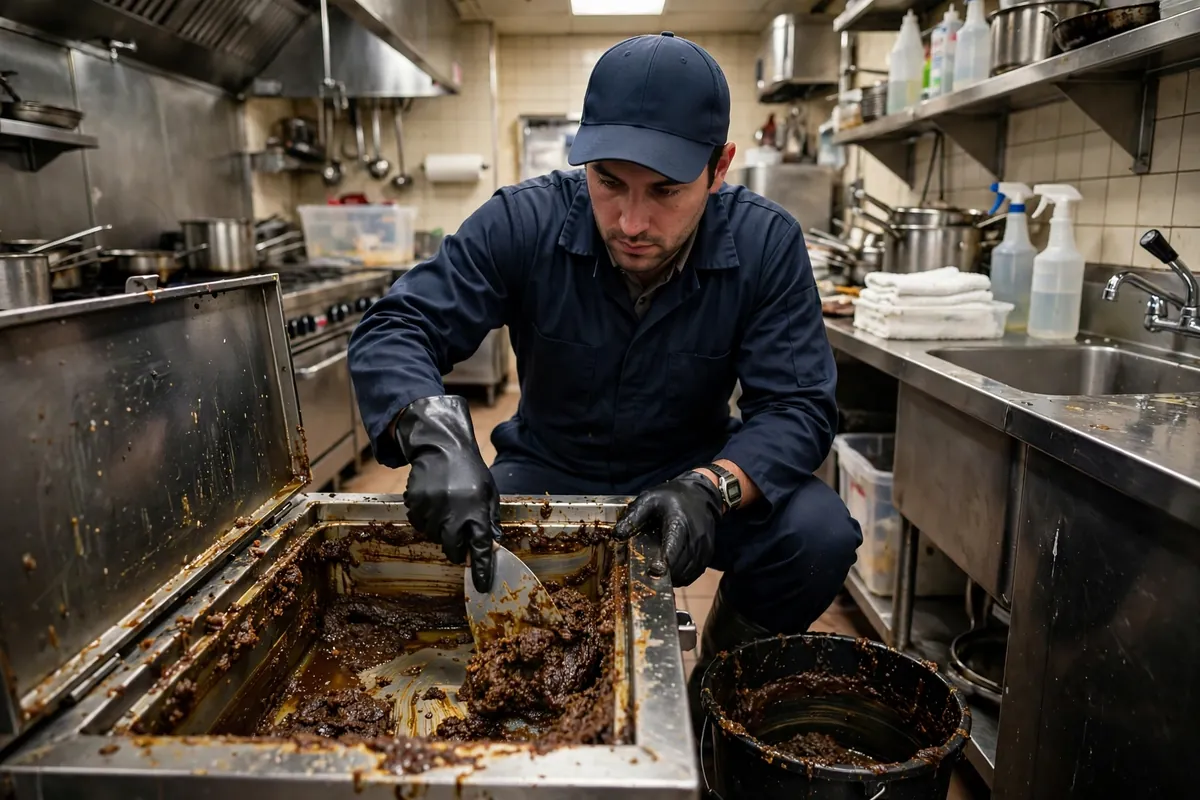
What to do instead: Pour cooled grease into a sealed container, an old can or jar works, and throw it in the trash. Wipe greasy pans with a paper towel before washing. For heavy grease buildup already in the line, hydro-jetting is the most effective way to scour it out. In a restaurant or commercial kitchen, that same grease is handled at scale by a grease trap that needs cleaning on a set schedule.
2. Pasta, Rice, and Other Starchy Foods
Pasta and rice keep absorbing water after they are cooked, and they keep expanding inside your pipes. A small handful of leftover spaghetti can swell into a dense, gluey mass in the trap. Potato peels are even worse: the starch turns them into a thick paste that the disposal smears around instead of grinding.
What to do instead: Scrape starchy leftovers into the trash or compost. If a little goes down accidentally, run plenty of cold water to push it through.
3. Fibrous Vegetables
Celery, corn husks, onion skins, asparagus, artichokes, and pumpkin guts share one trait: long, tough fibers. Instead of grinding, these fibers wrap around the disposal's impellers like string around an axle, slowing or jamming the motor. The wad that survives often lodges in the trap.
What to do instead: These belong in the trash or compost bin, not the sink.
4. Coffee Grounds
Coffee grounds seem harmless, they are small, after all. But they do not break down in water. They settle into a dense, sandy sediment in the trap and the low spots of the branch line, building up layer by layer until water can barely pass. Mixed with a little grease, they form something close to concrete.
What to do instead: Toss grounds in the trash or use them in the garden. Your plants will thank you.
5. Eggshells
The old advice says eggshells sharpen disposal impellers. They do not: impellers are blunt by design and do not need sharpening. What eggshells actually do is break into tiny, sharp-edged fragments whose papery membranes wrap around the mechanism. The fragments settle in the trap like sand.
What to do instead: Trash or compost. The membrane makes them a decent compost addition.
6. Bones and Fruit Pits
Chicken bones, peach pits, avocado pits, and similar hard objects are simply beyond what a residential disposal is built to grind. At best the disposal rattles violently and trips its overload switch. At worst, a bone fragment wedges between the plate and the grind ring and the motor burns out trying to turn.
What to do instead: Bones go in the trash. If the disposal hums but does not spin, press the red reset button underneath before calling for help.
7. Anything That Is Not Food
It sounds obvious, but twist ties, bottle caps, rubber bands, fruit stickers, and the occasional spoon find their way in. Non-food items jam instantly and can damage the splash guard or the grind ring. Run the disposal only after a quick visual check, and never reach in, even when it is off, without confirming the power is disconnected.
What You Can Safely Put Down the Disposal
The disposal handles small amounts of soft food scraps just fine: bits of cooked vegetables, small fruit pieces, and crumbs. The rules that keep it happy are simple:
- Run cold water before, during, and for 15 seconds after grinding. Cold water keeps grease solid so it moves through instead of coating the pipe.
- Feed scraps gradually, not all at once. A big dump overwhelms the grind ring.
- Cut large pieces into smaller ones first.
- Toss in ice cubes and citrus peels occasionally. The ice knocks loose light buildup and the citrus freshens the smell. Small lemon peels are fine: it is large quantities of thick, fibrous rind that cause trouble.
A garbage disposal is a convenience, not a compost bin. When in doubt, the trash can is always the safer choice for your pipes.
When a Clogged Disposal Needs a Plumber
Call Express Drain Rescue at (302) 412-8659 when:
- The disposal hums but will not spin, even after pressing the reset button
- Water backs up into the sink or the other side of a double sink
- The kitchen drain is slow even when the disposal runs fine
- There is a persistent bad smell you cannot flush away
- The same clog keeps returning after you have cleared it
A disposal jam is often just the visible part of a deeper kitchen line clog. Whatever you do, skip the chemical drain cleaner, which can damage pipes without clearing the real blockage. If snaking does not hold, a sewer camera inspection can show what is happening further down the line, and main sewer line clog removal can clear a blockage past the branch. We serve Newark, Bear, New Castle, Wilmington, and communities across New Castle County, with priority scheduling and upfront options before any work begins.