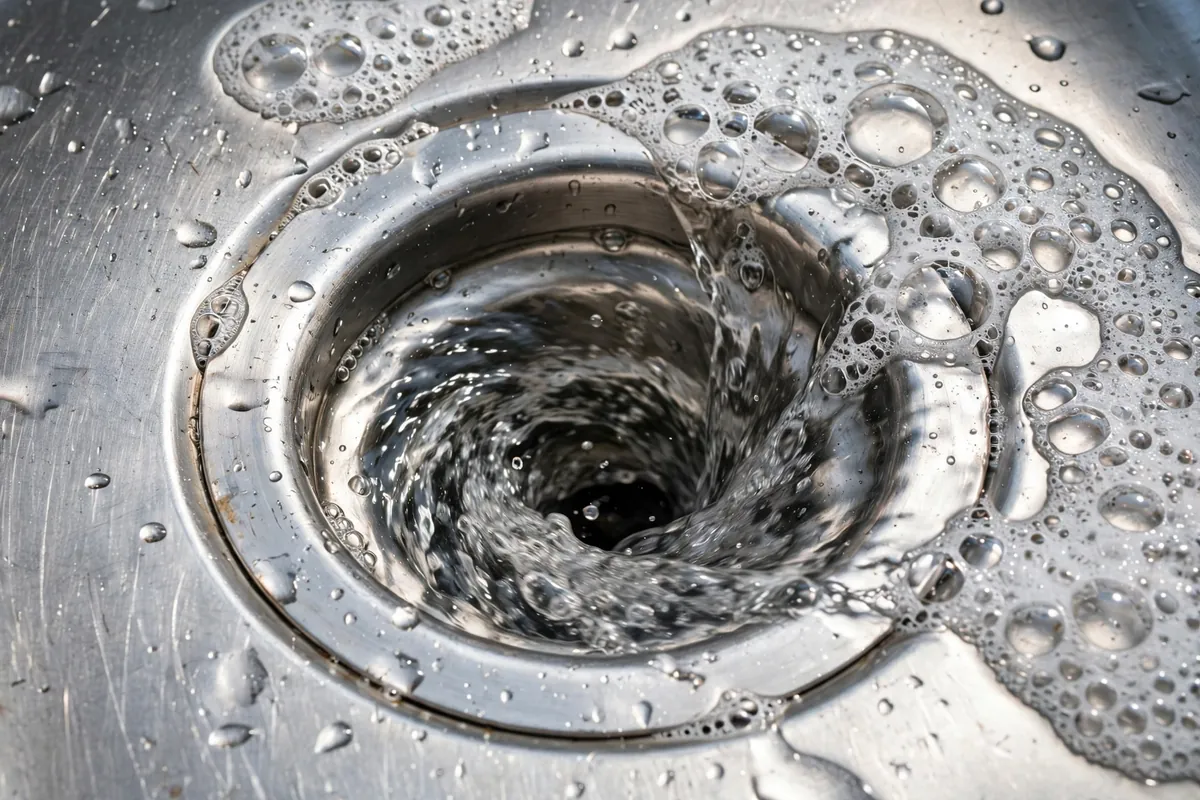
You run the faucet, and instead of clean water smell, you get a whiff of something rotten. Maybe it is faint, maybe it hits you when you walk into the kitchen. Either way, it is coming from the drain, and it is telling you something about what is living inside your pipes.
That smell is not coming from last night's dishes. It is coming from a living layer of grease, food particles, and bacteria coating the inside of your drain line. Plumbers call it biofilm, and once it takes hold, no amount of dish soap or baking soda will evict it. Here is why kitchen drains start smelling, what actually fixes it, and when snaking is the answer.
What That Smell Actually Is
Every time you rinse a plate, tiny bits of food and grease wash down the drain. Grease is the real villain. Hot grease goes down as a liquid, then cools and solidifies on the pipe walls a few feet down the line. Food particles stick to that greasy layer. Bacteria move in and start feeding, and their waste products include hydrogen sulfide, the rotten-egg gas you are smelling.
This is biofilm: a slimy, living coating that thickens over months and years. It is the same stuff that makes river rocks slippery. Inside your drain, it is a buffet that never closes. The disposal makes it worse by grinding food into fine particles that coat more surface area, and starchy foods like rice, pasta, and potato peels are especially good at sticking.
The smell gets stronger in warm weather because bacteria are more active, and it gets stronger when the drain sits unused because the biofilm keeps working with no fresh water to dilute it. If you have ever come home from vacation to a stinky kitchen, that is why.
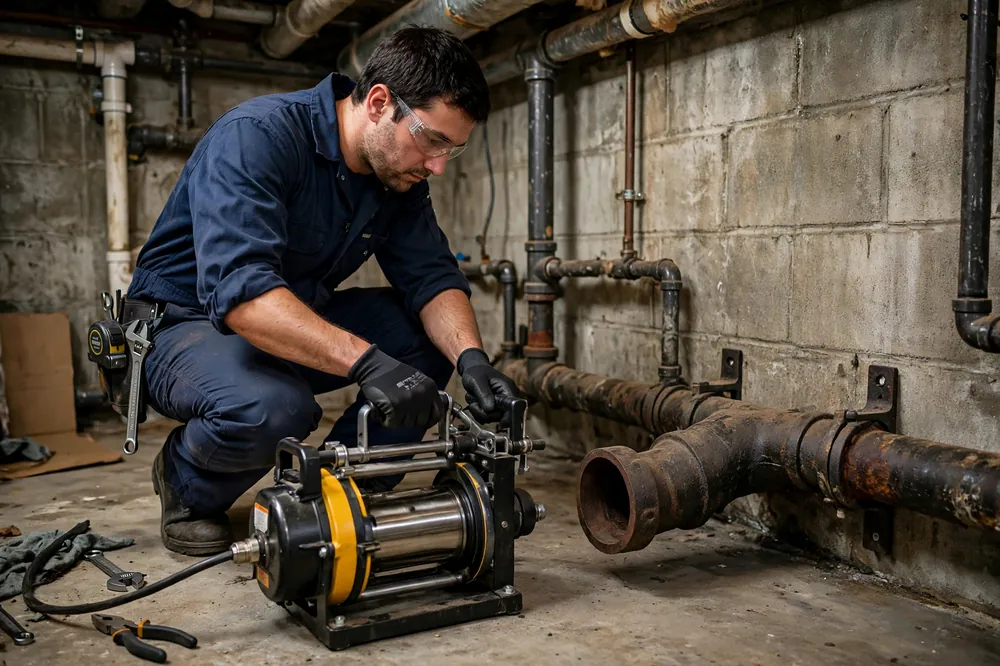
Newark's older neighborhoods add another wrinkle. Many homes in the city still run original cast-iron drain lines, and the rough interior of aging cast iron gives biofilm far more surface to grip than smooth PVC. A cast-iron kitchen drain can harbor twice the buildup of a plastic one the same age, which is why the smell hits harder in pre-1970s houses. The pipe material does not cause the odor, but it decides how fast the biofilm builds and how stubbornly it holds on.
Why Surface Cleaning Never Lasts
Baking soda and vinegar, lemon peels, bleach, boiling water. Every home remedy targets the top few inches of the drain, the part you can see. The biofilm causing the smell lives further down, coating feet of pipe wall where no home remedy reaches in any meaningful concentration.
Chemical drain cleaners have the same problem with an added risk. They burn a narrow channel through the middle of the buildup instead of cleaning the pipe walls, so the smell comes back fast. Worse, the caustic formulas can damage the pipes themselves. Our guide on why chemical drain cleaners damage pipes explains what those bottles do to PVC and cast iron.
Even a thorough scrubbing of the sink, the disposal splash guard, and the stopper only buys a few days. Those are worth doing, but they are maintenance, not a cure. The cure has to reach the pipe walls.
How Drain Snaking Clears the Real Cause
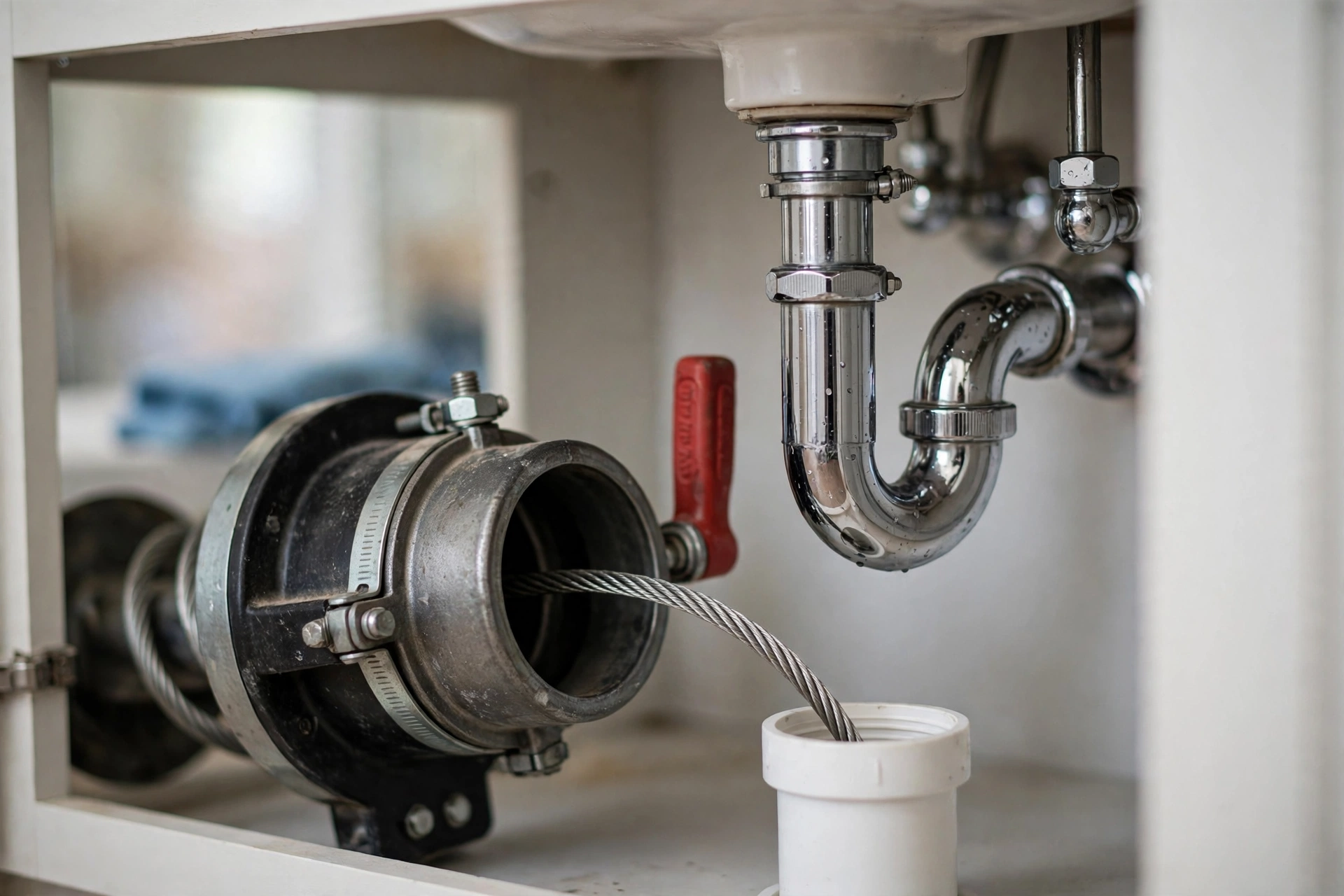
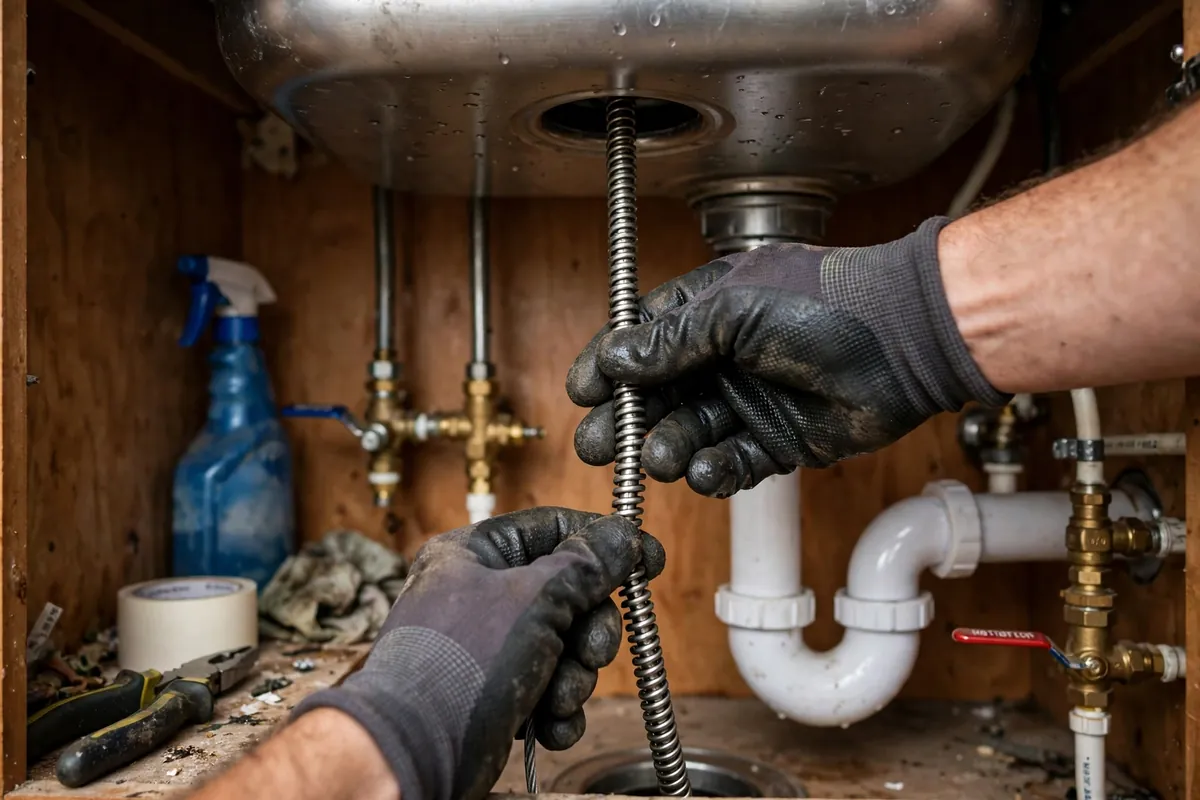
A drain snake, or auger, is a flexible steel cable with a cutting head that spins as it feeds through the pipe. As it turns, the head scrapes the inside circumference of the pipe, physically tearing the biofilm and grease layer off the walls. The debris washes away with the water flow that follows.
This is fundamentally different from chemicals. Chemicals dissolve a path through the center. Snaking cleans the walls. Since the smell lives in the wall coating, wall cleaning is what ends it. A proper snaking leaves the pipe interior close to its original diameter, which also improves drainage speed.
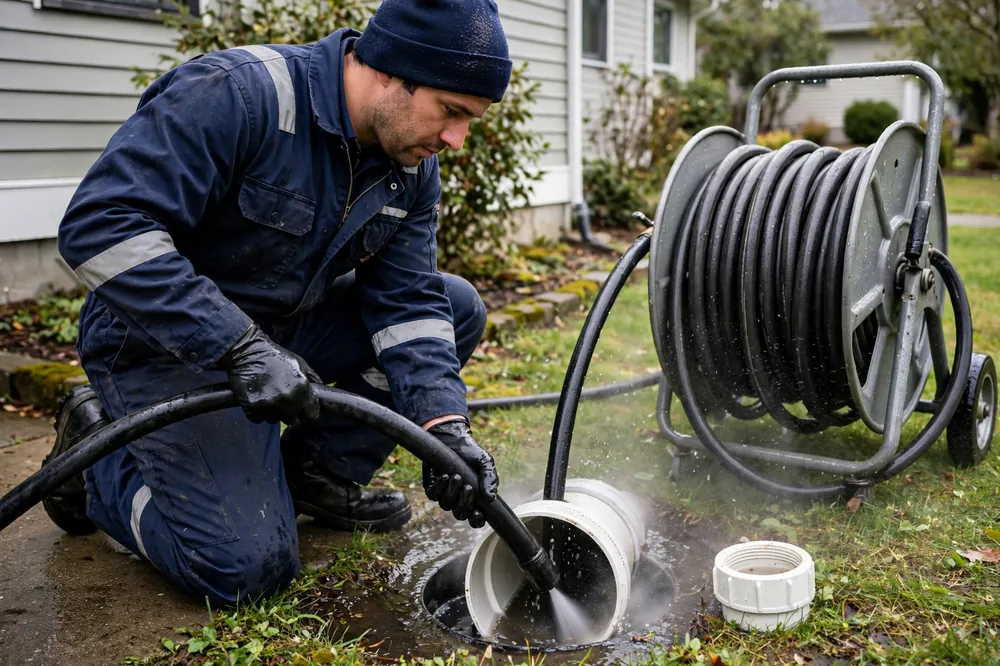
For kitchen lines with heavy grease, a plumber may follow the snake with a hydro jetting service, which blasts the walls clean with high-pressure water. Snaking handles most residential kitchen odor jobs on its own. Jetting is the heavy artillery for lines that have been neglected for years. Our comparison of hydro jetting vs drain snaking breaks down when each makes sense.
What You Can Do to Keep It From Coming Back
Once the line is clean, habits decide how long it stays that way. The single biggest change is keeping grease out of the drain. Wipe pans with a paper towel before washing, pour cooled cooking grease into a container for the trash, and never assume hot water keeps grease liquid all the way to the street. It does not.
Run cold water while using the disposal, not hot. Cold water keeps grease solid so the disposal can chop it into pieces that flush through, while hot water melts it into a coating that re-solidifies downstream. Scrape plates into the trash before rinsing. And once a week, fill the sink with hot water and release it all at once. That surge flushes the line better than a trickle ever will.
For homes that do a lot of cooking, regular grease trap maintenance matters too, especially if you have an under-sink unit. But for most Newark kitchens, grease discipline plus an occasional snaking keeps the smells away for good.
When the Smell Means Something Else
Most kitchen drain smells are biofilm, but not all. If the odor smells like raw sewage rather than rotten food, the problem might be a dry P-trap letting sewer gas up, or a venting issue preventing proper drainage. Run water in rarely used sinks to refill traps. If the sewer smell persists, that is a different diagnosis worth a professional look.
Gurgling along with the smell points to a partial blockage or vent problem further down the line. Slow drainage plus odor means the buildup has narrowed the pipe significantly. Both are signs to stop troubleshooting with home remedies and get the line properly cleaned.
The nose knows. A kitchen should smell like cooking, not like the drain. When the smell keeps coming back no matter what you pour down there, the biofilm has won the surface battle, and it is time to clean the pipe walls themselves.