You notice one or two tiny grey flies near the bathroom sink and think nothing of it. A week later there are a dozen hovering around the drain every morning. They are not fruit flies, and they did not fly in through an open window. They hatched in the drain itself, and until you deal with what is growing inside the pipe, they will keep coming back.
Drain flies are a Newark plumbing problem as much as a pest problem. They breed in the biofilm inside slow drains, common in older Newark homes. This blog covers where they come from, the cleaning steps that end the cycle, and when snaking is the fix.
What Drain Flies Are, and Why They Pick Your Drains
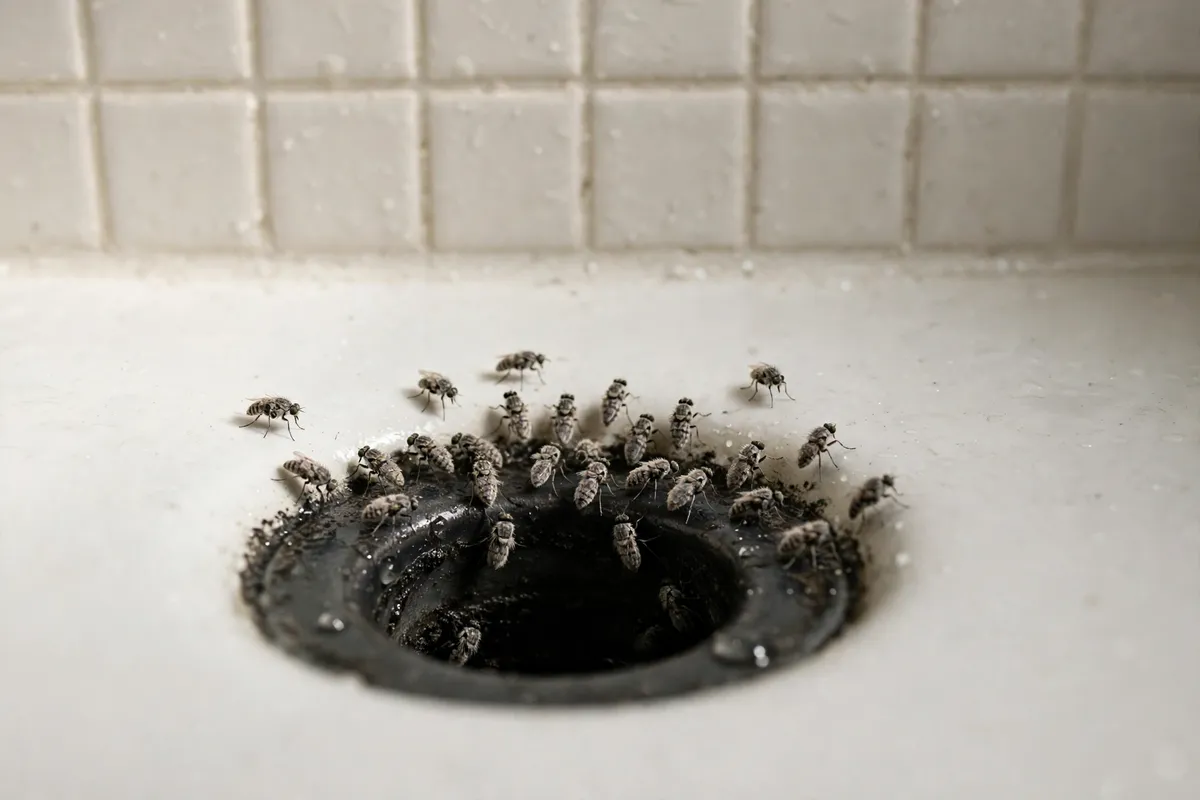
A drain fly is a small, fuzzy, moth-like insect, about the size of a fruit fly, with broad wings held flat over its back. The adults are weak fliers: they hover near the drain they hatched from and rarely travel far. That is the first clue. If the flies stay within a few feet of one sink or shower, they are breeding in that drain. Fruit flies gather around food and bins; drain flies gather around drains.
The life cycle is short and fast. A female lays eggs in the moist organic film inside a drain, and the larvae feed on the bacteria and slime in that film. In warm, damp conditions the cycle from egg to adult takes about two weeks, so a small colony becomes a cloud quickly. Killing the adults does nothing to the eggs and larvae still in the pipe: drain fly treatment has to reach the film.
The Biofilm Buffet: Why Slow Drains Breed Flies
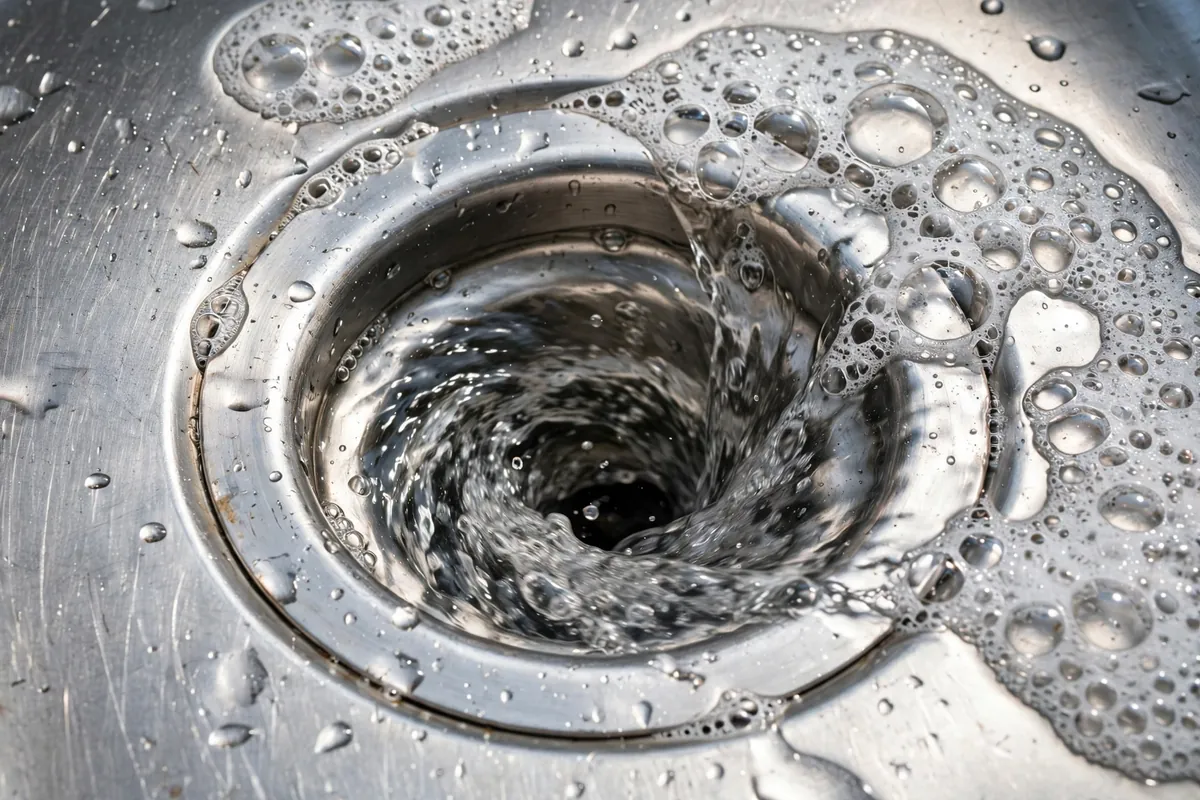
Biofilm is the slippery layer of bacteria, soap scum, hair, skin cells, and grease that coats the inside of every used drain. A fast drain flushes most of it away with every use. A slow drain lets it build up, because the water never moves fast enough to scour the walls. That buildup is food and shelter for drain fly larvae, and it is the whole reason they pick one drain over another.
Newark homes give biofilm plenty of help. Older cast iron lines roughen with age, and the rough surface holds film that smooth plastic would shed. Long branch lines to a basement laundry or a far bathroom give the film more pipe to coat. Homes around Brookside and Pike Creek, where postwar plumbing runs long distances to the main, see this pattern often: the slowest drain in the house is the one with the flies. If your drains run slow in general, read why drains run slow first, because the slow drain is the cause and the flies are the symptom.
Where Drain Flies Hide in a Newark Home
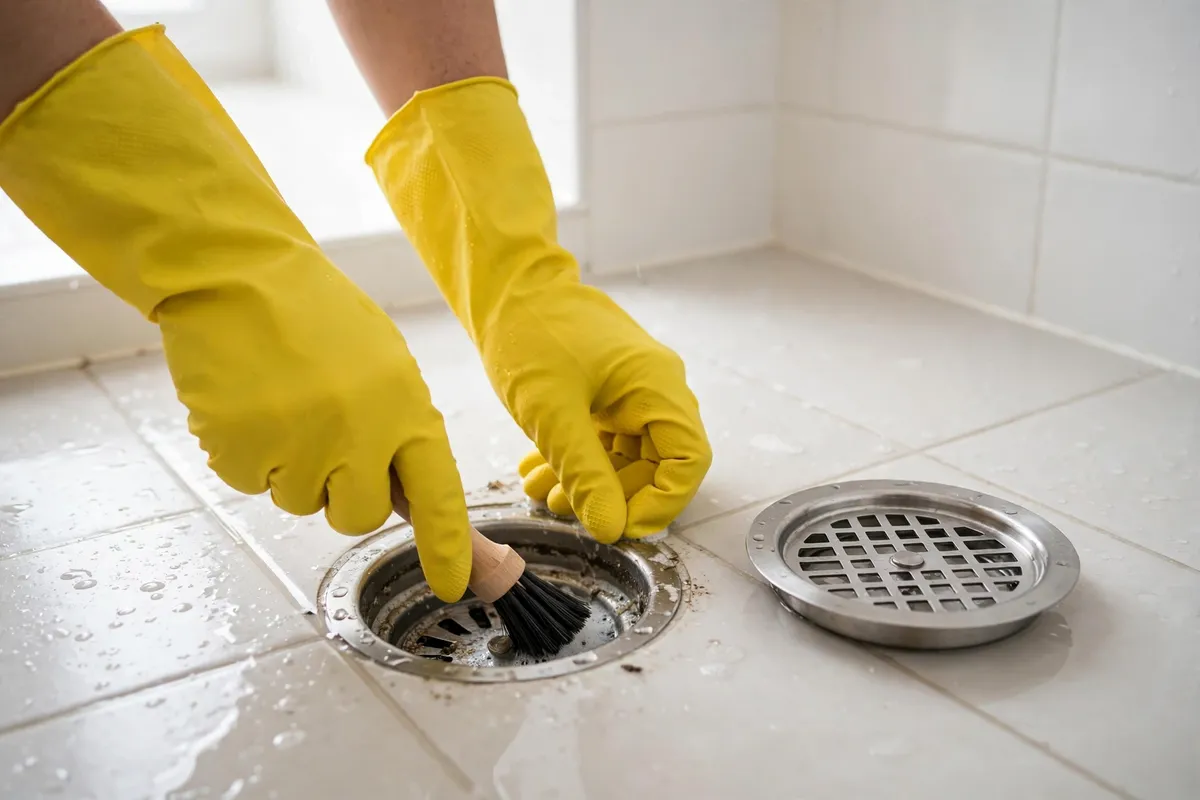
Drain flies breed in any drain that stays damp and slow, but a few spots produce most Newark cases. The bathroom sink is the classic one: toothpaste, soap, and hair coat the pop-up stopper, and the drain is used in short bursts that never flush the line. Shower drains come next, and floor drains breed quietly, because they sit unused for weeks with a trap full of stagnant water.
- Bathroom sinks. Check the pop-up stopper first: the film on its underside is often the nursery. Remove it, scrub it, and look down the drain with a flashlight.
- Showers and tubs. Hair catches on the drain crossbars and holds soap film. Pull the strainer, clean the hair, and scrub the visible pipe walls.
- Kitchen sinks. Less common, but a slow kitchen drain with a garbage disposal can breed flies in the splash guard and the disposal chamber.
- Basement floor drains. A dry or slow floor drain is a fly hotel. The trap water evaporates between uses, and the film in the pipe stays damp enough to breed.
- Laundry standpipes. Lint and soap coat the pipe, and the washer discharges in bursts that leave the line damp between loads, as washing machine drain overflows show in a different way.
To find the source, tape clear tape over each suspect drain at night, sticky side down, leaving a small gap. In the morning, the drain with flies stuck to the tape is the breeder. Check the least-used drains too.
The Cleaning Steps That End the Cycle
Ending a drain fly problem means removing the film the larvae live in. Spraying the adults is a holding action, not a fix, and pouring bleach down the drain is worse than useless: bleach runs past the film without scrubbing it. The fix is mechanical cleaning plus a flush, repeated until the film is gone.
- Remove the stopper or strainer. Pull the pop-up stopper, the shower strainer, or the floor drain grate, and scrub it clean with a brush and dish soap.
- Brush the drain walls. Push a stiff bottle brush down the drain as far as it reaches, and scrub the walls in a twisting motion. Pull out what comes up: hair, grey slime, and soap curds.
- Flush with very hot water. Run the hottest tap water for several minutes. Hot water softens the remaining film and carries it down the line.
- Use an enzyme drain cleaner. An enzyme treatment eats the organic film over a few days, reaching where the brush cannot. Use it at night and repeat for several nights.
- Repeat for a week. One cleaning kills the larvae you reach, but eggs can survive and hatch days later. Clean and treat nightly for a week: when a taped drain stays clean for three nights running, the cycle is broken.
While you clean, fix the slow drainage that let the film build up. A drain that clears slowly will grow film again within weeks. If the drain stays slow after cleaning, the restriction is deeper than a brush can reach.
When Snaking Is the Fix, and When It Is Not
A drain cable clears the partial blockage that keeps a drain slow: the packed hair, soap, and lint plug in the branch line. The cable breaks it up and pulls it back, restoring the opening so water flushes the line properly again. Once the drain runs at full speed, the film stops building up, and the flies lose their nursery.
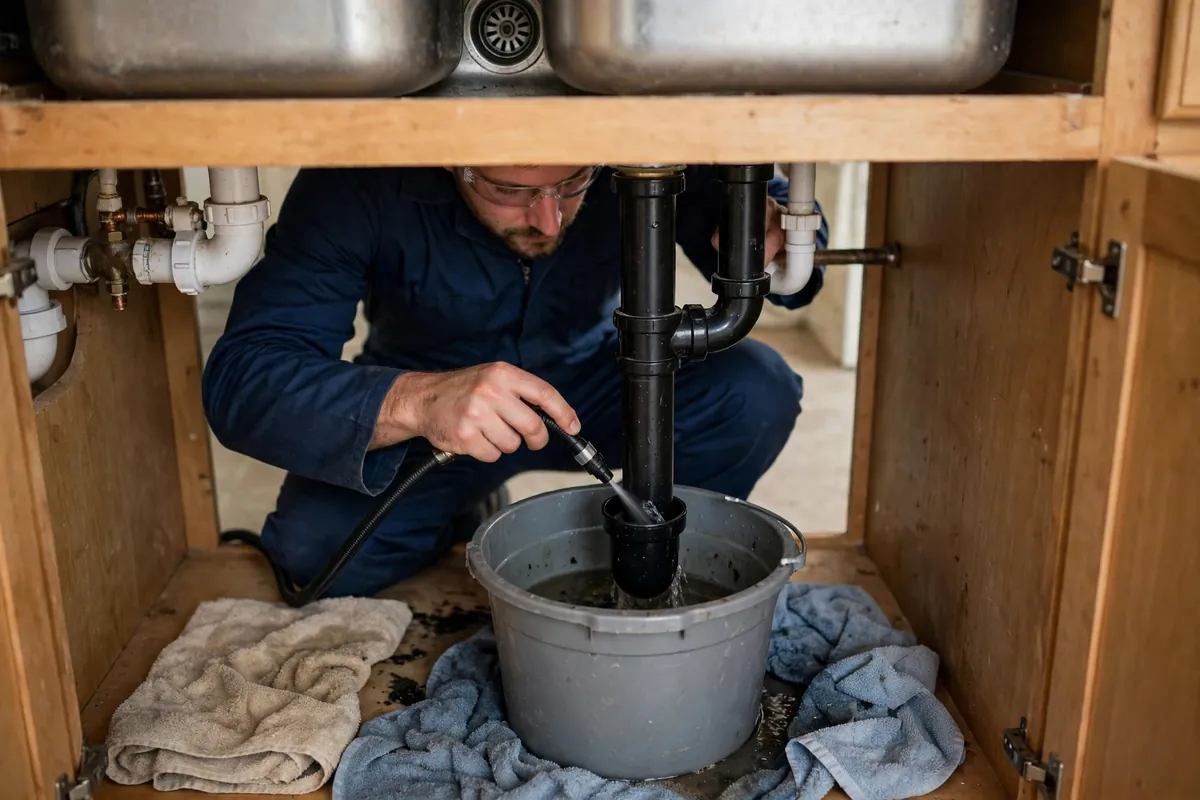
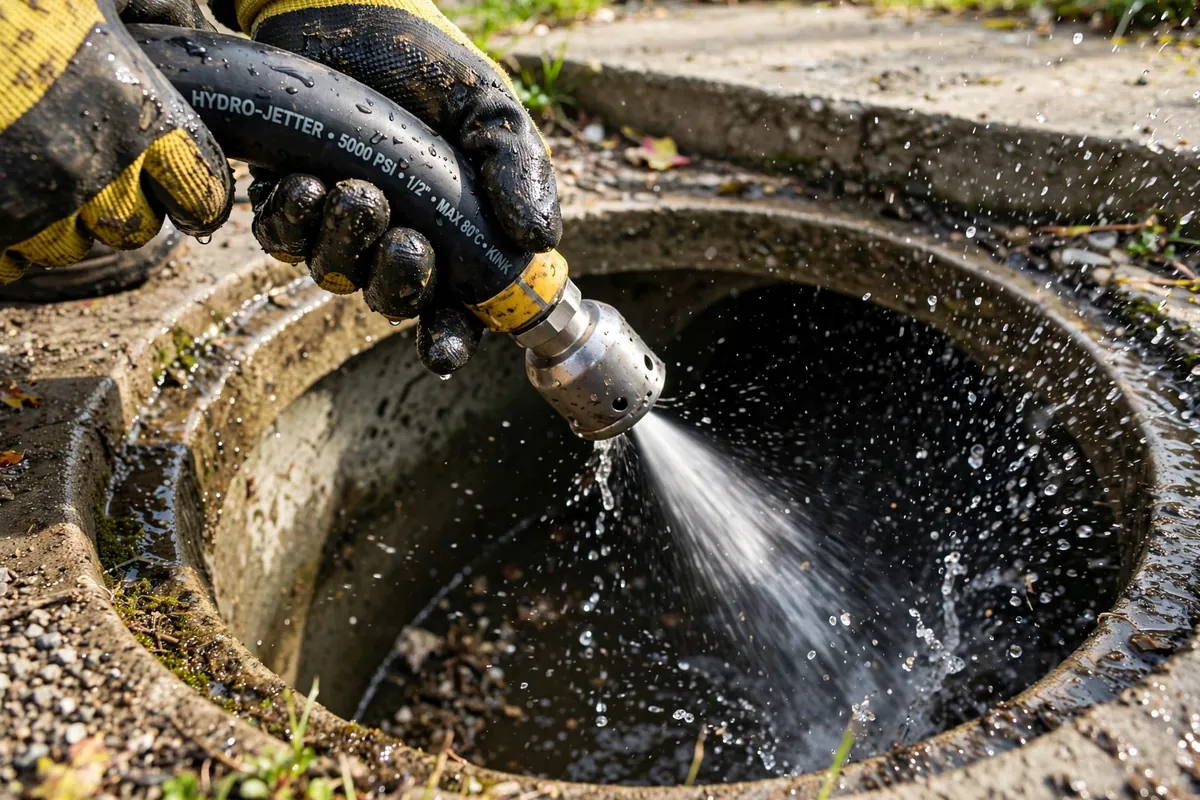
Hydro jetting goes further: it scours the full pipe wall, stripping biofilm back to the pipe surface along the whole line. That matters when several drains are infested at once, or when the film coats a long branch line. See hydro jetting vs drain snaking for which one fits a fly problem versus a single clog. A sewer camera inspection shows whether the line is coated, cracked, or bellied: a belly holds standing water that breeds flies no matter how often you clean. Snaking is not the fix when the flies come from a dry trap or a broken vent.
What Does Not Work, and What Makes It Worse
A few common responses waste money or make the problem worse. Bug spray kills the adults and leaves the larvae untouched, so the cloud returns within days. Chemical drain cleaner is the worst: it rarely clears the film, and it makes a later professional visit harder and less safe. Read how chemical drain cleaners damage pipes before reaching for a bottle.
- Bug spray and fly traps. They catch adults only. The larvae keep hatching.
- Bleach down the drain. It flows past the film without removing it.
- Chemical drain cleaner. It rarely clears biofilm, and it creates a hazard for the next person to open the drain.
- Sealing the drain shut. Tape stops the flies from coming out, but the colony keeps breeding behind it.
The only approach that works is removing the film and restoring full flow. Everything else is a delay.
Keeping Them Gone for Good
Once the flies are gone, keep the drains fast and the film thin. Run hot water down each bathroom drain for a minute once a week, and use an enzyme treatment monthly in the drains that bred flies. Clean hair from shower strainers every week. Refill floor drain traps with a jug of water every few weeks so they never dry out, and run water in guest bathrooms that sit unused.
Homes near Glasgow and Bear, where long branch lines run to laundry rooms far from the main, need the weekly flush most. Older homes near the University of Delaware campus face short runs into aging cast iron mains, where the film grips the rough pipe walls. Either way, the rule holds: fast drains do not breed flies. If a smell comes with the flies, read why a kitchen sink smells, and if the sink gurgles, why a sink gurgles when you flush explains the air side.
Drain flies are a message, not a mystery. The drain is slow, the film is thick, and the flies are the proof. Clean the film, restore the flow, and the flies leave.