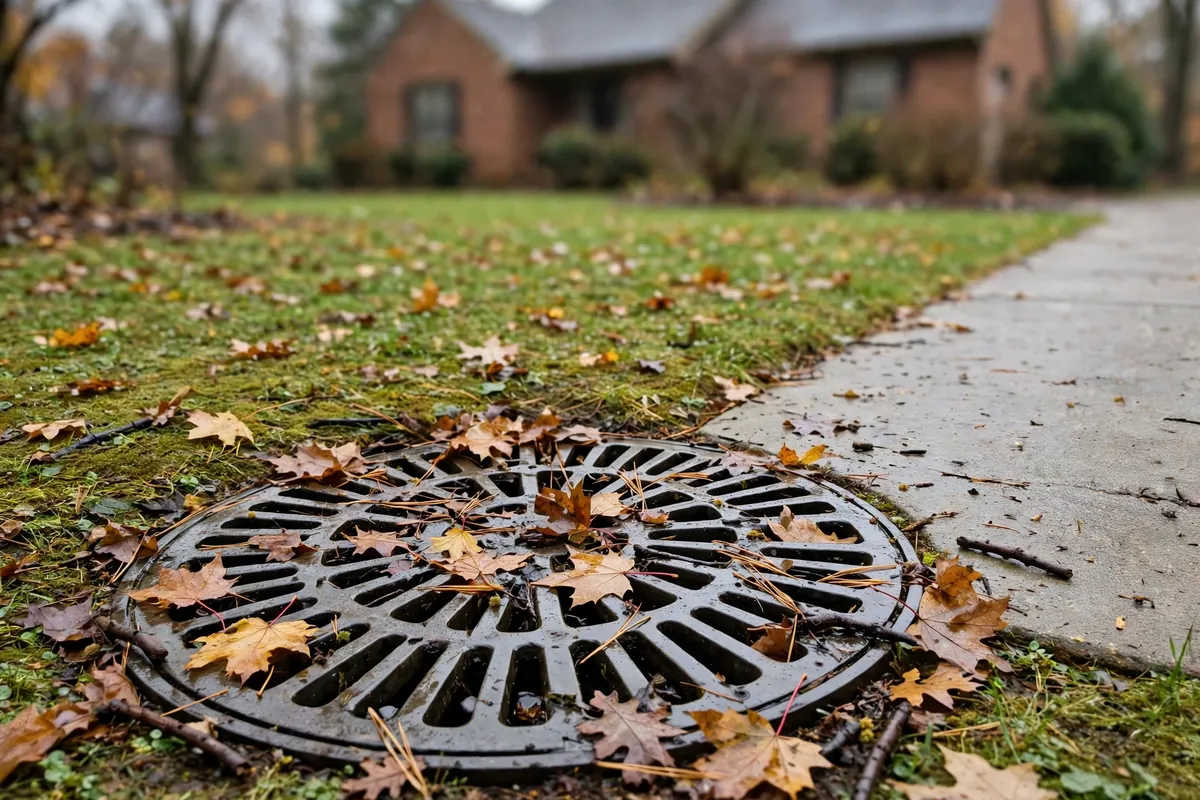
Every November, Newark yards tell the same story. The oaks and maples drop their leaves in a rush, wind pushes them into every low spot, and the first winter rain turns that layer into a wet mat. The yard drain under it stops draining, water spreads across the lawn, and by the second storm it runs toward the foundation instead of away from it. The drain worked fine all summer, when the rain was lighter and the grate was clear.
Yard drains fail quietly, and winter rain exposes them. This blog covers why leaves choke them so fast, how to find every grate, the clearing steps that work, and the signs the problem is in the pipe below rather than on the grate.
Why Yard Drains Clog Just Before Winter Rain
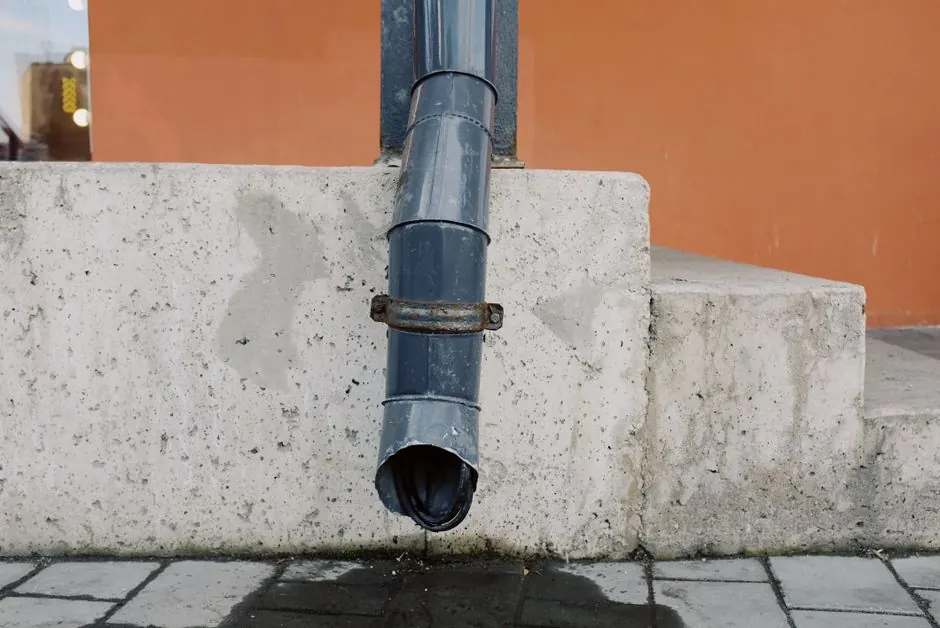
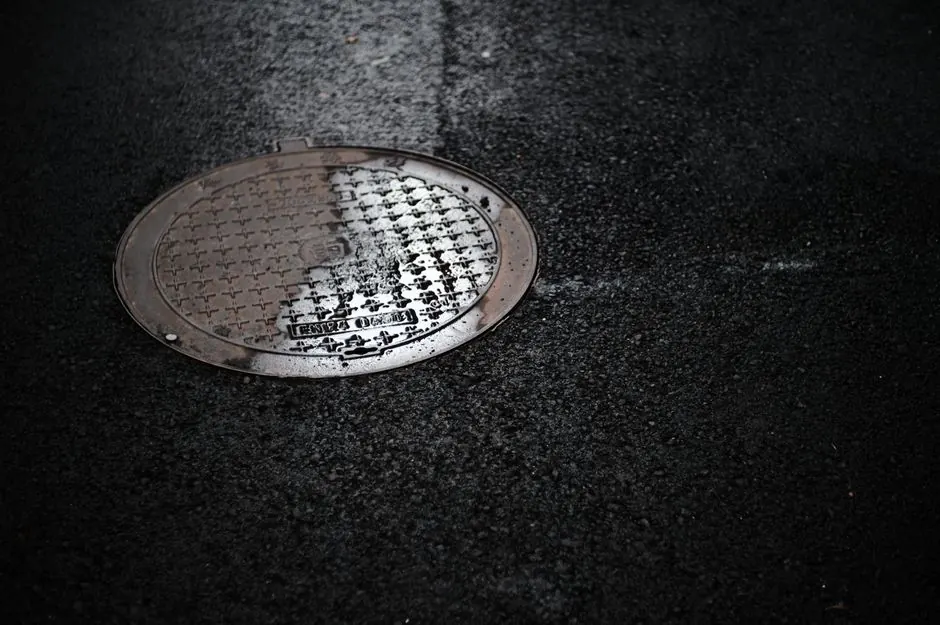
A yard drain is simple: a grate over a basin, connected to a pipe that carries water to the street, a dry well, or a storm line. It clogs because everything the yard sheds ends up in the low spot the drain sits in. Leaves are the main load, especially from the big oaks and maples around Brookside and Pike Creek. Pine needles slip through the grate slots and pack the pipe itself. Soil from bare patches washes in and settles as silt, raising the basin floor until the outlet sits half buried.
The timing turns a slow drain into a flood. Leaves fall heaviest in late October and November, just as rain shifts to longer winter storms. A half covered grate drains fine through a summer thunderstorm. The same grate under a soaked leaf mat in December barely drains, because wet leaves seal the slots like a lid. The water then heads for the lowest point near the house: the walkway, the patio, or the basement stair. If heavy rain has already pushed water inside once, read why a Newark basement floor drain backs up during heavy rain.
Find Every Drain Before You Start
Most Newark properties have more drains than the owner remembers. Walk the yard with a rake and look for round or square grates set flush in the lawn, usually at the lowest point or where two slopes meet. Check the driveway apron and any channel drain across the driveway or walkway, which catches runoff before it reaches the garage. Look where each downspout lands: many homes pipe downspouts underground to a yard drain or a pop up emitter at the curb, and that outlet is a drain too, even with no grate to see.
Do not forget the spots that hide. Window wells collect leaves and hold water against the basement wall. Stairwell drains clog with one handful of leaves. The area behind a shed often holds a grate nobody has touched in years, buried under mulch. Mark each one with a flag or stick so you can find it again after the next leaf fall.
Clearing a Yard Drain, Step by Step
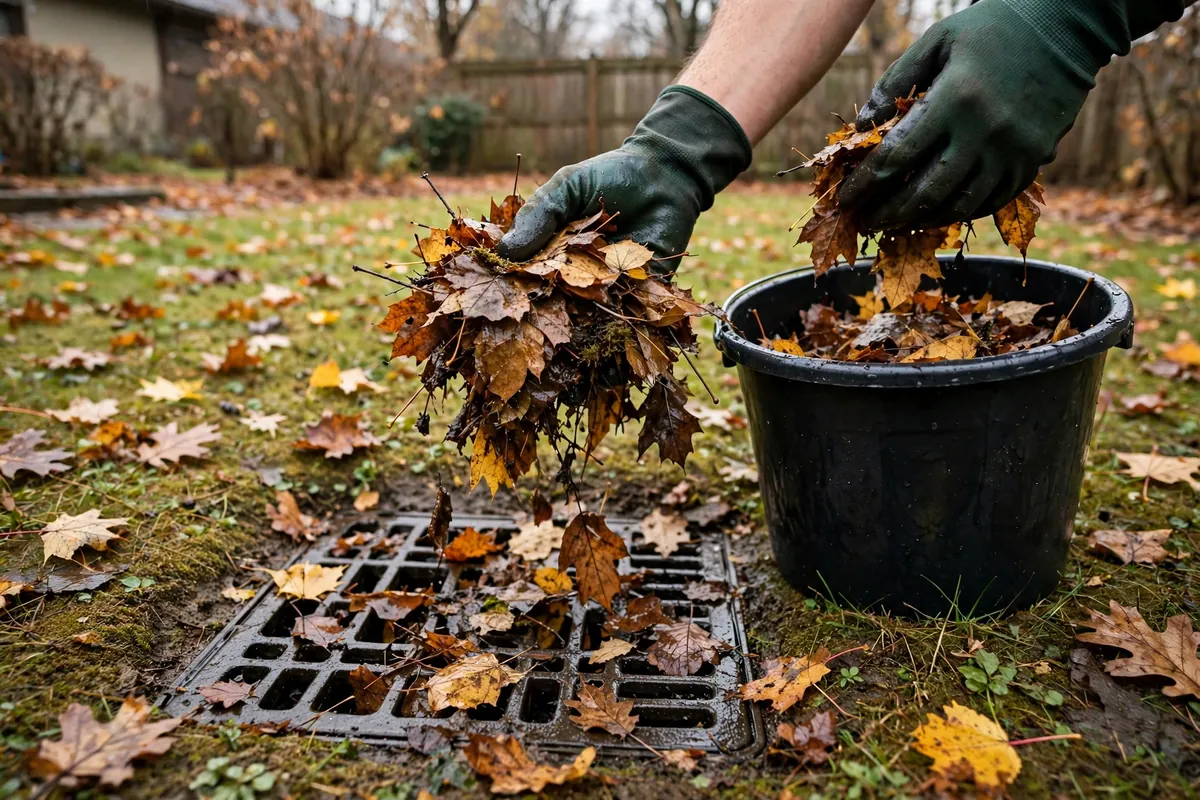
Clearing a yard drain takes about fifteen minutes per grate: gloves, a rake, a bucket, a trowel, and a garden hose. Work on a dry day if you can, since wet leaves are heavier and the basin is easier to see.
- Rake around the grate. Clear a circle a few feet wide, so the next wind does not push it all straight back.
- Lift the grate and scoop the basin. Most grates lift out by hand or with a screwdriver in the slot. Scoop leaves, silt, and muck out until you can see the outlet pipe.
- Check the outlet. Look into the outlet pipe for leaves or roots and pull out what you can reach. Do not force a stick down the pipe, since it packs the blockage tighter.
- Flush with a hose. Run water into the basin at full flow. It should drain steadily and appear at the outlet or curb. If the basin fills faster than it drains, the pipe below is restricted.
- Replace the grate and test the slope. Set it flush with the lawn, pour a bucket of water a few feet uphill, and confirm it runs toward the grate.
- Repeat after the next leaf fall. One November clearing is not enough while trees still drop leaves. Check again after every big wind until the trees are bare.
What not to do matters too. Do not push leaves down through the grate: that is how the pipe itself clogs. Do not cover a grate with fabric or a board for winter, since that blocks the drain exactly when it is needed most. And do not pour chemical drain cleaner into a yard drain. A drain that resists a hose flush is a job for a cable or a jetter: storm drain and catch basin cleaning.
Driveway and Patio Drains Need the Same Pass
Channel drains across a driveway or patio clog differently from lawn grates. They collect grit, sand, and small stones along with leaves, and the narrow channel packs solid from the bottom up. Pop the cover off in sections, scoop the channel clean, and hose it toward the outlet end. Check the junction where the channel meets the yard drain or street: that narrow point is the first place a plug forms.
Patios have their own trap. Furniture, planters, and firewood get pushed against the patio drain over summer, and by November it hides behind a stack of pots. Move everything a foot away and keep the path clear through winter. If the patio ponds after rain even with a clear grate, the slabs may have settled so water runs away from the drain. That is a grading problem, not a clog. The same applies where the driveway meets the garage: if water ponds there, check the channel and its outlet first.
When the Grate Is Clear But Water Still Pools
A clean grate with standing water above it means the blockage is underground. Roots enter older clay or concrete pipes through cracked joints. A vehicle driving over a shallow line can crush a section. Silt builds up over years until the pipe carries a trickle. None of these can be seen from the surface, and guessing where to dig is expensive.
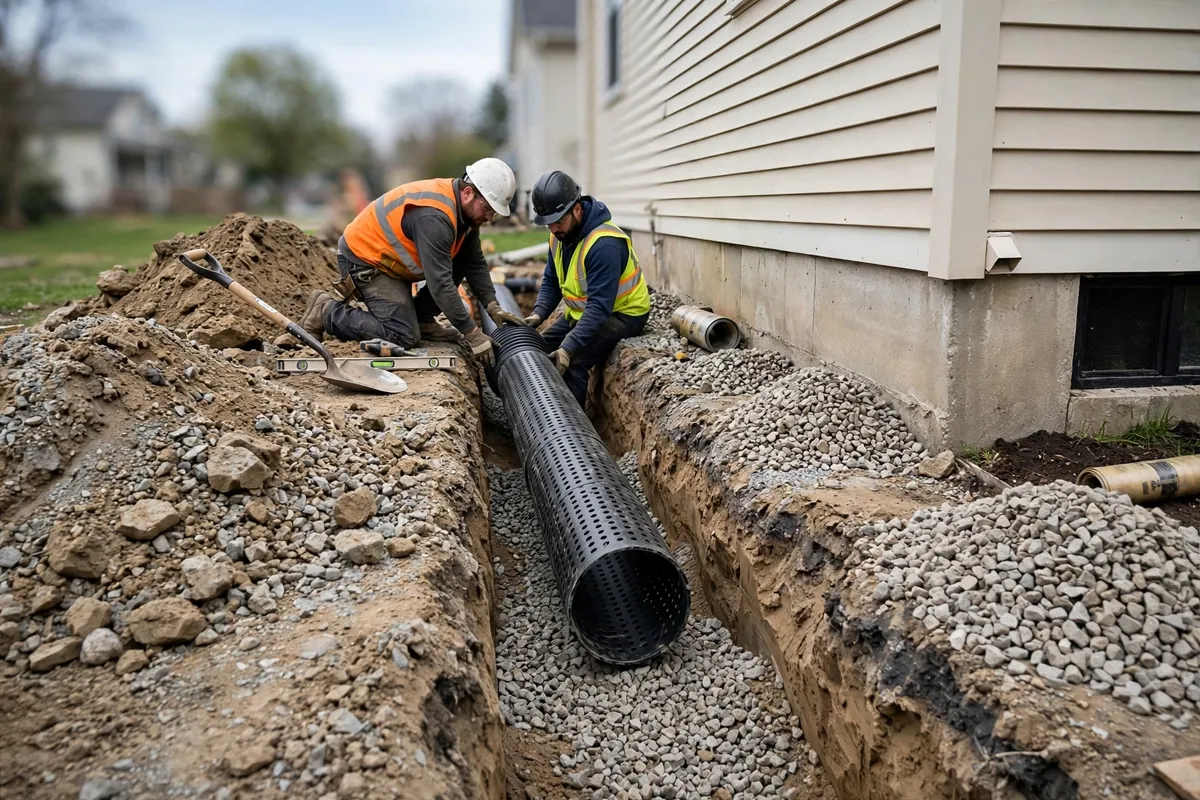
That is where a camera earns its keep. A sewer camera inspection shows exactly where the blockage or break sits, so any digging happens in one spot. For intact but silted lines, hydro jetting scours the pipe clean. And if the yard has no drain where water pools, a French drain installation gives that water a path away from the house. See French drain vs sump pump for which fix fits a flooding yard versus a flooding basement.
The Pre-Winter Checklist For Newark Yards
Run through this list once in November and once more after the last leaves fall.
- Every grate raked, lifted, and scooped. Lawn grates, driveway channels, stairwell drains, and window wells, down to the outlet.
- Downspouts checked end to end. Gutters clear, pipes open, underground outlets flowing at the curb.
- Hose test passed. Water in each basin drains steadily and shows up at the outlet without backing up.
- Sump pump tested, if you have one. Pour a bucket into the pit and confirm the pump runs and discharges away from the foundation. See sump pump installation if the pit has no pump.
- Grading checked. Soil and mulch slope away from the house, with no mulch dam against the foundation.
- Supplies ready. Gloves, rake, and bucket by the back door, so the next leaf fall gets cleared the same weekend.
Homes near Glasgow and Bear, where newer subdivisions sit on flatter ground, need the grading check most: flat yards pond faster because water has no slope to follow. Older homes near the University of Delaware campus face the opposite problem, with runoff arriving fast from uphill lots. Either way, the checklist holds.
When a Yard Drain Problem Needs a Pro
Most grate clearing is homeowner work. Call a pro when the hose test fails and the basin keeps filling, when water appears in the basement during rain, when sewage odor comes from any drain, or when a line has collapsed. Each one gets worse with every storm. If sewage is involved, stop using water in the house and read what to do first for a sewage backup before anything else.
Express Drain Rescue clears yard drains, catch basins, and storm lines across Newark, from Brookside to Pike Creek, with camera inspection to find the blockage before any digging starts. When you call, say which grates you cleared, what the hose test showed, and where the water pools. A slow drain inside often travels with the same problem outside: why drains run slow covers the indoor side.
An hour with a rake and a hose in November is the difference between winter rain that drains away and winter rain that finds its way inside.