Delaware winters are unpredictable. One week it's 50 degrees and raining, the next a polar vortex sends temperatures plunging into the teens overnight — and that's when pipes freeze. A frozen pipe is more than an inconvenience: when water freezes it expands, pressure builds between the ice blockage and the nearest closed faucet, and the pipe can split wide open. The real damage often shows up during the thaw, when water starts pouring through the break.
The good news: frozen pipes are largely preventable, and most of the protection costs little or nothing. Every winter we get emergency calls from Newark-area homeowners dealing with burst pipes that a weekend of preparation would have prevented. Here's what actually works, starting with understanding which pipes are at risk.
Why pipes freeze — and why they burst
It seems obvious, but the mechanics matter. Water expands as it freezes, and unlike most liquids, it keeps expanding with real force. Inside a pipe, the expanding ice has nowhere to go, so pressure builds in the trapped water between the ice blockage and a closed faucet or valve. It's that pressure — not the ice itself — that usually splits the pipe, often at a joint or a weak spot rather than where the ice formed.
This is why a pipe can freeze in the crawl space and burst inside a wall: the break happens where the pressure peaks, not necessarily where the ice is. It also explains why the damage appears at thaw time — the ice was plugging its own leak until it melted.
Know your vulnerable spots
Not every pipe in your house is equally at risk. Walk through your home and identify these danger zones:
- Pipes in exterior walls — especially kitchen and bathroom sinks on outside walls, where insulation between the pipe and the cold siding may be thin or missing.
- Crawl spaces — unheated, often drafty, and full of both supply and drain lines. The number-one freeze location in Delaware homes.
- Attics and garages — any water line running through an unconditioned space, including lines to a second-floor bathroom or a garage utility sink.
- Outdoor hose bibs (spigots) — the classic burst-pipe culprit. Water trapped in the bib or a connected hose freezes, and the break happens inside the wall.
- Under-sink cabinets on exterior walls — closed cabinet doors trap cold air around the pipes while blocking warm room air.
If you're not sure where your pipes run, the crawl space and the walls facing north or exposed to wind are the places to check first.
Insulate exposed pipes
Foam pipe insulation sleeves are cheap, sold at every hardware store, and take minutes to install — just slit, wrap, and tape. Focus on any pipe you can see or reach in crawl spaces, attics, garages, and unfinished basements. Insulation doesn't make pipes freeze-proof, but it buys significant time: it slows heat loss so the water inside stays above freezing longer during a cold snap.
For especially vulnerable runs, electric heat tape (heat cable) adds active protection. It wraps around the pipe and gently warms it, usually with a built-in thermostat. Follow the manufacturer's instructions exactly — don't overlap the cable on itself, don't use it on plastic pipe unless it's rated for it, and plug it into a GFCI-protected outlet. Heat tape is a great solution for a known problem spot, like the one section of pipe that freezes every January.
Seal out cold air
Insulation slows heat loss; air sealing stops the cold from reaching the pipe in the first place. Check where pipes pass through exterior walls, the foundation, or the rim joist in the basement — gaps around those penetrations let frigid air pour directly onto the pipe. Seal them with caulk for small gaps or expanding foam for larger ones.
Also check crawl space vents and access doors. Many Delaware homes have foundation vents that should be closed for the winter — open vents turn a crawl space into a wind tunnel. And look for missing or fallen insulation in the spots you identified above; insulation only works if it's actually in place.
Keep the heat on — even when you're away
The thermostat is your cheapest freeze insurance. During cold snaps, keep the house heated consistently rather than dropping the temperature way down at night — pipes in exterior walls need that steady warmth. If you travel in winter, don't shut the heat off to save money; keep it at a moderate setting so the whole envelope of the house stays above freezing.
Two free tricks help on the coldest nights: open the cabinet doors under sinks on exterior walls so warm room air circulates around the pipes, and keep interior doors open so heat distributes evenly — closed-off rooms with plumbing (a guest bath, a laundry room) can get surprisingly cold.
Let faucets drip during extreme cold
When temperatures drop into the teens or lower, let a faucet drip. Moving water is harder to freeze than standing water, and the drip relieves pressure buildup — the actual cause of most bursts — even if ice starts forming. A thin trickle from the faucet farthest from where the water line enters the house protects the longest run of pipe.
You don't need a steady stream; a light drip is enough, and the cold tap is the one that matters. Yes, it uses some water — but a few gallons overnight is nothing compared to the cost and mess of a burst pipe. If your home has a history of freezing, this is the single easiest thing you can do on a bitter night.
Disconnect hoses and shut off outdoor faucets
Before the first hard freeze, disconnect every garden hose, drain it, and store it. A connected hose traps water in the spigot and the pipe behind it — and when that water freezes, the pipe typically bursts inside the wall, where you won't see the leak until spring. If your outdoor faucets have interior shutoff valves, close them and open the outside spigot to drain the line.
Frost-free hose bibs (the long-stem type) are designed to shut off water deep inside the warm wall — but they only work if the hose is disconnected. Leave a hose attached and even a frost-free bib can freeze and split. This five-minute job prevents one of the most common winter plumbing failures we see.
If a pipe freezes anyway
Signs of a frozen pipe: a faucet that produces only a trickle or nothing at all while others work fine, frost visible on an exposed pipe section, or odd smells from a drain (a frozen vent or drain line can trap sewer gases). If you suspect a freeze, act quickly:
- Keep the faucet open. Open the tap the frozen pipe feeds — running water, even a trickle, helps melt the ice and gives expanding water somewhere to go.
- Find the frozen section. Check the coldest areas first: crawl space, attic, garage, exterior wall. Look and feel for frost or an unusually cold spot on the pipe.
- Thaw it gently. Use a hair dryer, a space heater aimed at the area (kept at a safe distance), or warm towels wrapped around the pipe. Start thawing near the faucet and work back toward the blockage.
- Never use an open flame. No torches, no heat guns on high, no kerosene heaters near the pipe. Besides the fire risk, intense concentrated heat can damage the pipe and fittings.
- Watch for leaks as it thaws. The thaw is when a burst reveals itself. If water starts appearing where it shouldn't, shut off your main valve immediately.
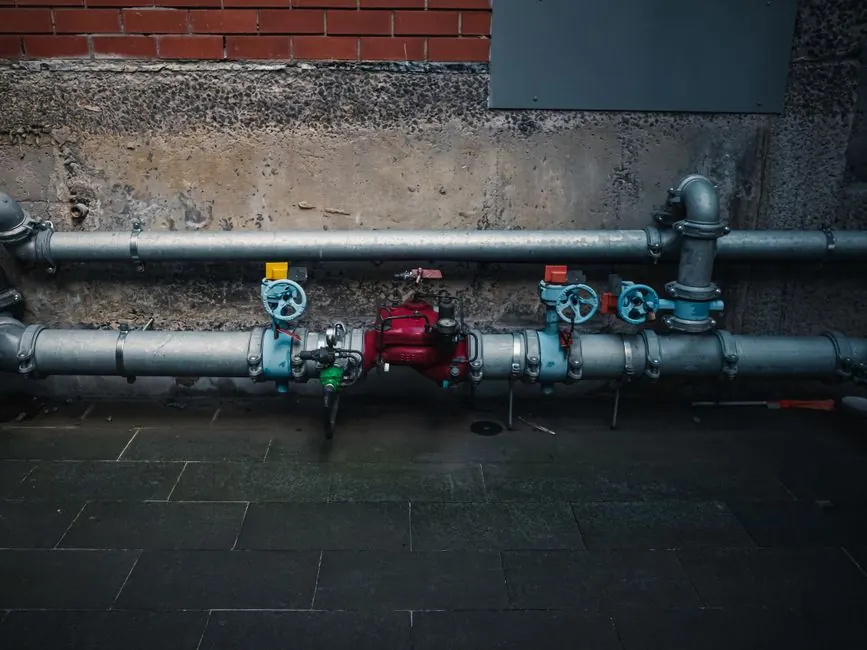
Know where your main water shutoff valve is before you need it. In most Newark-area homes it's in the basement or crawl space where the water line enters, or near the water meter. Make sure every adult in the house knows its location.
When to call a plumber
Call Express Drain Rescue at (302) 412-8659 when:
- You can't locate the frozen section or can't safely reach it
- Thawing doesn't restore flow — the blockage may be somewhere you can't access
- You see or hear water leaking as the pipe thaws
- A pipe has burst — shut off the main valve first, then call
- The same pipe freezes every winter and you want a permanent fix
For pipes that freeze year after year, the lasting answer is usually rerouting the line through conditioned space, adding proper insulation, or replacing a vulnerable section — including the water service line if the freeze point is between the street and your house. We help homeowners across Newark, Bear, and Middletown winter-proof their plumbing every fall. A quick pre-winter checkup now beats an emergency call at 2 a.m. in January.